



Marcus Aurelius Routine: Stoic Dichotomy of Control & Daily Meditation Guide

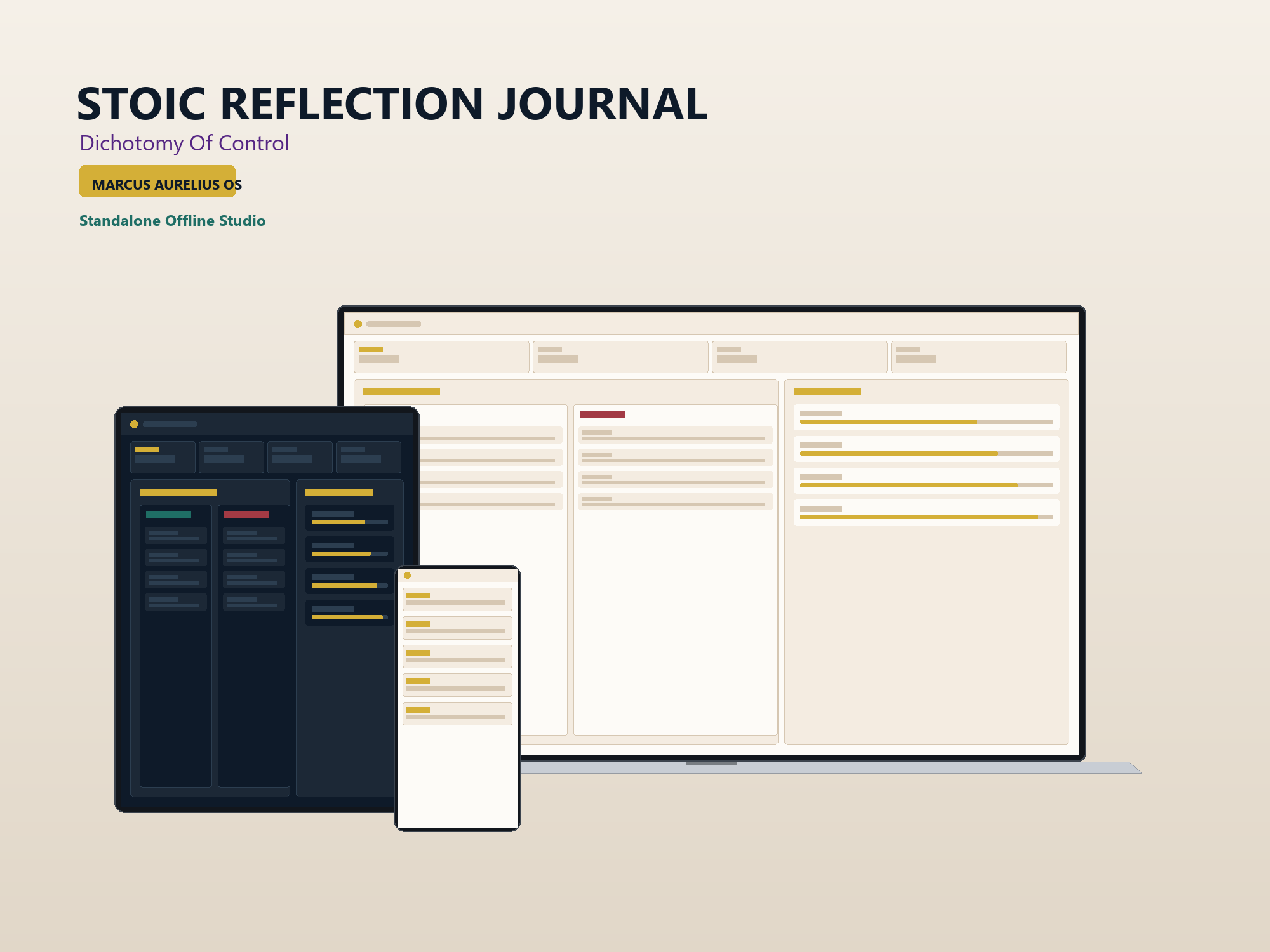
The Marcus Aurelius routine combined structured dawn philosophical contemplation with disciplined evening self-examination. Anchored by the Stoic dichotomy of control, the Roman emperor methodically separated external circumstances beyond his power from internal mental judgements, preparing his mind every morning to handle adversity, deceit, and pressure with unshakeable moral integrity.
Ruling the Roman Empire during devastating plagues, foreign invasions, and political betrayals, Marcus Aurelius did not retreat into fatalism. Instead, he maintained an uncompromising daily journaling practice—recorded for his private eyes and posthumously titled Meditations. His timeless reflections prove that true serenity is not the absence of external chaos, but the mastery of internal perspective.
This philosophical manual examines the operational architecture of Marcus Aurelius daily routine, details the cognitive mechanics of Epictetus Dichotomy of Control, and provides practical journaling templates for modern professionals navigating high-stress environments.
The Stoic Dawn Ritual & Morning Premeditatio Malorum
Marcus Aurelius began each morning at dawn, well before public audiences and military briefings began. He used this sacred window to prime his mental faculties against toxic interactions and emotional contagion:
        ┌─────────────────────────────────────────────────────┐
        │            THE STOIC MORNING COGNITIVE SHIELD       │
        └──────────────────────────┬──────────────────────────┘
                                   │
         ┌─────────────────────────┼─────────────────────────┐
         ▼                         ▼                         ▼
┌──────────────────┐      ┌──────────────────┐      ┌──────────────────┐
│   Anticipation   │      │    Separation    │      │   Inner Citadel  │
│ Expect meddling, │      │ Classify control │      │ Retreat to virtue│
│ envy & malice    │      │ vs. externalities│      │ & duty to fellow │
└──────────────────┘      └──────────────────┘      └──────────────────┘
In his morning journal, he famously commanded himself:
"When you wake up in the morning, tell yourself: The people I deal with today will be meddling, ungrateful, arrogant, dishonest, jealous, and surly. They are like this because they cannot distinguish good from evil. But I have seen the beauty of good, and the ugliness of evil, and have recognized that the wrongdoer has a nature related to my own... None of them can hurt me."
This practice, known as Premeditatio Malorum (premeditation of evils), is not pessimism. It is cognitive inoculation. By mentally simulating frustrating interactions in advance, Aurelius ensured he would never react with impulsive rage or wounded vanity when reality unfolded.

Epictetus Dichotomy of Control: The Universal Filter
The foundational pillar of Stoic mental hygiene is dividing every phenomenon into two mutually exclusive categories:
- Things Within Our Power (Up to Us): Our opinions, desires, intentions, aversions, and moral character. In modern terms, our focus, our effort, our ethical choices, and how we choose to interpret events.
- Things Outside Our Power (Not Up to Us): Other people actions, reputations, market fluctuations, health outcomes, physical weather, and the inevitable passage of time.
Suffering arises when individuals attempt to force control over external outcomes while neglecting internal sovereignty. Stoics treat external events as morally neutral materials—what matters is the craftsmanship with which we respond.
Modern Reactive Living vs. Stoic Mastery Matrix
The matrix below contrasts conventional emotional reactivity with the disciplined composure of Marcus Aurelius operating framework:
| Scenario | Conventional Reactive Habit | Marcus Aurelius Stoic Approach |
|---|---|---|
| Public Criticism or Slur | Outrage, defensive counter-attacks, resentment | Inquire if the critique is true; if false, pity their ignorance |
| Unexpected Market Setback | Panic, anxiety, catastrophizing the future | Acknowledge reality; focus exclusively on the immediate next step |
| Interpersonal Betrayal | Vengeance, victim narrative, prolonged bitterness | Recognize human frailty; protect boundaries without harboring malice |
| Morning Routine | Checking sensationalist news and reactive emails | Silent philosophical writing and intentional mental grounding |
| Evening Routine | Passive entertainment and screen escapism | Honest, non-judgmental audit of actions and virtues |

The Evening Philosophical Audit
Before retiring to sleep, Marcus Aurelius conducted a rigorous, compassionate self-audit borrowed from the Stoic philosopher Seneca:
- What moral weakness did I overcome today?
- Where did I allow external flattery or impatience to compromise my character?
- How did I serve the common welfare of my community?
This nightly review closes the psychological loop of the day, preventing unprocessed regrets from disturbing rest and setting a clean slate for the following sunrise.
Dedicated Philosophical & Mindfulness Workspaces
To integrate classical Stoic resilience into your daily decision-making and mindfulness habits, utilize these structured tools:
- Structure your morning contemplation and evening audits using our dedicated Stoic Mindset & Dichotomy of Control Journal, featuring an interactive control classifier and nightly reflection ledger.
- Build structural resilience against unexpected market turbulence with the Antifragile Barbell Strategy Decision Matrix.
- Complement mental stillness with physical dawn discipline using the Mamba Mentality Relentless Discipline Tracker.
- Institutionalize humble inquiry and executive empathy via the Learn-It-All Growth Mindset Execution System.

Strategic Topic Frameworks & Practical Connections
To deepen your practical mastery and build an integrated operational workflow within this topic, explore these complementary guides:
- Implement the execution protocols in Monk Mode Rules: Architecture for Extreme Focus and 2027 Goal Mastery to systematically strengthen your foundational routine.
- Explore the strategic principles detailed in Richard Branson 5:00 AM Routine & Delegation Matrix Guide for advanced optimization and mental clarity.
- Apply the structured methods from The 5 AM Club Morning Routine: Complete 20/20/20 Rule Guide to maintain long-term momentum and consistency.
Frequently Asked Questions
What was Marcus Aurelius daily routine?
Aurelius woke at dawn, practiced quiet philosophical writing (meditations), mentally prepared for difficult personalities, addressed imperial administration and legal affairs with focused duty, and concluded his evening with an unflinching self-examination.
How does the Dichotomy of Control reduce anxiety?
Chronic anxiety is caused by obsessing over external variables that you cannot dictate (what others think, future market conditions). The Dichotomy of Control redirects your attention entirely to internal variables you directly govern (your effort, integrity, and response).
Was Marcus Aurelius a fatalist?
No. Stoicism advocates active, virtuous engagement in society. Aurelius labored tirelessly to govern Rome, reform legal codes, and protect his citizens, but he remained detached from the vanity of praise and the fear of mortality.
How can a beginner practice Stoic journaling?
Begin each morning by writing three things: one external challenge you anticipate facing today, a reminder of what remains in your control, and a commitment to treat others with patient grace.
Disclaimer: This guide is prepared for personal philosophical study, emotional resilience, and mindfulness reflection. It does not replace clinical psychological therapy or medical care for severe anxiety or depression.
Research & References
- [1]Project Gutenberg — Marcus Aurelius, Meditations (primary text) ↗
- [2]Stanford Encyclopedia of Philosophy — Stoicism ↗
For comprehensive editorial standards and health/financial disclaimers, view our Editorial Policy.
Tools featured in this guide
Marcus Aurelius Stoic Mindset & Dichotomy of Control Daily Reflection Interactive Journal
Master Inner Poise, Separate Agency from Circumstance & Practice Ancient Meditations
$24.99₫549,000
Nassim Taleb Antifragile Barbell Strategy Decision Matrix and Asymmetric Risk Calculator
$24.99₫549,000
Kobe Bryant Mamba Mentality 4:00 AM Relentless Discipline Tracker & Daily Excellence Dashboard
$27.99₫609,000
Satya Nadella Learn-It-All Growth Mindset Execution System & Executive Daily Matrix
$24.99₫549,000
Guides in this Topic
View all (26) →- productivity
Kobe Bryant Workout Routine & Mamba Mentality Relentless Discipline Guide
Master the Kobe Bryant workout routine and Mamba Mentality discipline: learn the 4:00 AM training protocol, 5 mental pillars, and peak focus routines.
Read guide  productivity
Jordan Peterson 12 Rules for Life & Future Authoring Guide
Master Jordan Peterson's 12 Rules for Life and the Future Authoring program. Overcome chaotic drift, articulate your ideal future, and build daily order.
Read guide productivity
Ryan Holiday Discipline Is Destiny: Stoic Habit Guide
Master Ryan Holiday's Discipline Is Destiny principles. Cultivate Stoic temperance, build unbreakable morning routines, and conquer distraction daily.
Read guide wellness
75 Soft Challenge Rules: Dopamine Reset Habit Guide
Discover 75 Soft Challenge rules. Master dopamine reset protocols, mindful daily workouts, hydration targets, and non-restrictive habit tracking.
Read guide productivity
Arnold Schwarzenegger 'Sleep Faster' Workout & 6 Rules Guide
Master Arnold Schwarzenegger's 6 rules of success and workout routine. Learn how to sleep faster, conquer excuses, and build daily discipline.
Read guide productivity
Benjamin Franklin 13 Virtues & 24-Hour Schedule Guide
Master Benjamin Franklin's 13 virtues system and 24-hour daily schedule. Discover his 13-week habit cycle, morning questions, and self-mastery.
Read guide
Topic Pillar
Discipline & Daily Habits
Frameworks, routines, and systems for relentless consistency, morning discipline, and mental fortitude.
Ask Yinyang Masters inside your AI assistant
Get the same calculations and guidance right in your chat: add the free Yinyang Masters app, then ask in plain English. No account needed.
Try asking: “Build me a 30-day morning habit stack.”