



Bill Gates Think Week Strategy & Yellow Pad Deep Reading Guide

A Bill Gates Think Week is a bi-annual, seven-day solitary intellectual retreat where the Microsoft co-founder completely disconnects from daily operations to read dozens of academic papers, synthesize emerging technological disruptions on legal yellow notepads, and author visionary strategy memos that steer multi-billion-dollar enterprise decisions.
┌──────────────────────────────────────────────────────────────────────────┐
│                   THE BILL GATES THINK WEEK ARCHITECTURE                 │
├──────────────────────────────────────────────────────────────────────────┤
│ 1. Complete Environmental & Digital Isolation                            │
│    ├──> Solitary waterfront cabin (zero family, staff, or meetings)     │
│    └──> Hard disconnect: Zero internet browsing, email triage, or calls  │
│ 2. Uncompressed Reading Pipeline (18 Hours/Day)                         │
│    ├──> 50–100 academic preprints, competitor teardowns, technical whitepapers│
│    └──> Sustained reading velocity: 150+ pages per reading sprint        │
│ 3. The Legal Yellow Pad Synthesis Protocol                               │
│    ├──> Active marginalia & dispute notes in physical ink                │
│    ├──> Synthesis of non-obvious cross-domain second-order impacts       │
│    └──> Formulation of executive strategic thesis memos (e.g. Internet Tidal Wave)│
└──────────────────────────────────────────────────────────────────────────┘
1. The Historical Genesis: From Pacific Northwest Cabin to Global Tech Dominance
In the 1980s, facing the unrelenting operational frenzy of scaling Microsoft into an enterprise titan, Bill Gates realized that daily corporate demands—shareholder calls, engineering fire drills, and executive meetings—systematically choked out long-term strategic imagination. His countermeasure became legendary: twice a year, he packed cardboard boxes full of unread technical manuscripts, booked a secluded waterfront cabin in the Pacific Northwest, and vanished for seven days.
No family, no colleagues, no staff, and crucially, zero internet connectivity. A dedicated caretaker dropped off simple meals twice a day without speaking.
During these solitary sprints, Gates consumed up to 18 hours of technical literature daily. The most consequential outcome of this practice occurred during his May 1995 Think Week. Surrounded by obscure university research on networking protocols, Gates authored his seminal memo: "The Internet Tidal Wave". That single document recognized the web as the defining paradigm shift of modern computing, redirected every engineering division within Microsoft, triggered the bundling of Internet Explorer into Windows, and preserved Microsoft's market dominance for decades.
Think Week demonstrates that the highest-leverage competitive advantage in knowledge work is not speed of execution, but uninterrupted depth of synthesis.
2. Anatomy of a 7-Day Think Week
The Think Week methodology is not an unstructured vacation; it is a rigorous cognitive marathon engineered around three distinct operational phases:
| Phase | Duration | Core Objective | Primary Deliverables | Cognitive State |
|---|---|---|---|---|
| Phase 1: Input Saturation | Days 1–3 | High-volume ingestion of disparate academic papers & industry teardowns | Curated marginalia, highlighted raw data, reading queue depletion | High absorption, mental fatigue |
| Phase 2: Pattern Synthesis | Days 4–5 | Cross-referencing contradictions, modeling 2nd-order technological shifts | Yellow Pad concept clusters, trend divergence maps | Deep intellectual flow, creative synthesis |
| Phase 3: Executive Thesis Formulation | Days 6–7 | Distilling insights into concrete strategy memos & actionable roadmaps | Boardroom-ready strategic manifesto, resource re-allocation directives | Uncompromising executive clarity |
Input Saturation (Days 1–3)
The practitioner enters the retreat with a pre-curated dossier of 50 to 100 documents spanning unfamiliar disciplines: synthetic biology, macroeconomics, emerging cryptographic standards, and competitive post-mortems. Reading velocity is maintained without pausing to formulate complete theories. The goal is sheer cognitive density.
Pattern Synthesis (Days 4–5)
As disparate concepts interact within working memory, hidden patterns emerge. Gates famously used standard legal yellow notepads to handwrite margin disputes, sketch system architecture diagrams, and challenge authors' fundamental assumptions. Physical handwriting engages motor-cognitive pathways that digital typing bypasses.
Executive Thesis Formulation (Days 6–7)
The final 48 hours translate abstract synthesis into strategic power. The practitioner authors a comprehensive strategic thesis addressing three core questions:
- What fundamental technological or economic assumption has become obsolete?
- Where does an asymmetric leverage point exist that competitors currently dismiss?
- What immediate structural bets must we fund over the next 12 to 36 months?
3. The Yellow Pad Note-Taking Protocol
Bill Gates' reliance on the classic American legal yellow notepad is not a nostalgic quirk; it is a tactical information filtering system.
┌─────────────────────────────────────────────────────────────┐
│              GATES YELLOW PAD TWO-COLUMN ARCHITECTURE       │
├──────────────────────────────┬──────────────────────────────┤
│ PRIMARY ARGUMENT / DATA POINT│ SKEPTICAL COUNTER-THESIS &   │
│ (What the author claims)     │ 2ND-ORDER IMPACT (My view)   │
├──────────────────────────────┼──────────────────────────────┤
│ "Transformer models will scale│ Compute constraints + energy │
│  linearly with compute."     │ wall at gigawatt scale.      │
│                              │ Leverage: Small specialized  │
│                              │ SLMs & on-device silicon.    │
└──────────────────────────────┴──────────────────────────────┘
- Active Marginalia vs. Passive Highlighting: Highlighting creates the cognitive illusion of competence. Gates actively writes confrontational questions in margins: "How does this scale when bandwidth costs drop 10x?" or "Contradicts Smith's empirical trial data."
- The Two-Column Synthesis Method: The left margin records the author's primary thesis and verifiable data points. The right column captures second-order consequences, strategic vulnerabilities, and counter-theses.
- Weekly Compression Pass: At the conclusion of each day, all loose notes are condensed into a single summary sheet outlining the 3 most consequential breakthroughs discovered.
4. Adapting Think Week for Modern Solo Operators & Founders
While few founders can disappear to a private lakeside cabin for an entire week, the underlying mechanics can be scaled down into accessible operational rituals:
The 48-Hour Micro Think Weekend
- Book a quiet Airbnb or rural cabin 1 to 2 hours outside your city.
- Check in Friday at 5:00 PM; check out Sunday at 3:00 PM.
- Place your smartphone inside an airplane-mode lockbox for the entire 44-hour duration.
- Bring a physical stack of 10 long-form research papers and 2 yellow legal pads.
- Dedicate Saturday entirely to deep reading; spend Sunday morning authoring your upcoming quarter's strategic manifesto.
The Mid-Week 1-Day Deep Reading Retreat
- Schedule an unbreakable monthly calendar lock from 7:00 AM to 5:00 PM.
- Work from a quiet university library or nature reserve without internet access.
- Ingest 3 complete industry monographs and synthesize key takeaways before returning to operational channels.
5. Complementary High-Performance Workstations
Pairing deep intellectual retreats with dedicated offline interactive tools ensures that strategic insights seamlessly transition into everyday execution:
- Plan, track, and synthesize your deep reading sprints, yellow pad notes, and executive retreat agendas with the Bill Gates Think Week Strategy Planner & Yellow Pad Deep Reading Tracker.
- Implement daily distraction-free time-blocking and shutdown rituals with the Cal Newport Deep Work Time-Block Planner & Focus Block Dashboard.
- Eliminate firefighting chaos and delegate non-essential operational tasks before entering your retreat using the Eisenhower Priority Matrix Dynamic Dashboard & Task Delegation Workbook.
Strategic Topic Frameworks & Practical Connections
To deepen your practical mastery and build an integrated operational workflow within this topic, explore these complementary guides:
- Implement the execution protocols in What is Founder Mode? Brian Chesky Hands-On Operations Guide to systematically strengthen your foundational routine.
- Explore the strategic principles detailed in Charlie Munger Mental Models & Inversion Decision Matrix Guide for advanced optimization and mental clarity.
- Apply the structured methods from Never Split the Difference by Chris Voss: Tactical Empathy & High-Stakes Negotiation Guide to maintain long-term momentum and consistency.
6. Frequently Asked Questions (FAQ)
What exact reading materials should I prepare for a Think Week?
Avoid bestsellers and airport business books that regurgitate basic concepts. Instead, curate primary source materials: academic preprints, SEC 10-K regulatory filings, competitor patent applications, specialized technical whitepapers, and dense historical biographies. Include at least 30% content from completely unrelated industries to stimulate lateral thinking.
How does Bill Gates prevent interruptions from critical emergencies?
During his active tenure at Microsoft, Gates designated a single executive assistant who served as the sole emergency gatekeeper. Only catastrophic physical emergencies (such as severe family crises or legal injunctions against the company) were permitted to break the perimeter. For modern professionals, designate one trusted colleague who holds your cabin landline number while all digital channels remain silenced.
Can I conduct a Think Week digitally on an iPad or laptop?
While possible, digital devices dramatically increase friction. Incoming notifications, browser tab hoarding, and email checking reflexes erode the prefrontal cortex's deep immersion. Gates strictly used physical printouts and yellow paper pads. If you must use a digital device, use an offline E-ink tablet (e.g., Remarkable or Kindle Scribe) with Wi-Fi permanently disabled.
How do I measure whether my Think Week was successful?
A Think Week is successful if it results in at least one definitive strategic decision that fundamentally redirects resource allocation. This could mean cancelling an underperforming product line, authoring an operational thesis memo for your board, or committing to an ambitious architectural redesign that competitors cannot match. If you return with only vague inspiration, you did not push your synthesis into actionable thesis formulation.
What is the ideal frequency for conducting Think Weeks?
Bill Gates maintained a strict bi-annual cadence (every six months), typically in May and November. For modern entrepreneurs and senior executives, two 5-to-7-day retreats per year, augmented by quarterly 48-hour micro retreats, provide the optimal balance between high-level strategic foresight and operational continuity.
Explore verified real-time macro telemetry, market catalysts, and capital flow intelligence.
Live disclosures tracking tech billionaire allocations, philanthropic foundations capital redeployment, and strategic multi-decade equity stakes.
Tools featured in this guide
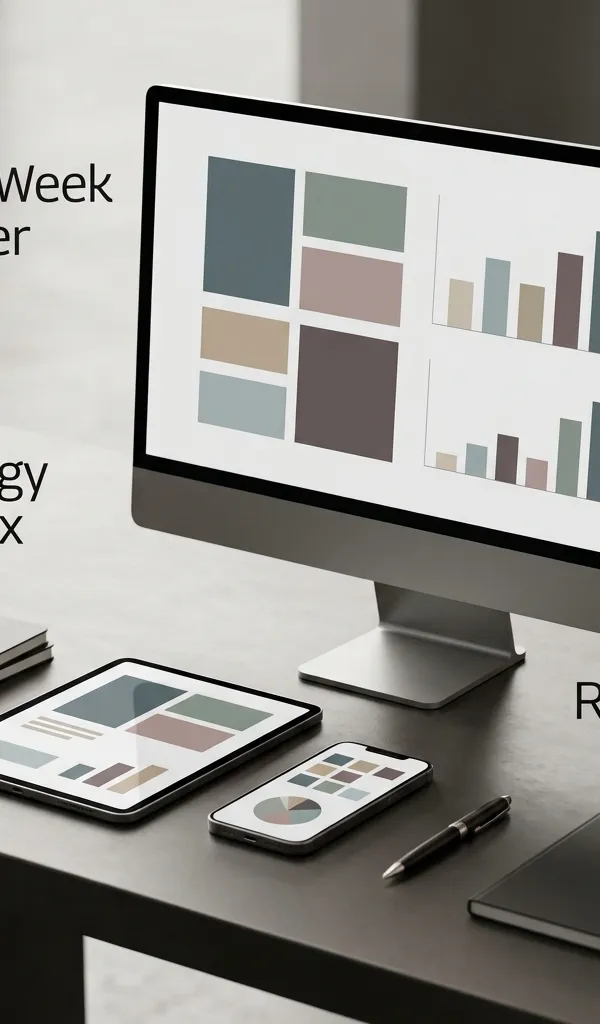
Bill Gates Think Week Strategy Planner & Yellow Pad Deep Reading Tracker
Interactive single-file digital workstation for secluded strategic retreats, marginalia note-taking, paperpile tracking, and Tidal Wave executive memos.
$22.99₫499,000

Cal Newport Deep Work Time-Block Planner & Focus Block Dashboard
The definitive single-file interactive workspace engineered for uncompromising cognitive focus, 30-minute time-blocking, distraction isolation, and elite mental output.
$24.99₫549,000
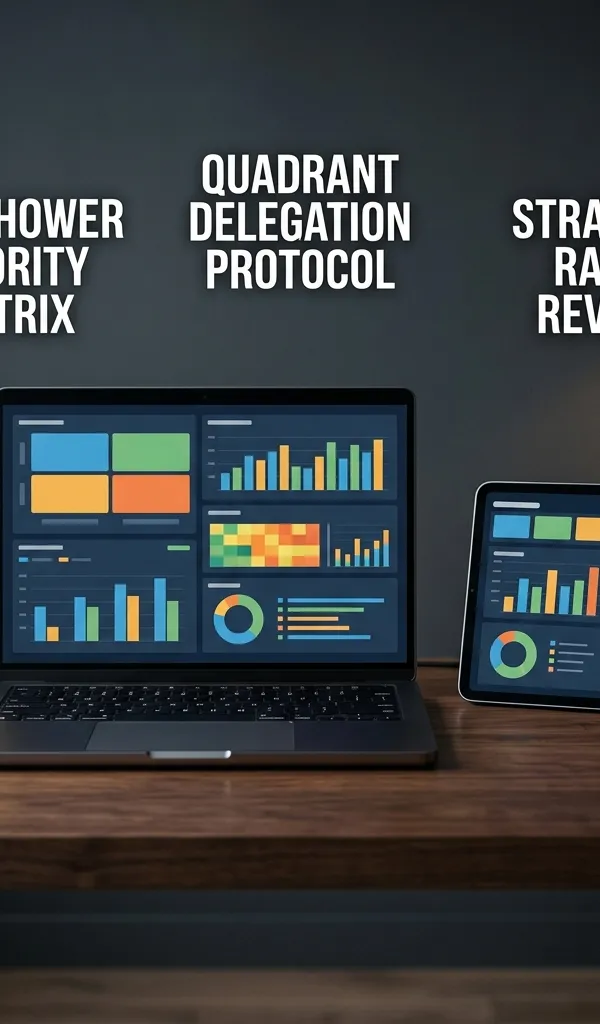
Eisenhower Priority Matrix Dynamic Dashboard & Task Delegation Workbook
Master the art of presidential decision-making: differentiate urgent from important, eliminate the mere urgency effect, and delegate low-value tasks with an executive single-file interactive workspace.
$24.99₫549,000
Guides in this Topic
View all (15) →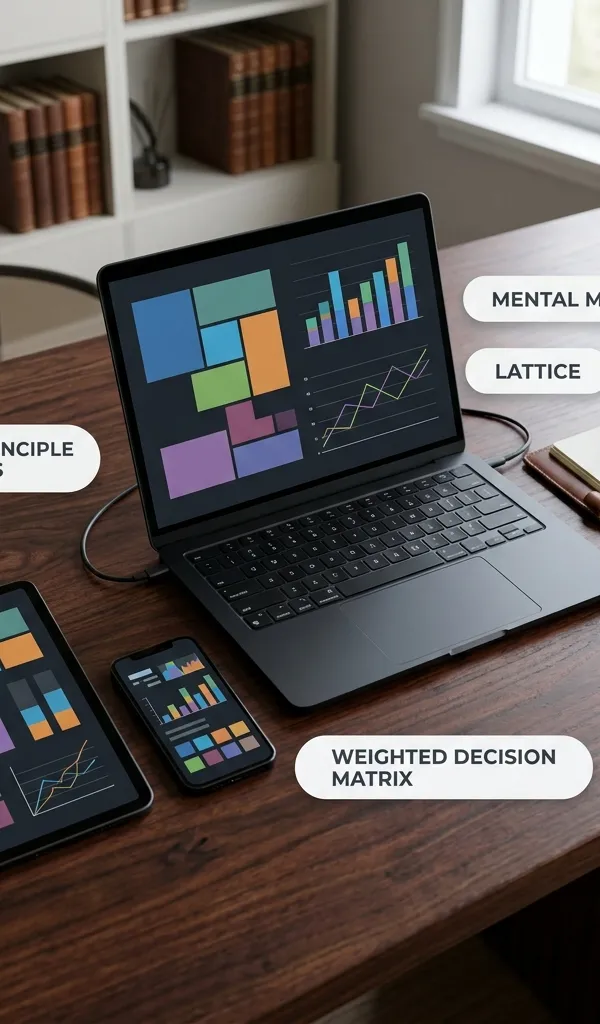 Multi-Disciplinary Wisdom & Executive Decision Frameworks
Charlie Munger Mental Models & Inversion Decision Matrix Guide
Master Charlie Munger's multi-disciplinary mental models lattice, the fatal inversion thinking principle, and weighted executive decision matrices.
Read guide Executive Strategy & Corporate Political Dynamics
The 48 Laws of Power by Robert Greene: Workplace Survival & Strategic Defense Guide
Master Robert Greene's 48 Laws of Power: navigate corporate politics, defend against manipulative coworkers, and protect professional sovereignty.
Read guide Executive Leadership & Startup Strategy
What is Founder Mode? Brian Chesky Hands-On Operations Guide
Discover what Founder Mode is, how Brian Chesky operates Airbnb, why traditional manager mode fails, and how to run a high-craft flat organization.
Read guide Tactical Negotiation & Executive Influence Architecture
Never Split the Difference by Chris Voss: Tactical Empathy & High-Stakes Negotiation Guide
Master Never Split the Difference: tactical empathy, calibrated questions, salary negotiation scripts, and high-stakes deal-closing frameworks.
Read guide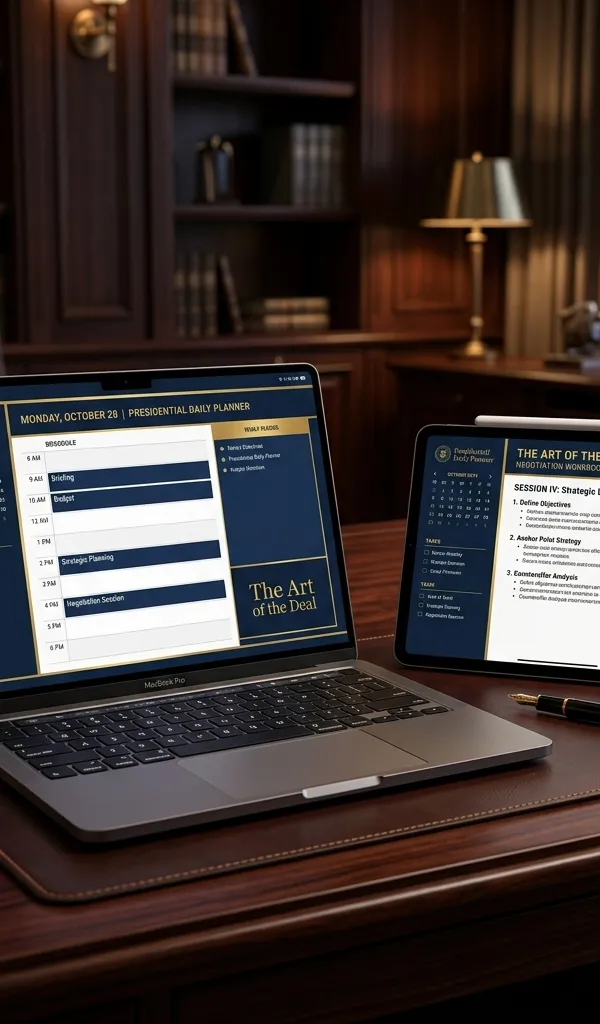 Executive Leadership & Negotiation Strategy
Donald Trump Daily Schedule: 4-Hour Sleep & Art of the Deal System
Deconstruct the Donald Trump daily schedule, 4-hour sleep routine, timebox system, and Art of the Deal negotiation strategies for peak productivity.
Read guide High-Performance Execution & Productivity Architecture
The 10X Rule by Grant Cardone: Massive Action, Extreme Target Setting & Market Domination Guide
Master Grant Cardone's 10X Rule: 10X goal-setting, the 4 degrees of action, overcoming fear of rejection, and daily execution architectures.
Read guide
Topic Pillar
Leadership & Mental Models
High-stakes decision frameworks, first-principles reasoning, and executive operational mastery.
Ask Yinyang Masters inside your AI assistant
Get the same calculations and guidance right in your chat: add the free Yinyang Masters app, then ask in plain English. No account needed.
Try asking: “Find a Yinyang Masters guide about starting a daily spiritual practice.”