



Mark Zuckerberg Year of Efficiency: Lean Operations Playbook Guide

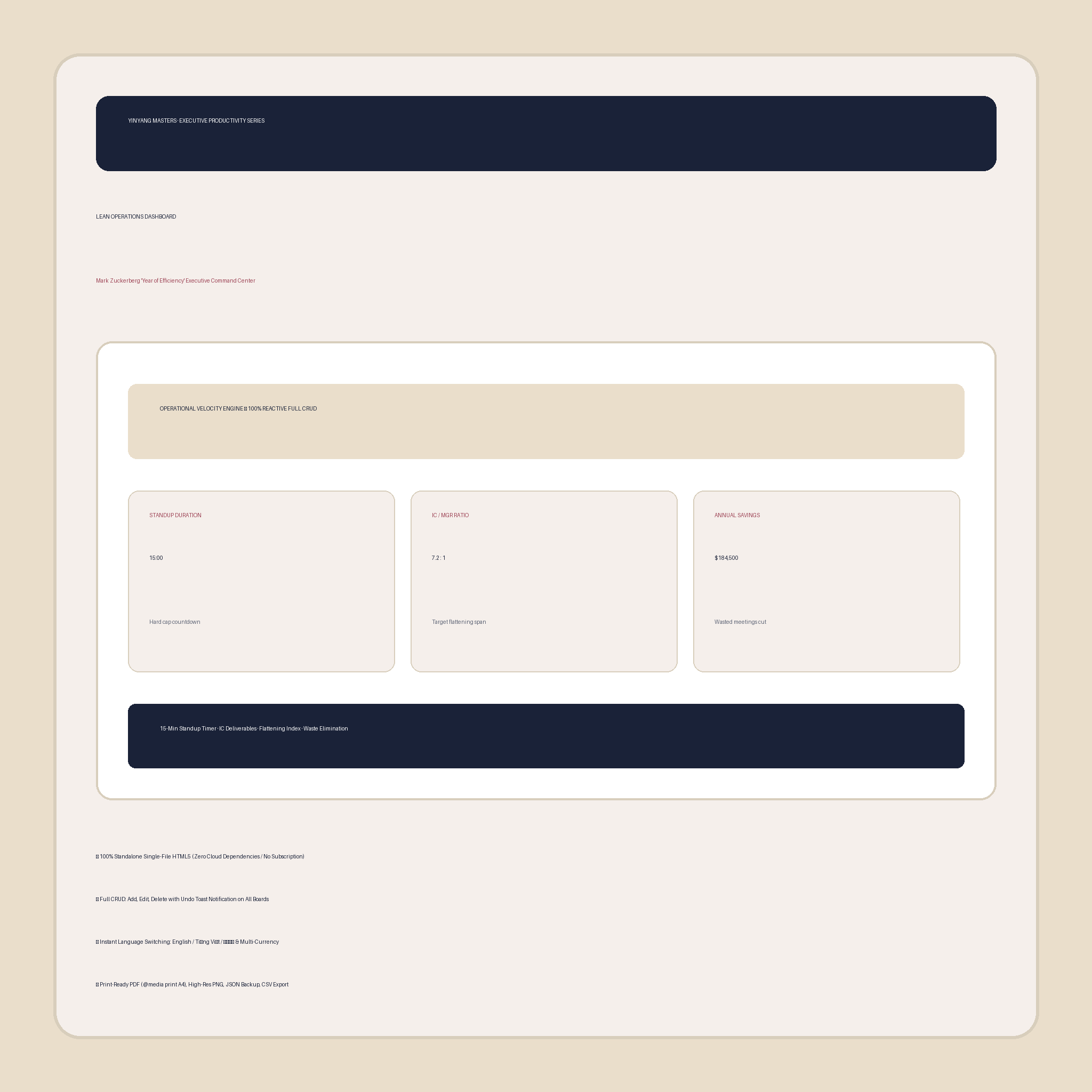
Mark Zuckerberg's Year of Efficiency redefined Silicon Valley corporate governance by aggressively dismantling bloated managerial hierarchies and establishing lean engineering operating protocols. By flattening organizational layers, automating non-core workflows, and empowering individual contributors with direct technical ownership, tech enterprises unlock higher operational leverage, rapid deployment velocity, and record-breaking profitability in capital-constrained environments.
┌──────────────────────────────────────────────────────────────────────────┐
│              MARK ZUCKERBERG'S YEAR OF EFFICIENCY PILLARS                │
├──────────────────────────────────────────────────────────────────────────┤
│ 1. Organizational Flattening: Stripping out middle-management bureaucracy│
│    └──> "Managers managing managers managing engineers" eradicated      │
│ 2. Tooling Over Headcount: Automating workflows via AI and internal code │
│    └──> Infrastructure upgrades multiply individual developer leverage  │
│ 3. Ruthless Project Pruning: Killing non-performing experimental initiatives
│    └──> Capital reallocation toward highest-conviction generative growth │
│ 4. Lean Execution Cycles: Eliminating bloated multi-hour meetings        │
│    └──> Agile daily syncs: Blockers, Milestones, Direct Deployment       │
│ 5. Direct Accountability: Single-threaded technical product ownership   │
│    └──> Faster iteration loops, immediate decision sign-off authority   │
└──────────────────────────────────────────────────────────────────────────┘
1. The Anatomy of Corporate Bloat: What Triggered Meta's Paradigm Shift
Between 2020 and 2022, Silicon Valley tech giants experienced unprecedented capital inflows and ultra-low interest rates. In response, technology firms over-hired aggressively. Organizations expanded across every axis: project management, internal diplomacy, middle management, and speculative venture incubators.
By late 2022, the macroeconomic landscape inverted: interest rates climbed, capital costs escalated, and digital ad spending contracted. More critically, companies faced a silent internal epidemic: organizational paralysis.
Mark Zuckerberg observed that Meta had become bogged down by layers of bureaucracy. In his landmark 2023 memo, he identified the core dysfunctions that paralyze mature tech organizations:
- Managers Managing Managers: Deep organizational hierarchies where decisions traveled through five layers of sign-off, slowing feature deployments from days to quarters.
- Meeting Creep: Executives and senior engineers spent upwards of 25 hours per week in status-update meetings, leaving minimal unbroken blocks for deep technical execution.
- Diffuse Responsibility: When ten people "collaborate" on an initiative, zero individuals feel visceral, personal ownership when the product fails to deliver.
The Year of Efficiency was not merely a cost-cutting campaign; it was a cultural and operational reformation designed to restore the agility, hunger, and speed of a ten-person startup to a global enterprise.
2. The Core Tenets of Lean Operational Architecture
To successfully implement Zuckerberg’s efficiency playbook across any agency, startup, or scale-up business, executives must apply five core structural principles:
┌──────────────────────────────────────────────────────────────────────────┐
│                    THE 5 LEAN OPERATIONAL COMMANDMENTS                   │
├──────────────────────────────────────────────────────────────────────────┤
│ Commandment 1: Flatten Span of Control (Aim for 8 to 10 direct reports)  │
│    │                                                                     │
│    ▼                                                                     │
│ Commandment 2: Elevate Individual Contributors (Reward hands-on craft)   │
│    │                                                                     │
│    ▼                                                                     │
│ Commandment 3: Automate Low-Leverage Chores (Replace bodies with code)   │
│    │                                                                     │
│    ▼                                                                     │
│ Commandment 4: Shorten Feedback Cycles (From monthly review to daily ship)│
│    │                                                                     │
│    ▼                                                                     │
│ Commandment 5: Ruthless Sunsetting (Kill pet projects without remorse)   │
└──────────────────────────────────────────────────────────────────────────┘
1. Flattening the Span of Control
In traditional corporate pyramids, a manager often oversees only three or four subordinates. This encourages micro-management and busywork. In an efficient organization, leaders expand the span of control to eight or ten reports per manager. A wider span prevents leaders from micromanaging daily tasks, forcing them to establish clear guardrails and trust autonomous execution.
2. The "Hands-on-Code" Mandate
Zuckerberg required managers to return to hands-on contributions—writing code, conducting customer demos, or designing core architecture. When management stops being an administrative overhead role and resumes active craftsmanship, alignment friction vanishes.
3. Tooling and Automation Over Headcount
Before hiring a new person to handle manual operations, customer support queues, or internal reporting, lean companies mandate building an automated tool, script, or API pipeline. Adding employees introduces communication channels quadratically ($N(N-1)/2$), whereas adding software scales without organizational drag.
3. Structural Comparison: Bloated Enterprise vs Year of Efficiency
To appreciate the exponential velocity gained through operational flattening, contrast the structural mechanics of conventional management against the Year of Efficiency framework:
| Operational Dimension | Bloated Corporate Structure | Year of Efficiency Lean System |
|---|---|---|
| Organizational Layers | 6 to 9 hierarchical tiers between CEO and builders | 3 to 4 flat tiers with direct executive access |
| Meeting Cadence | Multi-hour status updates and alignment briefings | 15-minute asynchronous or standup syncs |
| Decision Authority | Consensual committees requiring universal sign-off | Single-threaded owner with autonomy to execute |
| Tooling Philosophy | Adding headcount to patch manual operational bottlenecks | Writing automated scripts and AI tools before hiring |
| Project Lifecycles | Multi-year speculative bets protected by vanity metrics | Rapid 30-day proof-of-concept validation or pivot |

4. The 15-Minute Agile Standup Framework in Lean Operations
Meetings represent the highest financial and cognitive expenditure in modern organizations. A sixty-minute meeting with eight senior operators does not cost one hour; it costs eight hours of high-leverage mental capital, plus the cognitive switching cost of interrupted workflow.
While Mark Zuckerberg's internal memos championed cutting bureaucratic layers and maximizing engineering build time rather than establishing a patented meeting template, modern engineering organizations implementing lean operational turnarounds widely adopt the 15-Minute Agile Standup Protocol to maintain synchronous alignment without calendar bloat:
┌──────────────────────────────────────────────────────────────────────────┐
│                   THE 15-MINUTE STANDUP TIMELINE                         │
├──────────────────────────────────────────────────────────────────────────┤
│ Minute 00 - 05 | YESTERDAY'S SHIPPED DELIVERABLES                        │
│    └──> Pure objective facts: PRs merged, deals closed, tickets resolved │
│ Minute 05 - 10 | TODAY'S MISSION-CRITICAL TARGET                         │
│    └──> One single priority outcome per operator (No laundry lists)      │
│ Minute 10 - 15 | REMOVAL OF IMMEDIATE BLOCKERS                          │
│    └──> Technical bottlenecks or dependency locks cleared immediately   │
└──────────────────────────────────────────────────────────────────────────┘
The Non-Negotiable Rules of the 15-Minute Standup:
- Stand Physically: If remote, keep cameras on with participants standing up. Physical discomfort prevents meandering philosophical tangents.
- Zero Problem-Solving During Standup: Identify blockers during the 15 minutes, but solve them afterward in targeted 1-on-1 breakout channels. Never hold the group hostage.
- No Slide Decks: Presenting slides encourages performative storytelling. Operators speak strictly to live metrics, deployed code, or interactive dashboards.
5. Cognitive Energy Management: Insights from Zuckerberg's Operating Discipline
Beyond enterprise strategy, Mark Zuckerberg's approach to personal cognitive energy management provides valuable lessons for operators. In long-form podcast interviews (including conversations with Lex Fridman and Joe Rogan), Zuckerberg has highlighted core habits that structure his working cadence: prioritizing intensive physical conditioning (Brazilian Jiu-Jitsu and MMA) to reset mental static, maintaining a minimalist wardrobe to eliminate daily decision fatigue, and carving out deep, uninterrupted blocks for product architecture.
While executive schedules fluctuate dynamically and tech leaders do not operate on rigid corporate timetables, productivity researchers commonly synthesize these publicly shared interview insights into an illustrative daily rhythm:
07:00 - 08:00 | Morning Physical Conditioning (Jiu-Jitsu / MMA training to clear cognitive static)
08:00 - 09:00 | Family Time & Decision-Minimalist Morning Prep (Wardrobe simplification)
09:00 - 12:00 | Uninterrupted Deep Focus Block (Product architecture & strategic engineering)
12:00 - 13:00 | Clean Nutrition & Walking Decompression
13:00 - 16:30 | Synchronous Alignment & High-Leverage Technical Decisions
16:30 - 18:30 | Exploration & Emerging Technology Sync
18:30 - 21:00 | Family Dinner, Reading & Evening Recovery
Note: This schedule represents an illustrative composite of Zuckerberg's publicly discussed training and energy management principles, rather than an officially published corporate schedule.
6. How to Deploy the Year of Efficiency Inside Small Businesses & Agencies
Small businesses often assume that "efficiency" is only relevant to Fortune 500 corporations executing mass layoffs. In reality, lean operations are even more critical for 5-person agencies, boutique consultancies, and independent software vendors:
Step 1: Conduct an Asynchronous Meeting Audit
Review every recurring meeting on your calendar. If a meeting serves solely to broadcast information, eliminate it immediately and replace it with a structured Slack update, Loom video, or shared dashboard.
Step 2: Establish Single-Threaded Ownership
For every core operational function—lead generation, client delivery, payment operations, product uptime—assign exactly one owner. Shared responsibility is abdicated responsibility.
Step 3: Implement Visual Operations Dashboards
Eliminate the endless back-and-forth question: "What is the status of project X?" By adopting a centralized, real-time operations dashboard, every team member has instant visibility into active sprints, pending approvals, and operational velocity.
7. Practical Implementation: Tools to Run Lean Operations
Deploying Zuckerberg's Year of Efficiency principles requires purpose-built operational infrastructure that enforces clarity and eliminates administrative waste:
Explore our dedicated tools to deploy lean operating systems immediately:
- Lean Operations Dashboard & Standup Meeting Efficiency Tracker: An interactive single-file HTML workspace featuring an automated 15-minute standup timer, sprint velocity tracker, project pruning calculator, and team output metric cards.
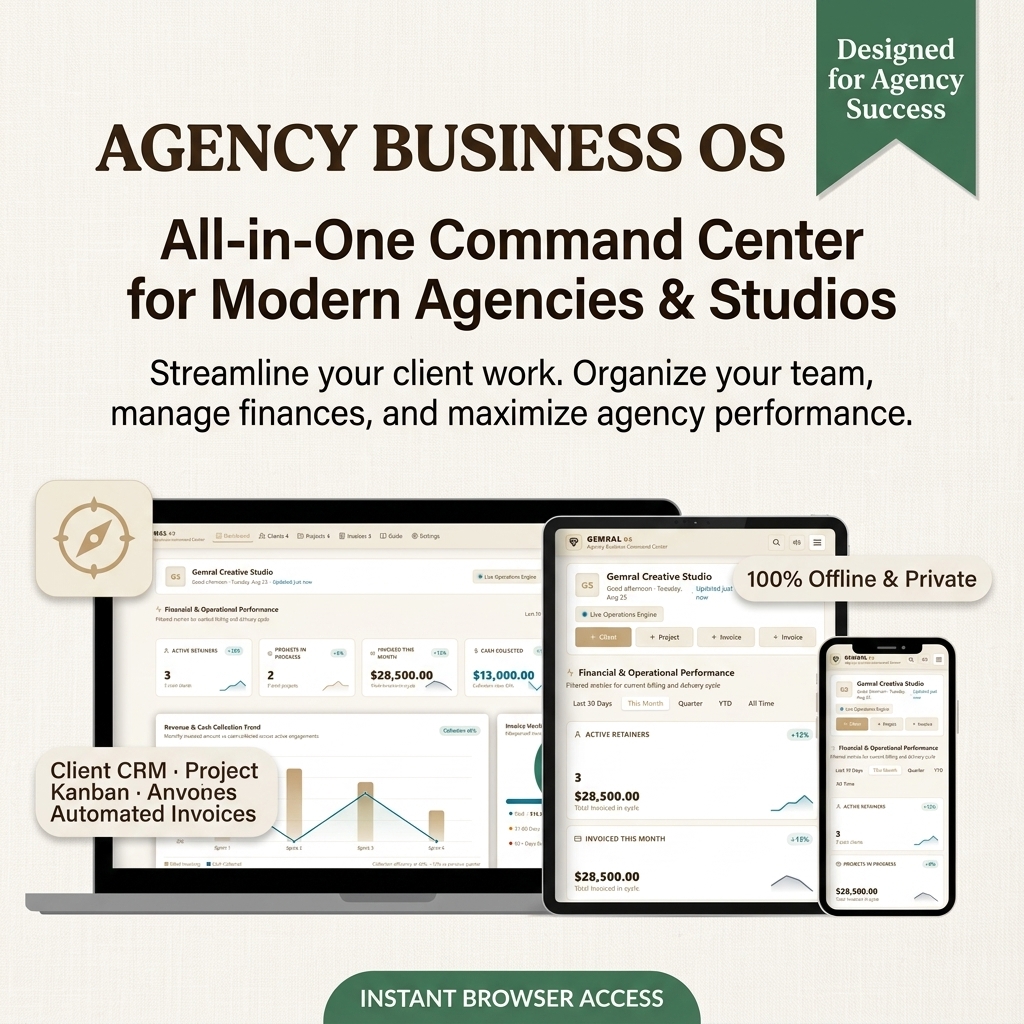
- Agency Business OS & Client Portal Architecture: A comprehensive operating system designed to streamline client management, contract delivery, and financial forecasting with minimal administrative overhead.
- Steve Jobs Minimalist Decision Journal & Ruthless Prioritization Matrix: Pair Zuckerberg's lean execution with Jobs' ruthless 2x2 prioritization matrix to maintain relentless corporate focus.
Strategic Topic Frameworks & Practical Connections
To deepen your practical mastery and build an integrated operational workflow within this topic, explore these complementary guides:
- Implement the execution protocols in The 48 Laws of Power by Robert Greene: Workplace Survival & Strategic Defense Guide to systematically strengthen your foundational routine.
- Explore the strategic principles detailed in Sam Altman Daily Routine: Unreasonable Conviction & AI Workflow Guide for advanced optimization and mental clarity.
- Apply the structured methods from Satya Nadella Leadership Style & The Learn-It-All Growth Mindset Guide to maintain long-term momentum and consistency.
8. Frequently Asked Questions
Does the Year of Efficiency mean hiring freezes and employee burnout?
No. When executed correctly, lean operations protect top talent from burnout by eliminating redundant middle-management reviews, bureaucratic paperwork, and useless meetings. High-performing individual contributors experience higher job satisfaction when granted autonomy and direct technical ownership over their work.
How does organizational flattening affect career progression for ambitious employees?
Flattening shifts career progression away from political ladder-climbing toward technical craftsmanship and demonstrable business impact. Instead of striving to become a manager of people, top operators advance through elite Individual Contributor (IC) tracks, commanding executive-level compensation based on the scope of their direct output.
What is the ideal duration and participant count for a daily standup meeting?
The ideal duration is strictly 15 minutes or fewer. The optimal team size follows Jeff Bezos's "Two-Pizza Rule": between 5 and 8 participants. When teams exceed 10 members, divide the standup into sub-functional operational pods to preserve rapid cadence and accountability.
How do lean companies track output without micromanaging remote employees?
Lean organizations focus exclusively on outcomes rather than presence. By utilizing clear delivery gates, commit velocity metrics, and centralized operations dashboards, managers evaluate teams based on shipped deliverables, resolved bottlenecks, and revenue growth rather than hours logged in a chair.
Notice & Disclaimer: This guide is for executive, organizational strategy, and educational purposes only. It does not constitute legal, financial, tax, or corporate governance advice. Consult qualified legal counsel and labor professionals when implementing organizational restructurings or operational policy changes.
Explore verified real-time macro telemetry, market catalysts, and capital flow intelligence.
Equity momentum radar monitoring tech efficiency measures, headcount restructuring ROI, and free cash flow surges.
Tools featured in this guide
Lean Operations Dashboard & Standup Meeting Efficiency Tracker
Streamline engineering and business operations inspired by Mark Zuckerberg's Year of Efficiency with a strict 15-minute standup timer, flattening index, and waste backlog.
$24.99₫549,000
Agency Business OS & Interactive Client Portal
The all-in-one command center for creative agencies and boutique studios to manage clients, retainers, and billing.
$39₫849,000
Steve Jobs Minimalist Decision Journal & Ruthless Prioritization Matrix
Master radical simplicity with the Morning Mirror routine, Steve Jobs 2x2 Focus Matrix, Top 3 of 10 Elimination Rule, and Cognitive Energy Budget.
$22.99₫499,000
Guides in this Topic
View all (15) →- Executive Performance & Cognitive Energy Management
Steve Jobs Daily Routine & Ruthless Simplicity: Minimalist Protocol Guide
Discover Steve Jobs' daily routine, mirror reflection habit, uniform system, and ruthless 2x2 prioritization matrix to eliminate decision fatigue.
Read guide 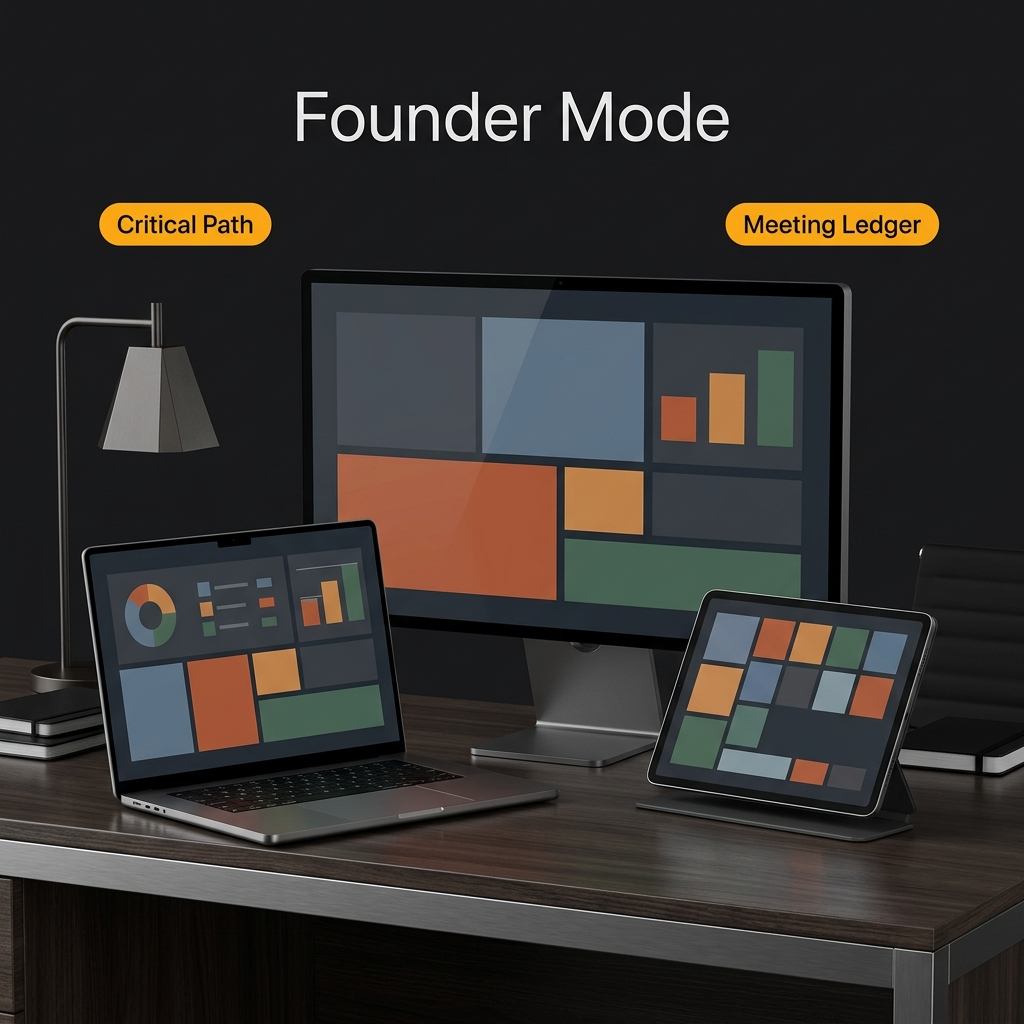 Executive Leadership & Startup Strategy
What is Founder Mode? Brian Chesky Hands-On Operations Guide
Discover what Founder Mode is, how Brian Chesky operates Airbnb, why traditional manager mode fails, and how to run a high-craft flat organization.
Read guide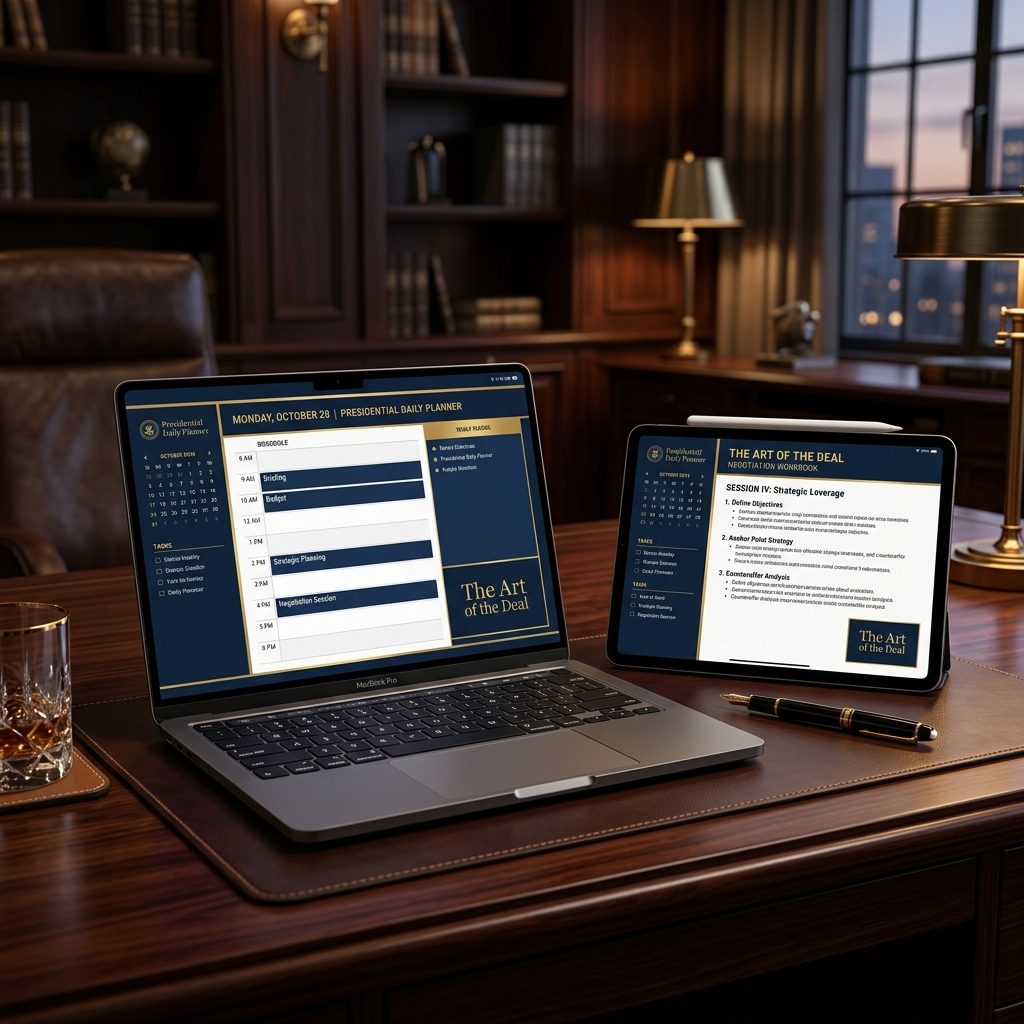 Executive Leadership & Negotiation Strategy
Donald Trump Daily Schedule: 4-Hour Sleep & Art of the Deal System
Deconstruct the Donald Trump daily schedule, 4-hour sleep routine, timebox system, and Art of the Deal negotiation strategies for peak productivity.
Read guide Executive Leadership
Jensen Huang Daily Routine & Flat Organization Management Framework
Inside the Jensen Huang daily routine and Nvidia flat org model. Learn 5:00 AM mornings, zero 1-on-1 meeting rules, and executive priority planning.
Read guide Executive Productivity & Frontier AI Strategy
Sam Altman Daily Routine: Unreasonable Conviction & AI Workflow Guide
Explore the Sam Altman daily routine, unreasonable conviction philosophy, high-leverage calendar architecture, and autonomous AI pipeline workflows.
Read guide leadership
Satya Nadella Leadership Style & The Learn-It-All Growth Mindset Guide
Discover how Satya Nadella transformed Microsoft through a Learn-It-All growth mindset culture, executive empathy, and lean operational frameworks.
Read guide
Topic Pillar
Leadership & Mental Models
High-stakes decision frameworks, first-principles reasoning, and executive operational mastery.
Ask Yinyang Masters inside your AI assistant
Get the same calculations and guidance right in your chat: add the free Yinyang Masters app, then ask in plain English. No account needed.
Try asking: “Find a Yinyang Masters guide about starting a daily spiritual practice.”