



Andrew Huberman Morning Sunlight & Dopamine Protocol Guide

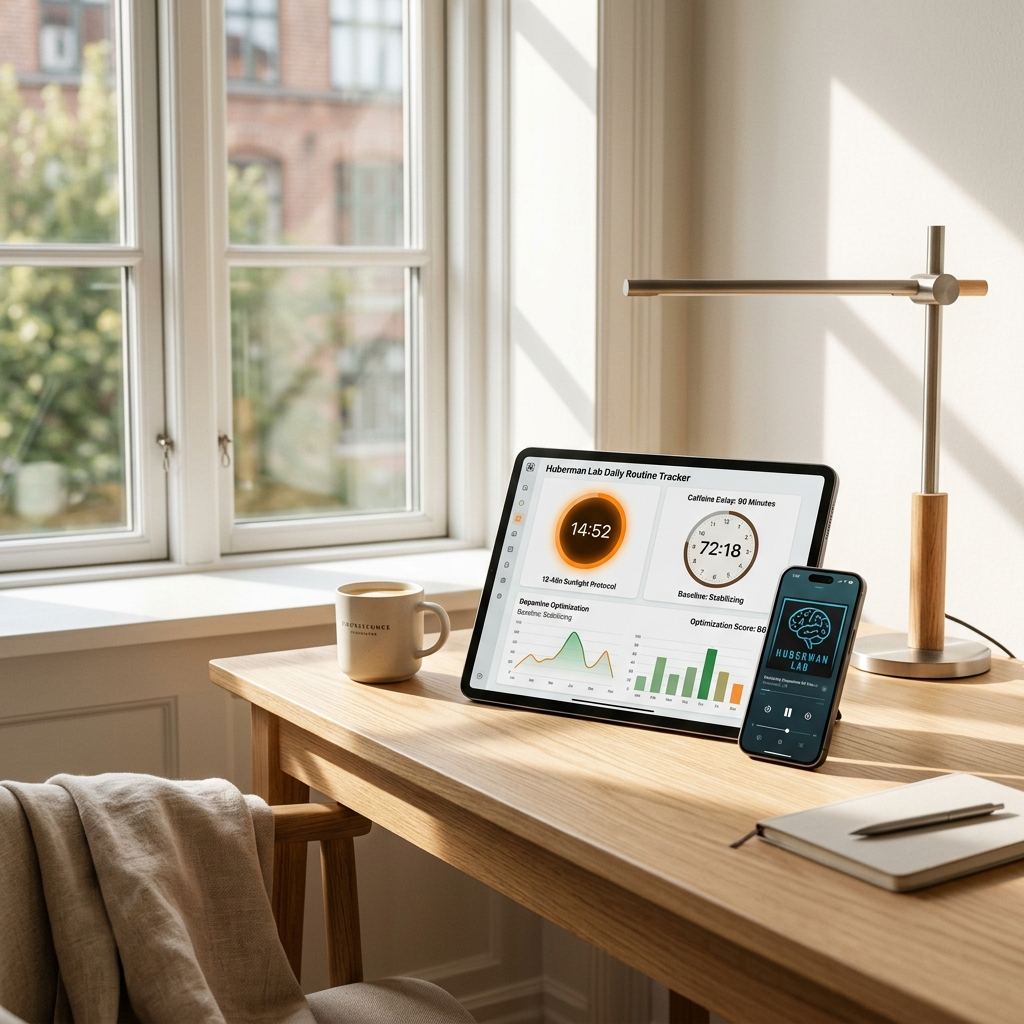
The Andrew Huberman morning routine is a clinical neurobiology framework formulated by Dr. Andrew Huberman, neuroscientist and tenured professor at Stanford University School of Medicine. Grounded in peer-reviewed neural plasticity research, the protocol optimizes circadian biology, hormone cascades, and dopamine receptor sensitivity through precise environmental cues rather than pharmaceutical interventions.
Unlike conventional productivity hacks that prescribe arbitrary wake-up hours or chaotic stimulant consumption, Huberman's method anchors the master biological clock located in the suprachiasmatic nucleus (SCN). By synchronizing natural photon intake with internal biochemical oscillations, practitioners achieve elevated daytime wakefulness, sustained mental focus, and deep nocturnal slow-wave sleep.
1. The Retinal Ganglion Photon Protocol: Why Morning Sunlight Is Non-Negotiable
The single most pivotal anchor in the entire Huberman daily protocol is early morning sunlight viewing. Within 30 to 60 minutes of waking, you must step outside and view natural solar light.
┌─────────────────────────────────────────────────────────────┐
│          RETINAL PHOTON CASCADE & CIRCADIAN ANCHOR          │
├─────────────────────────────────────────────────────────────┤
│ 1. Solar Photons (Morning Low Solar Angle)                  │
│    └──> Intrinsically Photosensitive Ganglion Cells (ipRGC) │
│         └──> Suprachiasmatic Nucleus (SCN Master Clock)     │
│              ├──> Triggers Early Cortisol Pulse (Alertness) │
│              ├──> Elevates Mood & Dopamine in Striatum      │
│              └──> Starts 14-Hour Timer for Melatonin Pulse  │
└─────────────────────────────────────────────────────────────┘
The underlying biological mechanism is mediated by intrinsically photosensitive retinal ganglion cells (ipRGCs). These specialized neurons contain melanopsin, a photopigment uniquely sensitive to blue-yellow wavelength transitions characteristic of low-solar-angle morning light.
When activated, ipRGCs transmit direct electrical pulses along the retinohypothalamic tract to the SCN. This accomplishes three non-negotiable biological mandates:
- Cortisol Awakening Response (CAR): Promotes an immediate, healthy spike in cortisol and epinephrine, establishing daytime alertness and metabolic drive.
- Daytime Melatonin Suppression: Halts residual nocturnal melatonin circulation, eliminating morning brain fog.
- Nocturnal Sleep Timer Calibration: Initiates an internal biochemical countdown that releases sleep-inducing melatonin approximately 14 to 16 hours later.
Clinical Sunlight Exposure Thresholds
- Clear, Sunny Morning: 5 to 10 minutes outdoors without sunglasses (eyeglasses and contact lenses are fine; they do not filter crucial wavelengths).
- Overcast or Cloud-Covered Sky: 15 to 20 minutes outdoors. Clouds filter photons, necessitating longer exposure.
- Dense Rain or Dark Winter Morning: 20 to 30 minutes outdoors, or utilize a 10,000-lux artificial light therapy box positioned at eye level.
Crucial Clinical Warning: Looking through a glass window or windshield is ineffective. Window glass filters out the precise ultraviolet and blue light spectrum required to activate melanopsin cells, reducing biological efficacy by over 90%.
2. The 90-Minute Caffeine Delay: Eliminating the Afternoon Crash
The standard corporate routine of drinking espresso immediately upon waking is a recipe for severe midday exhaustion. Dr. Huberman advocates delaying caffeine consumption by 90 to 120 minutes after waking.
| Timing Window | Biological State | Caffeine Impact | Downstream Effect |
|---|---|---|---|
| 0-15 Minutes Waking | Residual adenosine remains in cerebral circulation | Competitively blocks adenosine receptors without clearing adenosine | Severe crash at 2:00 PM when caffeine metabolizes |
| 90-120 Minutes Waking | Natural cortisol pulse and light exposure clear adenosine naturally | Caffeine binds to clean, empty receptors | Clean, sustained alertness without late-day rebound fatigue |
During wakefulness, your brain consumes ATP, accumulating a metabolic byproduct called adenosine. Adenosine creates homeostatic sleep pressure by binding to neuronal receptors. While sleeping, your glymphatic system and neural circuits clear adenosine.
When you wake, a small reservoir of residual adenosine remains. If you immediately flood your bloodstream with caffeine (an adenosine receptor antagonist), caffeine monopolizes those receptors, leaving adenosine circulating freely. As caffeine is metabolized around 1:30 PM to 2:00 PM, the accumulated adenosine floods back onto receptor sites, producing the notorious afternoon crash.
By delaying caffeine until 90 to 120 minutes post-waking, your natural cortisol pulse and physical movement clear residual adenosine naturally, ensuring that subsequent caffeine intake delivers clean, prolonged cognitive performance.
To track your exposure windows and exact delay timers offline, utilize the interactive Huberman Lab Science-Based Daily Routine & Dopamine Optimization Tracker, built with local storage chronometers and clinical protocol checksheets.
3. Deliberate Cold Exposure & Baseline Dopamine Dynamics
Dopamine is the primary neuromodulator governing motivation, drive, and goal-directed behavior. A critical contribution of Dr. Huberman's work is distinguishing between transient dopamine peaks and the tonic dopamine baseline.
DOPAMINE WAVE ARCHITECTURE:
Peak Height  ▲
             │       /---\\ (High Synthetic Spike: Social Media / Stimulants)
             │      /     \\
Baseline ────┼─────/───────\\───────────────/──────── (Depressed Trough: Craving & Apathy)
             │              \\             /
             │               \\___________/
             └───────────────────────────────────────► Time
When you experience an intense, artificial dopamine spike (e.g., compulsive social media scrolling, sugar rushes, or pharmaceutical stimulants), dopamine levels subsequently plunge below your initial baseline into a refractory trough. This trough manifests as lethargy, apathy, and compulsive cravings.
Conversely, deliberate cold exposure—such as a 1 to 3 minute cold shower or cold plunge (10°C to 15°C / 50°F to 59°F)—triggers an entirely different neurochemical dynamic:
- 2.5x Sustained Dopamine Spike: Baseline dopamine and norepinephrine elevate by 250% above baseline.
- Zero Trough Effect: Rather than crashing, dopamine levels remain elevated for up to 3 to 4 hours, creating steady, calm focus and intrinsic determination.
- Top-Down Prefrontal Control: Overcoming the cognitive friction of stepping into freezing water activates the anterior mid-cingulate cortex (aMCC), the core brain hub governing willpower and resilience.
4. The 24-Hour Master Implementation Architecture
To operationalize the neurobiology protocols into a seamless daily rhythm, adhere to this chronological structure:
06:30 AM ── Wake up + 500ml water with sea salt electrolytes
06:45 AM ── 15-Minute outdoor sunlight viewing (no sunglasses)
07:30 AM ── Deliberate cold shower (2 mins at 12°C) or Zone 2 movement
08:15 AM ── First coffee/tea (concludes 90-minute delay window)
08:30 AM ── First 90-Minute Ultradian Deep Work Block
12:30 PM ── Nutrient-dense lunch + brisk walk in natural daylight
02:00 PM ── 20-Minute Non-Sleep Deep Rest (NSDR) or Yoga Nidra
06:00 PM ── Low-angle sunset viewing (melatonin protection circuit)
08:30 PM ── Blue light curfew: dim overhead lighting, engage reading
10:30 PM ── Optimal sleep onset in cool, pitch-dark environment
Pairing this physiological routine with strategic prioritization frameworks—such as the Warren Buffett 5/25 Avoid-At-All-Costs Planner and Founder Mode Hands-On Operations Dashboard—ensures that your biological vitality directly translates into compounding creative and financial achievement.
Strategic Topic Frameworks & Practical Connections
To deepen your practical mastery and build an integrated operational workflow within this topic, explore these complementary guides:
- Implement the execution protocols in Arnold Schwarzenegger 'Sleep Faster' Workout & 6 Rules Guide to systematically strengthen your foundational routine.
- Explore the strategic principles detailed in Atomic Habits Habit Stacking & 2-Minute Rule Guide for advanced optimization and mental clarity.
- Apply the structured methods from Benjamin Franklin 13 Virtues & 24-Hour Schedule Guide to maintain long-term momentum and consistency.
5. Frequently Asked Questions (FAQ)
Can I wear contact lenses or prescription glasses during morning sunlight viewing?
Yes. Eyeglasses and contact lenses focus light onto your retina without filtering the critical blue-yellow wavelengths necessary to trigger melanopsin. However, do not wear sunglasses, transition lenses, or baseball caps that shield your eyes from natural sky light.
What if I wake up before sunrise?
If you wake up in pitch darkness, turn on bright artificial indoor lights (or a 10,000-lux daylight lamp) to signal wakefulness to your brain. Then, as soon as the sun rises, step outside for 10 to 15 minutes of natural sunlight viewing.
How does Non-Sleep Deep Rest (NSDR) restore dopamine?
Clinical trials conducted at Stanford demonstrate that 20 minutes of NSDR or Yoga Nidra slows brainwave frequency to theta and delta states. This reduces central sympathetic tone, clears cortisol, and accelerates dopamine replenishment within the basal ganglia striatum, providing the cognitive rejuvenation of a 90-minute sleep cycle without grogginess.
What is the optimal temperature for deliberate cold exposure?
Dr. Huberman recommends water between 10°C and 15°C (50°F to 59°F). The clinical benchmark is that the water should be uncomfortably cold so that you genuinely want to get out, yet safe enough to remain in for 1 to 3 continuous minutes without risking hypothermia.
Research & References
For comprehensive editorial standards and health/financial disclaimers, view our Editorial Policy.
Tools featured in this guide
Huberman Lab Science-Based Morning Routine & Dopamine Optimization Tracker
Interactive single-file digital workstation for circadian rhythm alignment, 15-minute sunlight protocol, 90-minute caffeine delay, and baseline dopamine management.
$24.99₫549,000
Warren Buffett 5/25 Avoid-At-All-Costs Planner & 20-Slot Life Decision Journal
Interactive single-file digital workstation for ruthless prioritization, 5/25 distraction defense, and Charlie Munger's 20-slot lifetime investment punch card.
$24.99₫549,000
Founder Mode Operations Dashboard & Zero-Management Tracker
Interactive single-file digital command center for hands-on operational control, skip-level directive dispatch, and zero-management bureaucracy elimination.
$22.99₫499,000
Guides in this Topic
View all (26) → Mental Toughness & Peak Discipline
David Goggins Accountability Mirror & 40% Rule Guide
Master David Goggins' mental toughness system: the Accountability Mirror ritual, breaking through the 40% rule governor, and the Cookie Jar.
Read guide Discipline & Daily Habits
How Many Sleep Cycles a Night: Circadian Rhythm & Energy Routine Guide
Learn how many sleep cycles a night you need to eliminate brain fog, fix circadian rhythm sleep disorders, and reset your sleep schedule effortlessly.
Read guide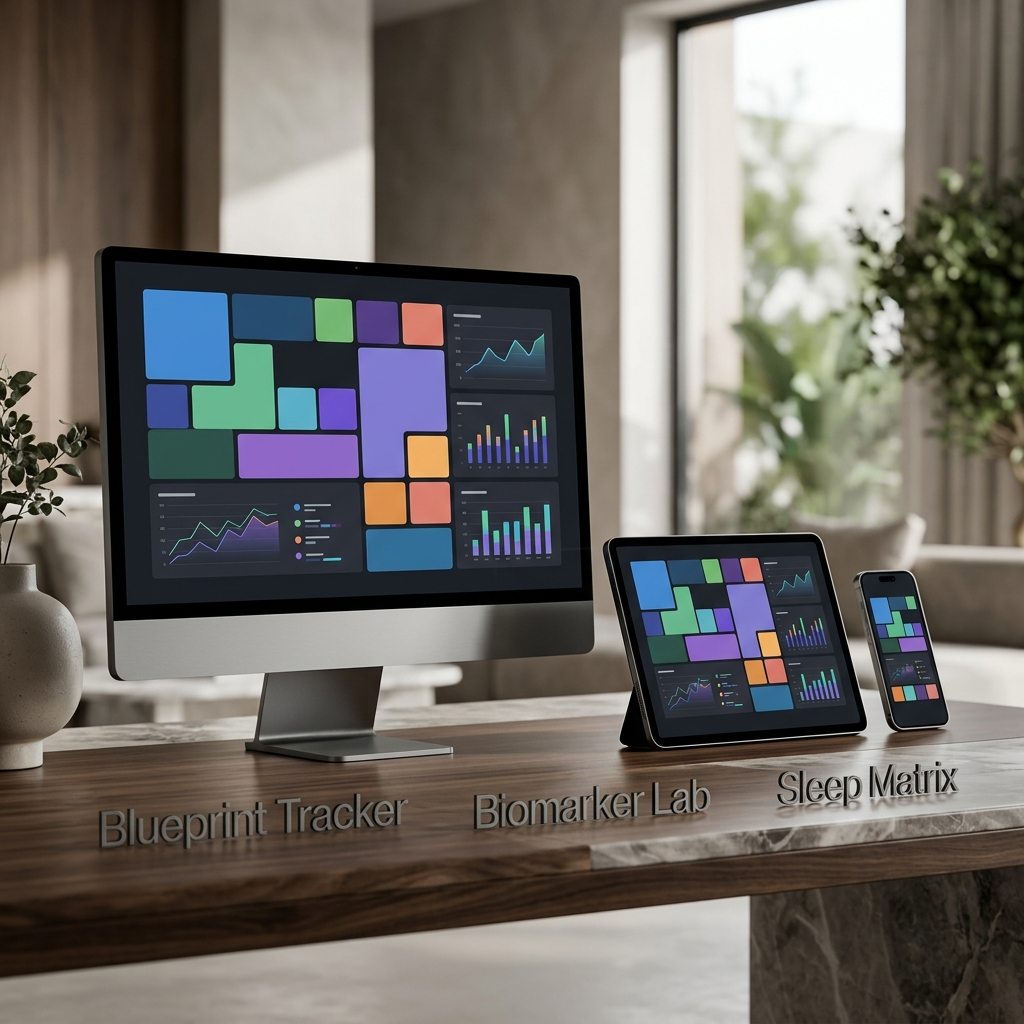 Longevity Architecture & Biohacking Systems
Bryan Johnson Blueprint Routine: The Autonomous Health & Biomarker Protocol Guide
Explore the Bryan Johnson Blueprint routine: 100+ biomarker tracking, sleep architecture, 11:00 AM meal window, and data-driven longevity systems.
Read guide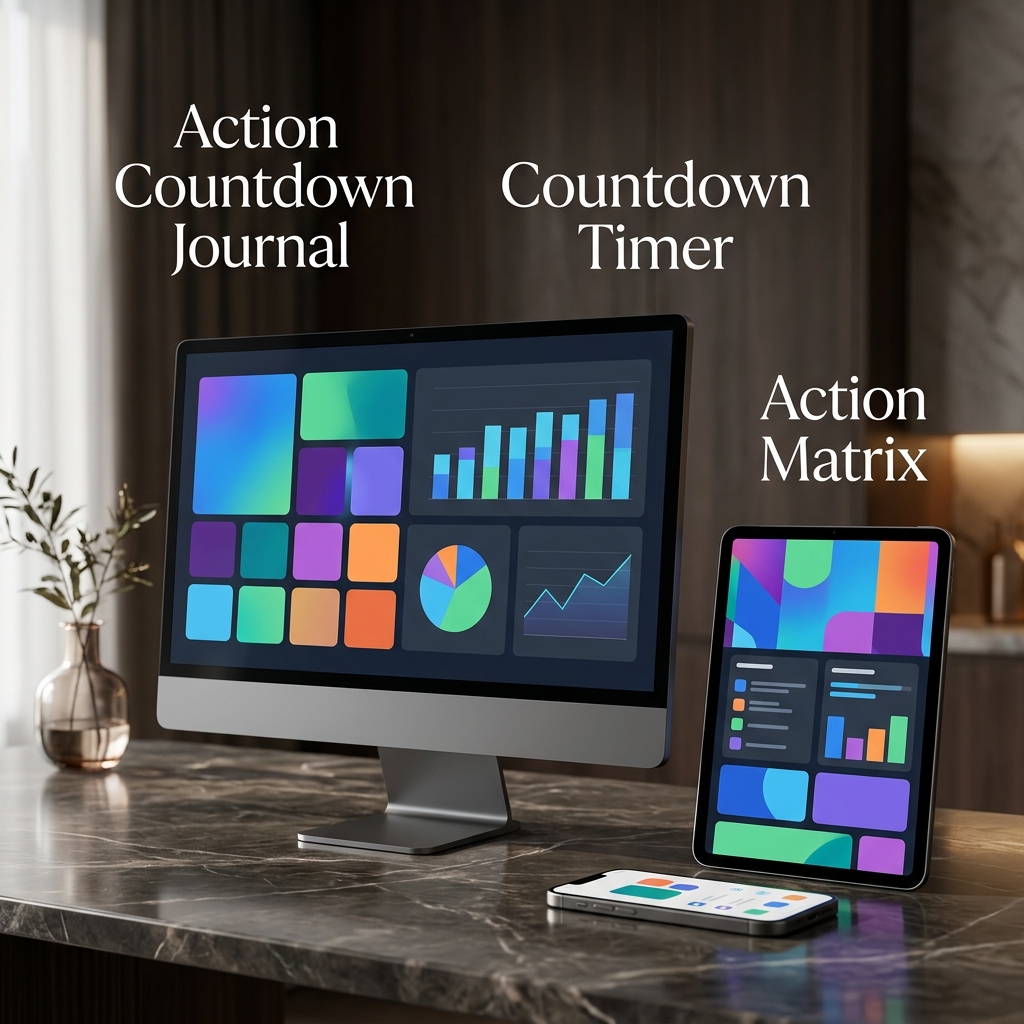 Personal Productivity & Cognitive Reframing
The 5 Second Rule & Mel Robbins Countdown Protocol Guide
Master Mel Robbins' 5 Second Rule and 5-4-3-2-1 countdown technique to conquer procrastination, awaken prefrontal cortex action, and build momentum.
Read guide habits
75 Hard Challenge Rules: The Ultimate Daily Tracking & Anti-Reset Guide
Master 75 Hard rules: two 45-min workouts, water intake schedule, 75 Soft alternative, and anti-reset daily habit tracking system.
Read guide wellness
75 Soft Challenge Rules: Dopamine Reset Habit Guide
Discover 75 Soft Challenge rules. Master dopamine reset protocols, mindful daily workouts, hydration targets, and non-restrictive habit tracking.
Read guide
Topic Pillar
Discipline & Daily Habits
Frameworks, routines, and systems for relentless consistency, morning discipline, and mental fortitude.
Ask Yinyang Masters inside your AI assistant
Get the same calculations and guidance right in your chat: add the free Yinyang Masters app, then ask in plain English. No account needed.
Try asking: “Build me a 30-day morning habit stack.”