



Atomic Habits Habit Stacking & 2-Minute Rule Guide

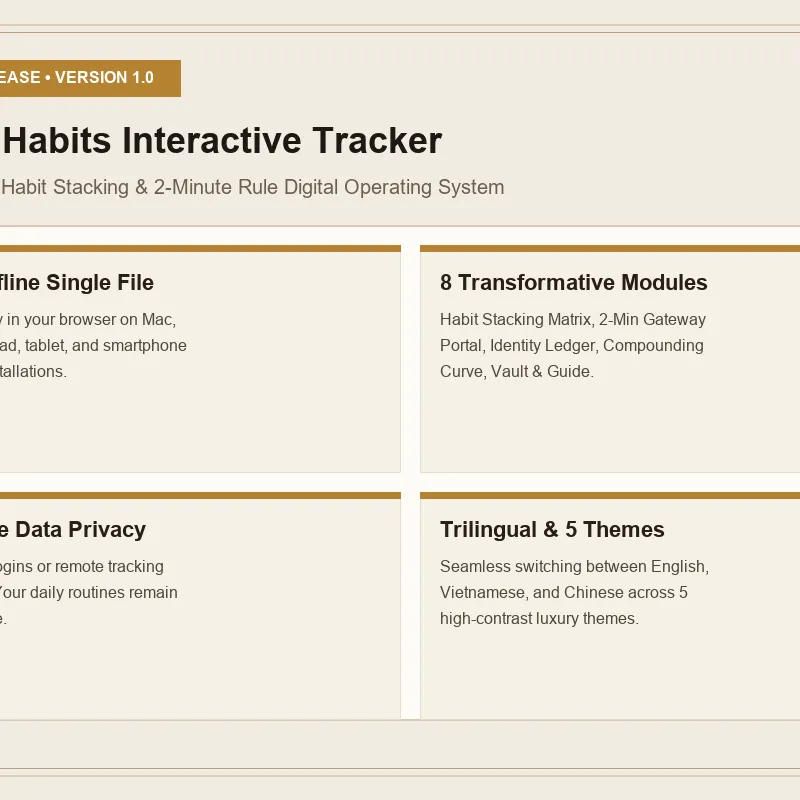
Habit stacking is a behavioral design framework from James Clear's Atomic Habits that pairs an existing daily routine with a desired new action using the formula: After [current habit], I will [new habit]. Combined with the 2-minute rule, it eliminates cognitive resistance and scales micro-behaviors into effortless identity-based compound success.
Building sustainable self-discipline rarely fails because people lack willpower or ambition. In his seminal work Atomic Habits, author James Clear reveals that human behavior follows neurological feedback loops deeply encoded into our daily environments. Most personal improvement initiatives collapse because people attempt monumental lifestyle overhauls overnight without an architectural bridge to their existing daily rhythms. By understanding habit stacking and the 2-minute rule, ambitious professionals can leverage existing neural pathways to build unbreakable routines.
1. The Neurobiology of Habit Stacking: Synaptic Pruning & Neural Pathways
Habit stacking is a special application of implementation intentions, originally developed by psychologist Peter Gollwitzer and popularized by James Clear. At its biological core, habit stacking relies on a neurological process known as synaptic pruning.
During childhood and adolescence, the human brain develops millions of synaptic connections. As we age and repeat specific behaviors, our brain strengthens frequently used neural pathways while pruning away dormant connections. When you pour your morning coffee, brush your teeth, or close your laptop at the end of the workday, those actions are governed by heavily myelinated, highly efficient neural superhighways that require virtually zero conscious glucose consumption.
The genius of habit stacking lies in hitchhiking a new, fragile habit onto an established, automated routine. Rather than pairing a new intention with a vague temporal cue (such as "I will meditate tomorrow morning"), habit stacking binds the action to an immutable sensory trigger:
$$\text{Implementation Formula: } \text{After [CURRENT HABIT]}, \text{I will [NEW HABIT]}$$
Examples of High-Leverage Habit Stacks:
- Morning Deep Work Stack: "After I place my brewed coffee on my desk, I will immediately open the Atomic Habits Habit Stacking Tracker and log my top three micro-intentions."
- Somatic Recovery Stack: "After I close my laptop screen for lunch, I will stand up and perform two minutes of diaphragmatic breathing."
- Evening Reflection Stack: "After I plug my smartphone into its charger outside the bedroom, I will review my 30-Day Dopamine Reset Habit Tracker entries."
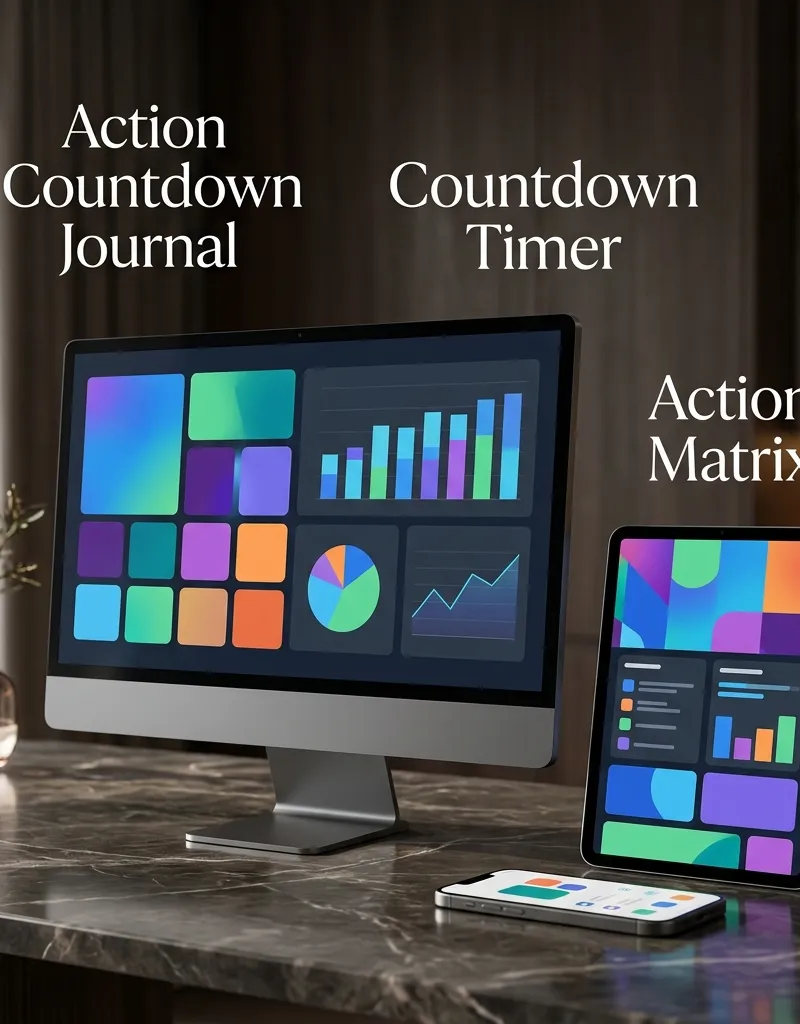
2. The 2-Minute Rule: Overcoming Activation Energy & The Law of Least Effort
Even with a crystal-clear trigger, many ambitious routines fail due to excessive cognitive friction at the point of initiation. Physics dictates that moving an object from a complete standstill requires significantly more energy than sustaining its velocity once in motion. In behavioral psychology, this is known as activation energy.
The 2-Minute Rule states:
"When you start a new habit, it should take less than two minutes to do."
The purpose of the 2-minute rule is not to achieve the end objective in 120 seconds, but to master the art of showing up. A habit must be firmly established before it can be optimized. If you cannot standardize the ritual of initiation, you can never scale its intensity.
+-----------------------------------------------------------+
|               SCALING A MICRO-HABIT VIA 2 MINUTES         |
+-----------------------------------------------------------+
| Stage 1 (Entry Gate)    : Read one page before sleeping.   |
| Stage 2 (Ritualization) : Read for five minutes.          |
| Stage 3 (Deep Focus)    : Read for fifteen minutes.       |
| Stage 4 (Mastery)       : Read an entire chapter daily.   |
+-----------------------------------------------------------+
When you feel paralyzed by procrastination or mental exhaustion, pairing the 2-minute rule with the prefrontal cortex reset technique found in The 5 Second Rule Action Journal (counting 5-4-3-2-1 down to physical movement) interrupts cognitive hesitation and initiates automatic momentum.
3. The Four Laws of Behavior Change in Practical Execution
James Clear structures habit formation into a four-stage behavioral feedback loop: Cue, Craving, Response, and Reward. To engineer positive habits and eradicate self-defeating loops, apply the Four Laws of Behavior Change:
- The 1st Law (Make It Obvious): Environmental design dictates human choices. Place visual trackers, workout shoes, or books directly in your physical line of sight. Never hide habit catalysts behind digital subfolders or closed cupboards.
- The 2nd Law (Make It Attractive): Combine temptation bundling with your stacks. Pair an action you need to do with an activity you want to do (e.g., only listen to your favorite industry podcast while walking on the treadmill).
- The 3rd Law (Make It Easy): Reduce friction to the absolute minimum. Prepare your digital workspace the night before using the Ivy Lee Method 6-Priority Planner, ensuring your morning begins with zero decision paralysis.
- The 4th Law (Make It Satisfying): The human brain evolved to prioritize immediate gratification over delayed rewards. Checking off a completed streak on a tactile, interactive digital dashboard releases an immediate dopamine surge, reinforcing the neurological desire to repeat the ritual tomorrow.

4. Identity-Based Habits vs. Outcome-Oriented Resolutions
Most goal-setting models focus entirely on outcomes: "I want to earn $100,000," "I want to run a marathon," or "I want to publish a book." Outcome-based goals reside at the superficial perimeter of personal transformation.
Real, sustainable change occurs at the core level of identity:
- Outcome Goal: "My goal is to read a book."
- Identity Shift: "I am a voracious reader who values wisdom."
- Outcome Goal: "My goal is to write 50,000 words."
- Identity Shift: "I am a disciplined writer who produces every morning."
Every single micro-action you take is a vote for the type of person you wish to become. A single push-up does not build Olympic musculature, but it decisively casts a vote for your identity as an athlete. Over weeks and months, these fractional votes accumulate into an undeniable body of empirical self-evidence.
5. Comparative Evaluation: Behavioral Frameworks Architecture
Understanding how habit stacking interfaces with other elite executive productivity models enables you to construct a comprehensive personal operating system:
| Behavioral Dimension | Habit Stacking (Clear) | 2-Minute Rule (Clear) | 5-Second Rule (Robbins) | Ivy Lee Method |
|---|---|---|---|---|
| Core Mechanism | Anchors new action to automated daily cue | Strips activation energy to 120 seconds | Counts 5-4-3-2-1 to hijack prefrontal cortex | Ranks 6 vital tasks strictly in sequential order |
| Primary Target | Routine automation & synaptic chaining | Overcoming startup friction & hesitation | Halting cognitive paralysis & self-doubt | Single-tasking & decision fatigue elimination |
| Best Used For | Morning/evening wellness and daily rituals | Creating reading, journaling, or fitness starts | Waking up instantly, sending difficult emails | High-stakes deep work & daily executive focus |
| Cognitive Load | Very Low (operates on existing autopilot) | Extremely Low (minimal physical threshold) | Low (pure physiological impulse) | Medium (requires night-before prioritization) |
| Recommended Tool | Atomic Habits Tracker | Atomic Habits Tracker | 5 Second Rule Journal | Ivy Lee Priority Planner |
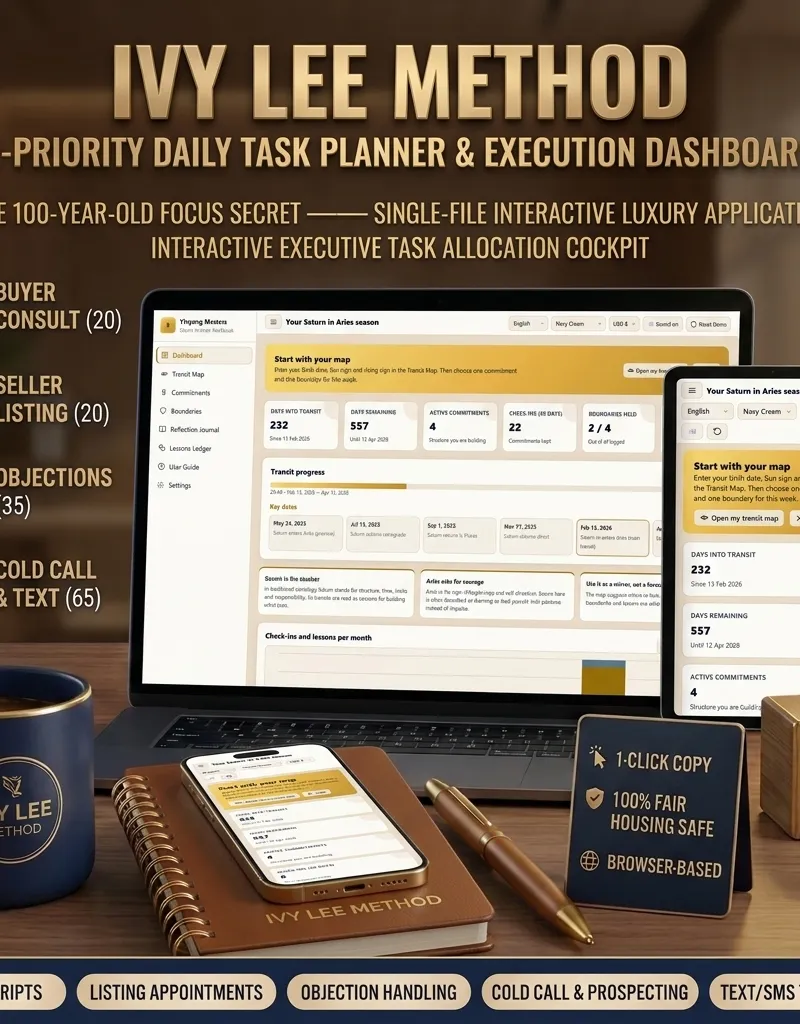
Strategic Topic Frameworks & Practical Connections
To deepen your practical mastery and build an integrated operational workflow within this topic, explore these complementary guides:
- Implement the execution protocols in Benjamin Franklin 13 Virtues & 24-Hour Schedule Guide to systematically strengthen your foundational routine.
- Explore the strategic principles detailed in Bryan Johnson Blueprint Routine: The Autonomous Health & Biomarker Protocol Guide for advanced optimization and mental clarity.
- Apply the structured methods from David Goggins Accountability Mirror & 40% Rule Guide to maintain long-term momentum and consistency.
6. Frequently Asked Questions (FAQ)
What is the primary difference between habit stacking and routine scheduling?
Routine scheduling relies on clock time (e.g., "I will exercise at 7:00 AM"), which frequently collapses when meetings run late or commutes are disrupted. Habit stacking anchors the behavior to an existing physical event (e.g., "After I step out of the shower, I will stretch for two minutes"), making the trigger immune to calendar shifts.
How many habits can I stack together simultaneously?
When beginning, stack exactly one new micro-habit onto an established anchor. Only after the new behavior becomes fully automated (typically 21 to 66 days) should you chain a third behavior. Attempting to stack four or five unproven habits simultaneously induces cognitive overload and causes the entire stack to fracture.
What should I do when my habit stack breaks due to illness or travel?
James Clear advocates the cardinal rule: Never miss twice. Missing one day is an accident; missing two consecutive days is the birth of a new, negative habit. If travel disrupts your environment, scale the habit down to its 10-second version rather than skipping it entirely.
Can the 2-minute rule really build significant life skills?
Yes, because consistency precedes capacity. Running for two minutes will not prepare you for a 26-mile marathon, but it cements the unshakeable daily habit of putting on your running shoes and stepping outside. Once the gateway habit is non-negotiable, increasing duration is effortless.
How does habit stacking prevent willpower depletion throughout the day?
Willpower is a finite metabolic resource governed by glucose availability in the brain. Habit stacking circumvents conscious decision-making by triggering action through subconscious cue-response associations, conserving executive energy for complex strategic challenges.
7. Tactical Implementation: Structuring Your Habit Stack Dashboard
To transition theoretical understanding into daily behavioral reality, follow this five-step implementation protocol:
- Inventory Current Anchors: List 10 habits you perform daily without thinking (e.g., brushing teeth, drinking water, brewing tea, locking the door).
- Select One High-Leverage Habit: Identify the single keystone habit that would yield the greatest compounding return on your career or health.
- Formulate Your Exact Equation: Draft your stack using specific language. Avoid vague words like "read more" or "exercise better."
- Enforce the 2-Minute Gateway: Ensure step one takes less than 120 seconds to execute.
- Track Streaks Interactively: Deploy the dedicated Atomic Habits Habit Stacking Tracker to record daily execution, monitor streak momentum, and review weekly adherence metrics.
By systematizing your behavioral triggers and honoring the compound effect of micro-habits, you construct a resilient personal operating system capable of weathering external volatility and delivering sustained excellence.
Tools featured in this guide

Atomic Habits Habit Stacking & 2-Minute Rule Interactive Tracker Dashboard
$27.99₫609,000

The 5 Second Rule Action Journal & Anti-Procrastination Daily Matrix
Mel Robbins Neuroscience-Backed Metacognitive Interactive Dashboard for Instant Execution
$22.99₫499,000

30-Day Dopamine Reset & Habit Tracker | Interactive Neuro-Detox App
Rebuild your focus in 30 days: a dopamine menu, daily habit tracking and gentle screen-time resets in one private interactive file.
$24.99₫549,000
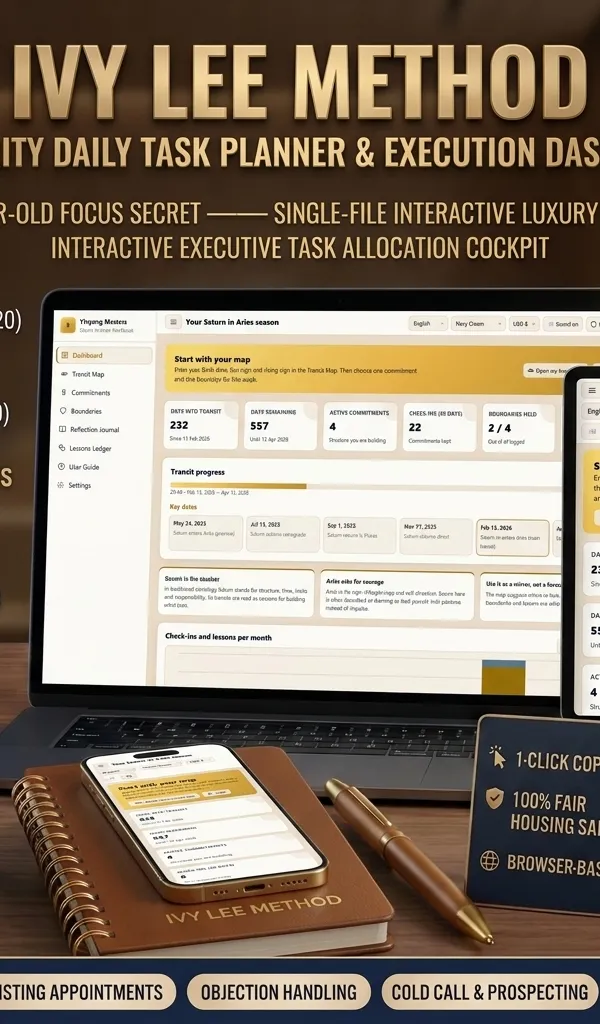
Ivy Lee Method 6-Priority Daily Task Planner & Execution Dashboard
The 100-Year-Old $25,000 Focus Secret — Offline Single-File Interactive Luxury Application
$24.99₫549,000
Guides in this Topic
View all (26) →- Personal Productivity & Cognitive Reframing
The 5 Second Rule & Mel Robbins Countdown Protocol Guide
Master Mel Robbins' 5 Second Rule and 5-4-3-2-1 countdown technique to conquer procrastination, awaken prefrontal cortex action, and build momentum.
Read guide  ADHD Focus & Neurodivergent Productivity
ADHD Dopamine Menu & Executive Dysfunction Routine Guide
Overcome ADHD paralysis and executive dysfunction with a custom dopamine menu: appetizers, entrees, sides, and desserts to reset focus and motivation.
Read guide Longevity Architecture & Biohacking Systems
Bryan Johnson Blueprint Routine: The Autonomous Health & Biomarker Protocol Guide
Explore the Bryan Johnson Blueprint routine: 100+ biomarker tracking, sleep architecture, 11:00 AM meal window, and data-driven longevity systems.
Read guide Cognitive Performance
30-Day Dopamine Detox Challenge & Dopamine Menu Framework
Transform mental focus with actionable dopamine detox rules. Build your personalized dopamine menu, reduce digital friction, and track 30-day habit resets.
Read guide habits
75 Hard Challenge Rules: The Ultimate Daily Tracking & Anti-Reset Guide
Master 75 Hard rules: two 45-min workouts, water intake schedule, 75 Soft alternative, and anti-reset daily habit tracking system.
Read guide wellness
75 Soft Challenge Rules: Dopamine Reset Habit Guide
Discover 75 Soft Challenge rules. Master dopamine reset protocols, mindful daily workouts, hydration targets, and non-restrictive habit tracking.
Read guide
Topic Pillar
Discipline & Daily Habits
Frameworks, routines, and systems for relentless consistency, morning discipline, and mental fortitude.
Ask Yinyang Masters inside your AI assistant
Get the same calculations and guidance right in your chat: add the free Yinyang Masters app, then ask in plain English. No account needed.
Try asking: “Build me a 30-day morning habit stack.”