



30-Day Dopamine Detox Challenge & Dopamine Menu Framework


Establishing structured dopamine detox rules provides an essential behavioral framework for reclaiming cognitive stamina in an era dominated by hyper-rewarding digital stimulation. Rather than pursuing extreme sensory deprivation, effective neuro-behavioral resets replace passive short-form video consumption with intentional low-stimulation hobbies, daily physical movement, and disciplined offline journaling routines over a thirty-day cycle.
Modern digital environments are engineered to hijack our evolutionary neurochemistry. Algorithmic feeds, infinite scrolling interfaces, and instant push notifications flood our brains with sudden spikes of dopamine—the neurotransmitter governing motivation, desire, and reward-seeking behavior. When the brain is perpetually overstimulated by frictionless high-dopamine inputs, its baseline receptor sensitivity down-regulates to protect itself. The consequences are acute and familiar: chronic procrastination, brain fog, inability to read long-form books, and profound apathy toward demanding, long-term goals.
True behavioral recovery does not require locking yourself in a dark room or abandoning technology altogether. Instead, it involves resetting your baseline dopamine response through deliberate behavioral boundaries. This guide explains the neurological science of dopamine down-regulation, defines sustainable rules for a 30-day reset, introduces the viral "Dopamine Menu" concept, and provides practical tracking frameworks.
1. The Neurobiology of Dopamine Down-Regulation and Fatigue
Dopamine is not the chemical of pleasure itself; it is the neurochemical of anticipation, craving, and pursuit. Understanding its homeostatic mechanics clarifies why digital addiction feels so exhausting:
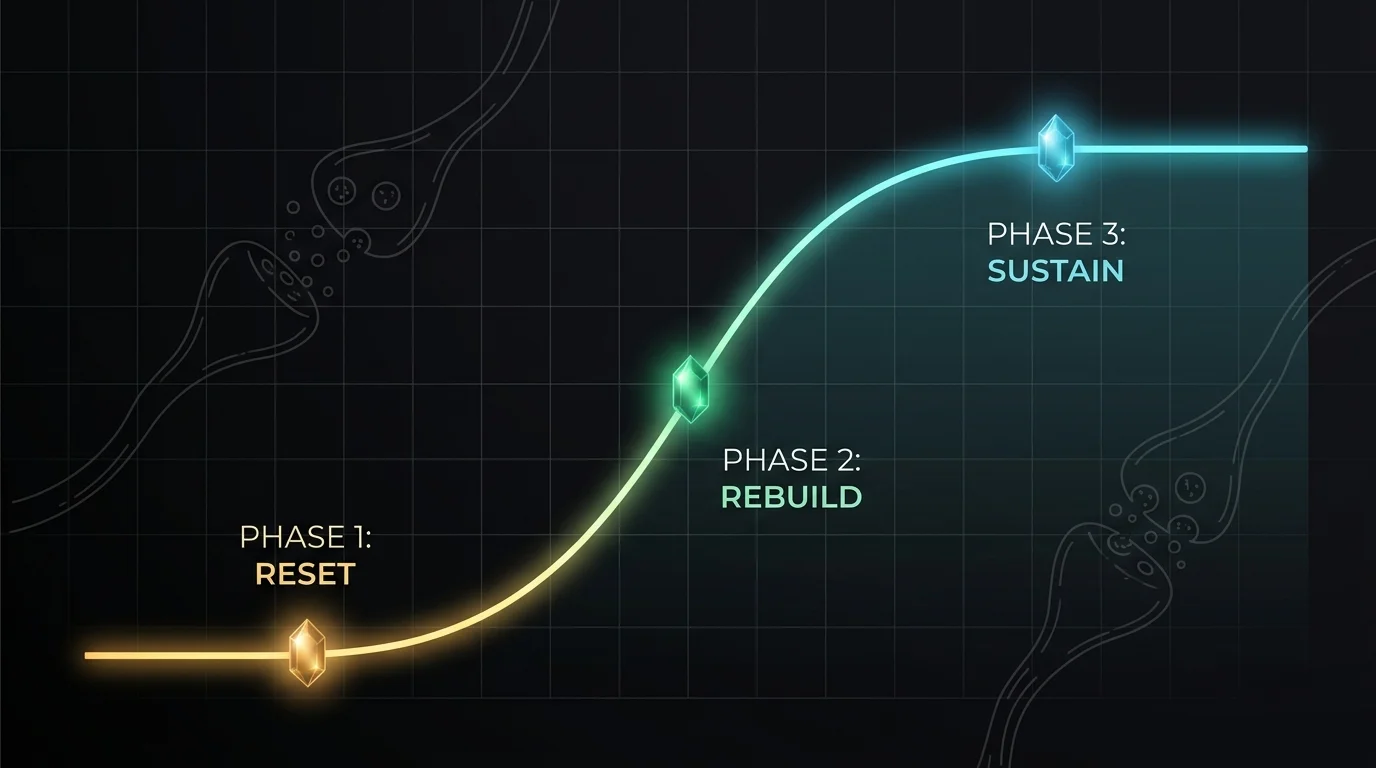
- The Dopamine Baseline vs. Spikes: Engaging with hyper-stimulating inputs (TikTok, algorithmic reels, casino-style gaming) creates massive dopamine spikes. However, every unnatural spike is followed by a compensatory crash below your original baseline.
- Receptor Down-Regulation: To prevent neurotoxic overstimulation, neurons reduce the density of available D2 dopamine receptors. Over time, normal everyday activities—such as reading, writing code, or cooking—feel agonizingly dull.
- The Tolerance Trap: You require increasingly intense stimulation simply to feel normal, resulting in compulsive phone checking and fragmented working blocks.
A 30-day dopamine reset allows your neural receptors time to replenish and up-regulate, restoring your innate capacity to experience deep satisfaction from sustained, focused labor.
2. Core Dopamine Detox Rules for a Sustainable 30-Day Reset
Effective habit reformation requires clear, non-negotiable boundaries rather than vague good intentions. Commit to these four foundational rules throughout your 30-day cycle:
- Zero Short-Form Algorithmic Video: Delete or block apps featuring infinite-scroll video feeds (TikTok, Instagram Reels, YouTube Shorts). These deliver the highest density of hyper-stimulation with the least cognitive effort.
- The Morning Phone Blackout: Do not look at screens for the first 60 minutes after waking. Let your cortisol and dopamine awaken naturally through morning daylight exposure, hydration, and light physical stretching.
- Friction at the Workstation: Keep personal smartphones in another room during designated deep-work blocks. If a device must remain near you, switch its display to grayscale mode to eliminate visual reward triggers.
- Structured Evening Digital Sunset: Discontinue all recreational screens 60 minutes before bedtime, transitioning to physical reading, stretching, or offline journaling.
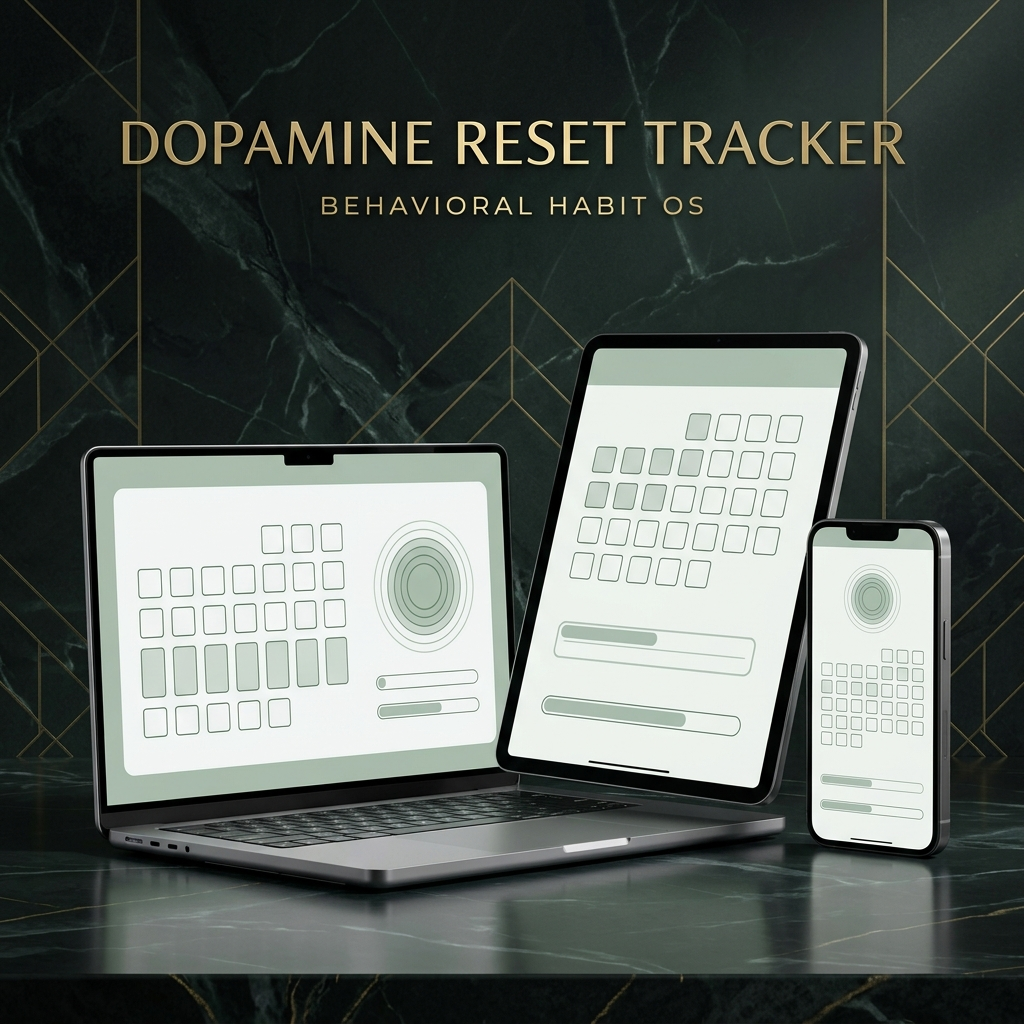
To track your compliance without being drawn back into digital notifications, use the dedicated 30-Day Dopamine Reset & Habit Tracker.
3. Designing Your Personal Dopamine Menu
The primary reason most detox challenges fail is that individuals cut out high-dopamine activities without preparing rewarding replacements. Psychologists have popularized the Dopamine Menu—a curated list of healthy, nourishing activities categorized like a restaurant menu:
- Appetizers (Quick 5-Minute Resets): Stepping outside to view sunlight, brewing a cup of herbal tea, doing 20 push-ups, or practicing box breathing.
- Entrees (Deep 30-to-60 Minute Immersion): Preparing a nutritious home-cooked meal, taking a nature walk without headphones, reading a physical book, or playing an acoustic instrument.
- Sides (Background Enhancers): Playing instrumental lo-fi music while tidying your desk, diffusing essential oils, or working beside an open window.
- Desserts (Mindful Luxuries): Enjoying an intentional movie night with friends or watching a curated documentary on a weekend evening with zero multitasking.
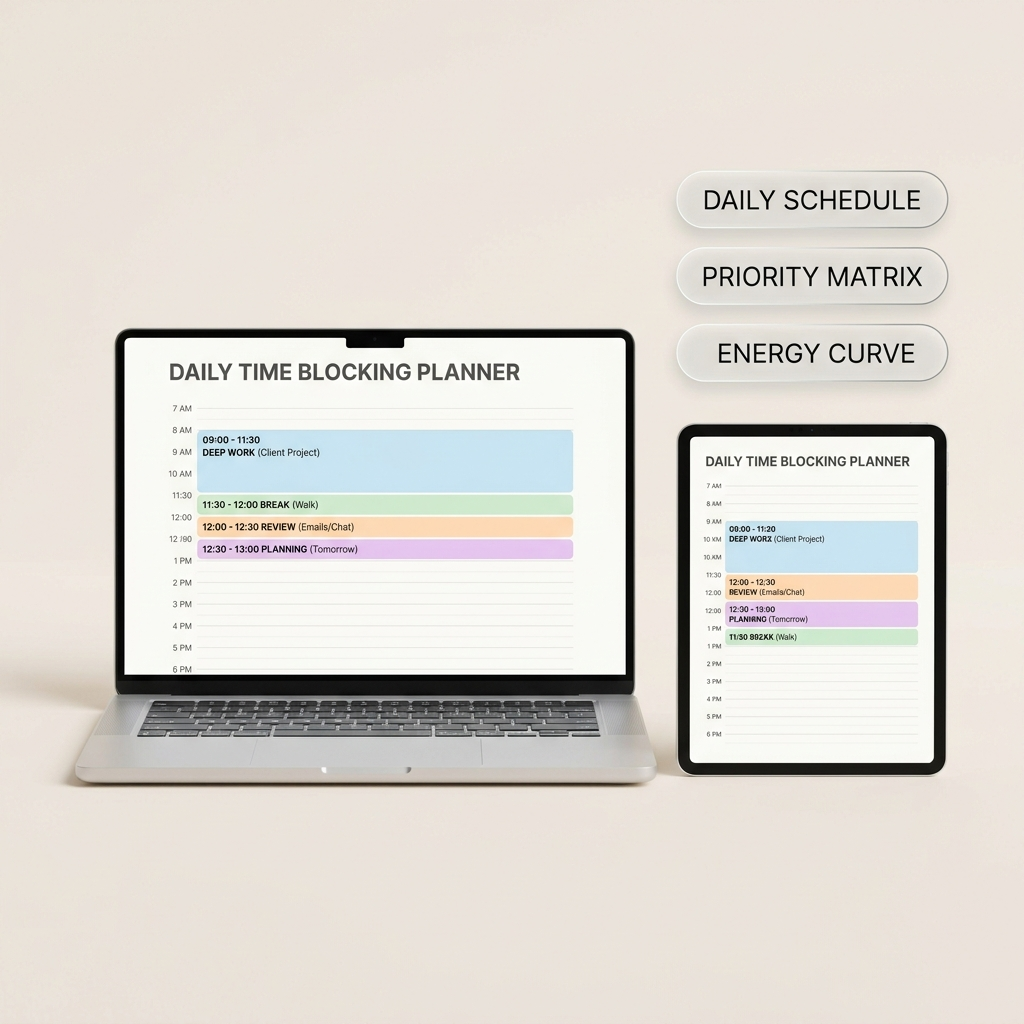
Pairing this menu with rigorous daily prioritization can be organized seamlessly through the Time-Blocking Daily Planner.
4. Integrating Emotional Introspection and Mental Reconditioning
When digital distractions are stripped away, repressed psychological emotions—such as career anxiety, loneliness, or perfectionism—often surface into conscious awareness.
Rather than fleeing back into your smartphone screen, use this heightened sensitivity as a diagnostic window:
- Shadow Work Integration: Write down the specific uncomfortable thoughts that prompt you to reach for your phone. Explore the deeper roots of your procrastination with the Shadow Work Journal & Workbook.
- Executive Priority Realignment: Re-channel your reclaimed cognitive bandwidth into high-value professional goals using the Executive Daily Planner & Priority Matrix.
5. Comparative Approaches to Behavioral Resets
Evaluating different strategies for managing digital consumption highlights why a structured 30-day reset provides enduring results:
| Behavioral Reset Approach | Difficulty Level | Social & Professional Feasibility | Long-Term Habit Sustainability | Cognitive Clarity Restored |
|---|---|---|---|---|
| Monk-Like Total Isolation | Extreme (Hardcore) | Unrealistic for employed professionals | Very Low; prone to violent rebound | High initially, fragile long-term |
| Unstructured Willpower Alone | Moderate | Easy to start, impossible to maintain | Negligible; fails within 48 hours | Low |
| Structured 30-Day Dopamine Menu | Balanced & Systematic | High (Maintains essential work tech) | High; establishes lifestyle habits | Exceptional; restored attention span |
| Digital Declutter Only | Low | High | Moderate without replacement habits | Moderate |

Strategic Topic Frameworks & Practical Connections
To deepen your practical mastery and build an integrated operational workflow within this topic, explore these complementary guides:
- Implement the execution protocols in Jocko Willink Daily Routine 430am: The Navy SEAL Discipline Guide to systematically strengthen your foundational routine.
- Explore the strategic principles detailed in Jordan Peterson 12 Rules for Life & Future Authoring Guide for advanced optimization and mental clarity.
- Apply the structured methods from Kobe Bryant Workout Routine & Mamba Mentality Relentless Discipline Guide to maintain long-term momentum and consistency.
6. Frequently Asked Questions (FAQ)
What are the basic rules of a dopamine detox?
The core rules include eliminating hyper-rewarding infinite-scroll video feeds, enforcing a 60-minute screen-free morning routine, establishing physical boundaries around phone use during work, and replacing digital scrolling with healthy offline activities from a dopamine menu.
How long does it take for dopamine receptors to reset?
While noticeable reductions in mental fog and impulsive phone checking emerge within 7 to 10 days, full neurochemical receptor up-regulation and behavioral stabilization typically require 30 to 90 days of consistent habit discipline.
Can you still use your computer for work during a dopamine detox?
Yes. A modern dopamine detox targets recreational, algorithmic hyper-stimulation (social media reels, compulsive gaming, binge-watching), not functional, productive work tools required for your profession.
What should you do when you feel intense boredom during a reset?
Recognize that boredom is not an emergency—it is your brain's natural signal that dopamine receptors are recalibrating. Embrace the pause, practice deep breathing, take a short walk, or choose a low-stimulation activity from your Dopamine Menu.
7. Conclusion
Reclaiming your focus is the ultimate competitive advantage in a distracted world. By embracing disciplined neuro-behavioral boundaries and constructing an intentional dopamine menu, you liberate your mind from algorithmic manipulation and rebuild the mental capacity to achieve extraordinary, fulfilling work.
Tools featured in this guide
30-Day Dopamine Reset & Habit Tracker | Interactive Neuro-Detox App
Rebuild your focus in 30 days: a dopamine menu, daily habit tracking and gentle screen-time resets in one private interactive file.
$24.99₫549,000
5-Minute Time-Blocking Daily Planner (Executive Edition)
Interactive single-file digital planner designed for intense productivity, 5-minute time-boxing, priority matrices, and deep work blocks.
$24.99₫549,000
Shadow Work Journal & Nervous System Regulation Workbook
Interactive single-file digital journal for subconscious shadow integration, somatic triggers tracking, and vagus nerve soothing with instant PDF export.
$22.99₫499,000

Executive Daily Planner & Priority Matrix — CEO 14h Schedule & Flat Org Operating System
Master High-Leverage Strategic Focus, 4-Quadrant Eisenhower Prioritization, and Flawless Time Blocking
$22.99₫499,000
Guides in this Topic
View all (26) → habits
Jocko Willink Daily Routine 430am: The Navy SEAL Discipline Guide
Master Jocko Willink's 4:30 AM routine. Complete Navy SEAL discipline schedule, workout protocols, sleep rules, and accountability system.
Read guide habits
75 Hard Challenge Rules: The Ultimate Daily Tracking & Anti-Reset Guide
Master 75 Hard rules: two 45-min workouts, water intake schedule, 75 Soft alternative, and anti-reset daily habit tracking system.
Read guide ADHD Focus & Neurodivergent Productivity
ADHD Dopamine Menu & Executive Dysfunction Routine Guide
Overcome ADHD paralysis and executive dysfunction with a custom dopamine menu: appetizers, entrees, sides, and desserts to reset focus and motivation.
Read guide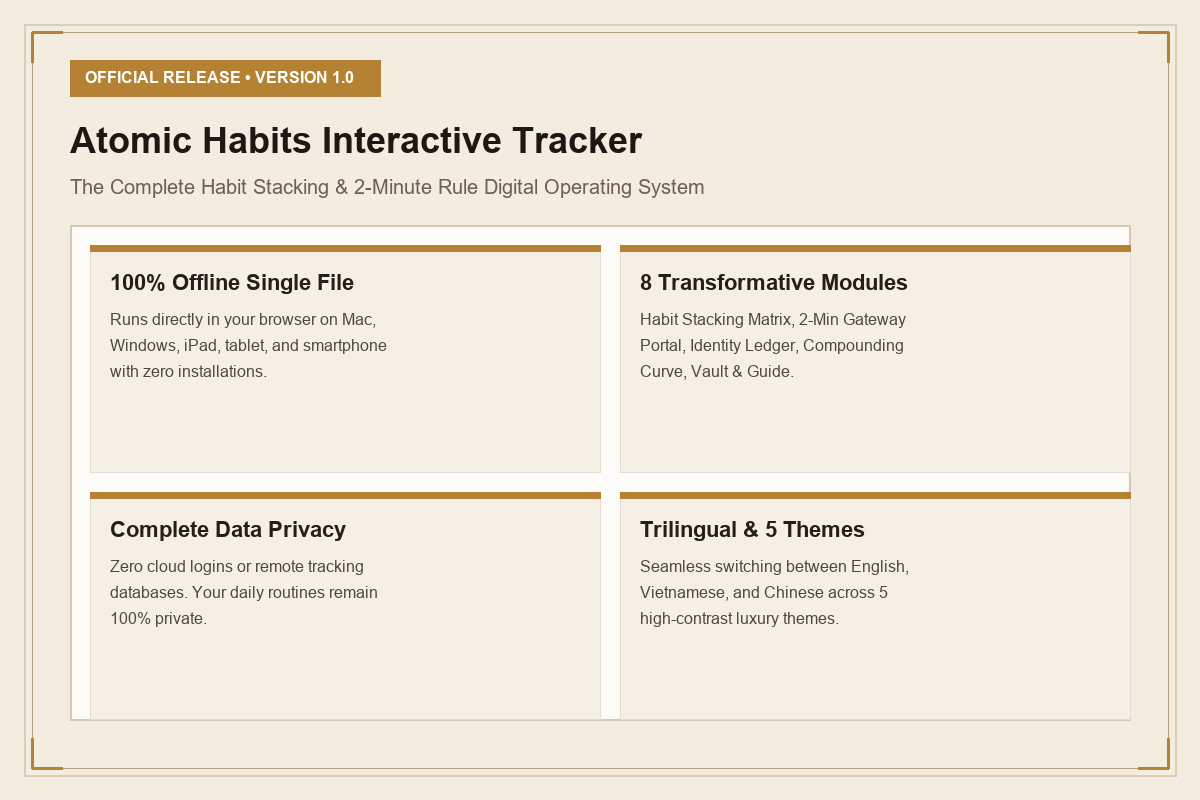 Personal Productivity & Habit Architecture
Atomic Habits Habit Stacking & 2-Minute Rule Guide
Master James Clear's habit stacking technique and 2-minute rule to build consistent routines, break procrastination, and scale personal productivity.
Read guide Longevity Architecture & Biohacking Systems
Bryan Johnson Blueprint Routine: The Autonomous Health & Biomarker Protocol Guide
Explore the Bryan Johnson Blueprint routine: 100+ biomarker tracking, sleep architecture, 11:00 AM meal window, and data-driven longevity systems.
Read guide Productivity
Monk Mode Rules: Architecture for Extreme Focus and 2027 Goal Mastery
Comprehensive guide to monk mode rules and 2027 goal planning. Master deep dopamine detox, quarterly sprint architecture, and distraction elimination.
Read guide
Topic Pillar
Discipline & Daily Habits
Frameworks, routines, and systems for relentless consistency, morning discipline, and mental fortitude.
Ask Yinyang Masters inside your AI assistant
Get the same calculations and guidance right in your chat: add the free Yinyang Masters app, then ask in plain English. No account needed.
Try asking: “Build me a 30-day morning habit stack.”