



The 5 Second Rule & Mel Robbins Countdown Protocol Guide

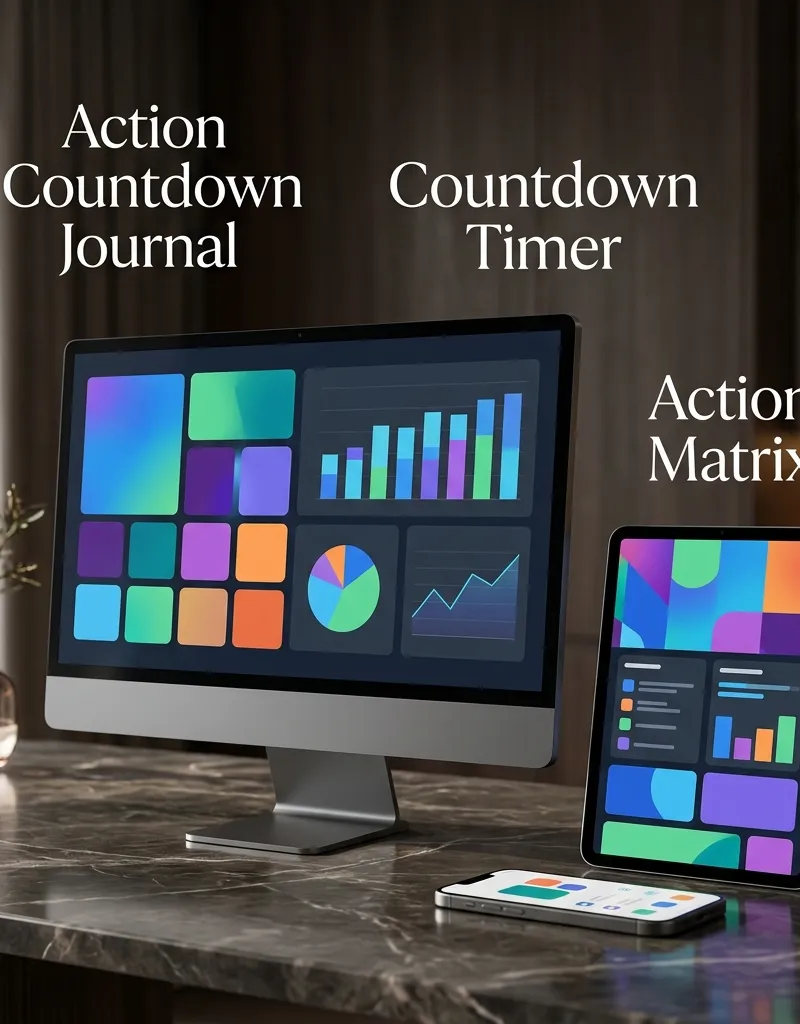
The 5 second rule is a metacognitive behavioral tool developed by Mel Robbins stating that the moment you have an instinct to act on a goal, you must physically move within 5 seconds by counting 5-4-3-2-1 backwards. This interrupts habitual hesitation and actively engages the prefrontal cortex.
Procrastination is rarely a flaw of character or a lack of raw intelligence. In psychological terms, hesitation is an automatic emotional coping mechanism designed to shield our ego from discomfort, potential failure, or energy expenditure. In her groundbreaking international bestseller The 5 Second Rule, author and motivational speaker Mel Robbins uncovered a simple yet scientifically profound neurological intervention: there is a critical five-second window between when you experience an intuitive impulse to act and when your subconscious mind fabricates excuses to stay stagnant.
1. The Neurobiology of the 5-4-3-2-1 Countdown Mechanism
When you encounter a task that triggers anxiety or fatigue, your brain instinctively retreats into autopilot mode, which is regulated by the basal ganglia. The basal ganglia's biological mandate is survival through energy conservation and risk aversion.
When you deliberately count backwards—5, 4, 3, 2, 1—you initiate an intentional cognitive pattern interrupt:
- Backwards Counting Requires Active Focus: Counting forwards (1, 2, 3, 4, 5) is an automated habit stored in your basal ganglia. Counting backwards forces your active working memory to take over, shifting neurological blood flow from the emotional limbic system directly to the prefrontal cortex.
- Prefrontal Cortex Activation: The prefrontal cortex is the executive seat of intentional decision-making, emotional regulation, and voluntary motor action. By stimulating it, you awaken conscious willpower before subconscious rationalizations take root.
- The 5-Second Window of Opportunity: Neuroscientific research confirms that the brain begins manufacturing rationalizations to avoid friction within less than five seconds of an initial impulse. Moving physically before that countdown hits zero cements the decision.
To cultivate this neurological reflex into an enduring life habit, high performers rely on structured tracking systems like The 5 Second Rule Action Journal, capturing their daily countdown triggers and tracking courage metrics over time.
2. Breaking the Procrastination Loop: Feelings vs. Intentional Choices
One of Mel Robbins' most liberating insights is that human beings make almost every decision based on how they feel in the exact moment rather than what they know they should do.
"You are never going to feel like doing the things that are hard, uncomfortable, or scary. If you wait until you feel motivated, you will wait forever."
Motivation is an unreliable, ephemeral emotion. Successful individuals do not possess superhuman reservoirs of enthusiasm; they possess reliable mental protocols to bypass their immediate emotional state.
+-----------------------------------------------------------+
|          THE PARALYSIS OF HESITATION VS. 5-4-3-2-1         |
+-----------------------------------------------------------+
| Trigger -> Impulse -> [Hesitation Window] -> Rationalize  |
|                               |                           |
|                      5-4-3-2-1 Interrupt                  |
|                               v                           |
|                     Immediate Physical Action             |
+-----------------------------------------------------------+
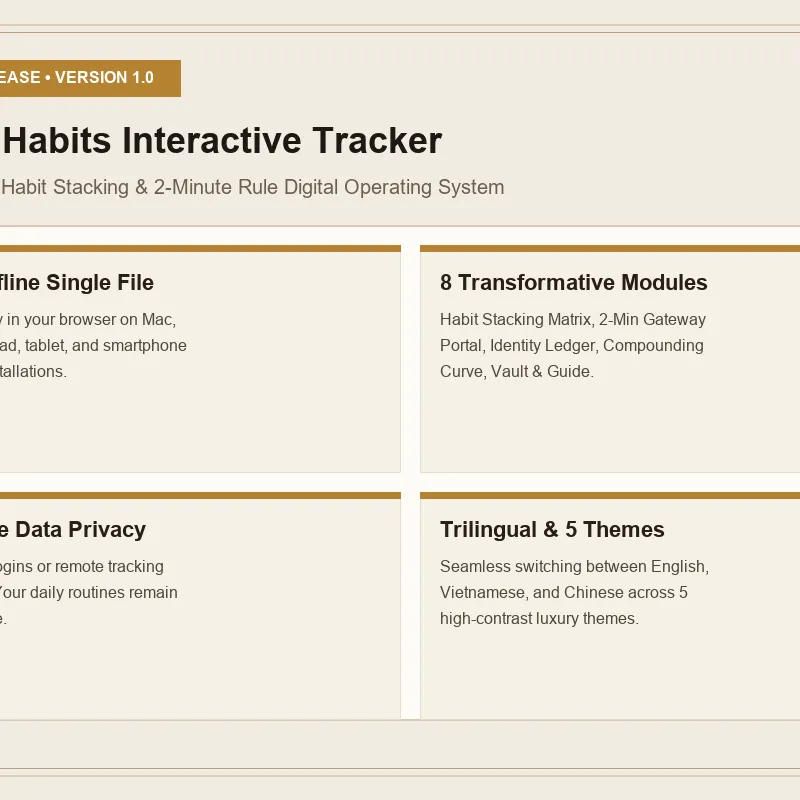
When you anchor your morning wakeup call to an immediate 5-4-3-2-1 launch, you sever the link between feeling sleepy and getting out of bed. Pair this ignition with the systematic habit stacking techniques outlined in our Atomic Habits Habit Stacking Tracker to chain your initial morning launch directly into a rewarding wellness routine.
3. Four Core Life Domains Transformed by the 5 Second Rule
The countdown protocol operates as a universal catalyst across diverse personal and professional arenas:
1. Health & Somatic Fitness
When your alarm rings at dawn or your workout scheduled hour arrives, your body pleads for comfort. Counting 5-4-3-2-1 and immediately placing your feet on the cold floor eliminates the internal debate before you reach for the snooze button.
2. Career Advancement & Boundary Setting
Raising your hand in an executive board meeting, negotiating compensation, or confronting an underperforming contractor produces immediate somatic anxiety. Deploying the rule forces you to speak up within the first five seconds of having an insight, banishing impostor syndrome.
3. Executive Deep Work & Focus
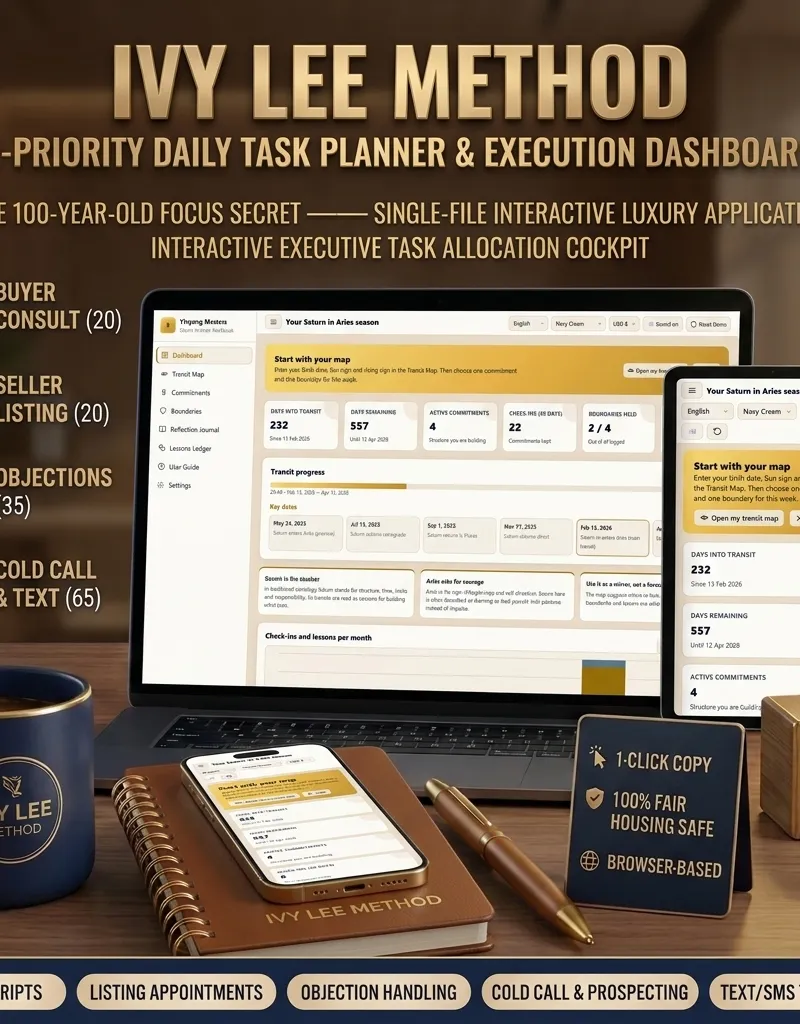
When facing a daunting analytical proposal or challenging codebase, starting is the highest friction point. Counting 5-4-3-2-1 and opening your development environment initiates work. Pairing this with Ivy Lee Method 6-Priority Planner ensures that once launched, your attention remains locked on high-priority outcomes.
4. Emotional Regulation & Anxiety Management
Anxiety is chronic worry trapped in a runaway cognitive loop. When catastrophic thinking begins, count 5-4-3-2-1 to halt the spiral, shift your physical posture, and transition attention toward physiological breathwork or a timed work interval using the Flowmodoro Deep Work Timer.
4. The Science of Everyday Courage: Micro-Moments of Decision
True courage is not reserved for monumental battlefield heroics; it is an everyday psychological muscle trained in ordinary, micro-moments.
Every single day presents you with dozens of invisible forks in the road:
- Do you send that sales pitch or leave it in drafts?
- Do you apologize to your partner or nurse your resentment?
- Do you drink a glass of water or reach for another sugary snack?
When you count 5-4-3-2-1 and take physical action, you prove to your subconscious that you are an agent of momentum rather than a passive recipient of circumstance. Over weeks and months, these micro-decisions build self-efficacy—the empirical psychological belief that you can achieve what you set out to do.
5. Metacognitive Reframing: Anxiety Reappraisal & Physiological Arousal
A critical discovery in Mel Robbins' later research—collaborating with behavioral findings from Harvard Business School researcher Dr. Alison Wood Brooks—is the neurological phenomenon known as anxiety reappraisal.
When you face high-stakes challenges such as keynote presentations, financial negotiations, or difficult confrontations, your autonomic nervous system initiates a sympathetic fight-or-flight response. Your heart rate accelerates, cortisol surges, palms sweat, and breathing becomes shallow. Most conventional advice encourages people to "just calm down." However, trying to suppress intense physiological arousal creates cognitive dissonance, as the brain cannot instantly drop from high arousal to low arousal.
Physiologically, anxiety and excitement are near-identical states: both involve high autonomic arousal and elevated adrenaline. The only distinction resides in cognitive framing:
- Anxiety is high arousal anchored in anticipated disaster or dread.
- Excitement is high arousal anchored in positive anticipation or opportunity.
When physical tension strikes, counting 5-4-3-2-1 creates a psychological circuit-breaker. At the count of "1", instead of telling yourself to relax, declare aloud or mentally: "I am excited." This immediate verbal and somatic reframe directs neurological energy toward constructive performance rather than paralyzing self-protection.

6. Comparative Evaluation: Metacognitive & Behavioral Productivity Models
To construct an unbreakable personal architecture, examine how the 5 Second Rule complements other leading behavioral frameworks:
| Performance Metric | The 5 Second Rule (Robbins) | 2-Minute Rule (Clear) | Pomodoro / Flowmodoro | Getting Things Done (Allen) |
|---|---|---|---|---|
| Primary Mechanism | Backwards count 5-4-3-2-1 to trigger motor action | Shrinks scope of initial task to 120 seconds | Structured work-and-rest cadence | Systematic external capture & context sorting |
| Cognitive Target | Paralyzing hesitation, self-doubt & anxiety | High activation friction & perfectionism | Attention drift, cognitive fatigue & burnout | Mental clutter & unfinished open loops |
| Response Horizon | Instantaneous (under 5 seconds) | Short-term (under 2 minutes) | Sustained blocks (25–90 minutes) | Weekly review & ongoing task processing |
| Key Advantage | Bypasses emotional resistance completely | Eliminates intimidation of monumental goals | Balances intense output with somatic rest | Prevents strategic obligations from slipping |
| Recommended Tool | 5 Second Rule Action Journal | Atomic Habits Tracker | Flowmodoro Deep Work Timer | Ivy Lee Priority Planner |
Strategic Topic Frameworks & Practical Connections
To deepen your practical mastery and build an integrated operational workflow within this topic, explore these complementary guides:
- Implement the execution protocols in 75 Hard Challenge Rules: The Ultimate Daily Tracking & Anti-Reset Guide to systematically strengthen your foundational routine.
- Explore the strategic principles detailed in 75 Soft Challenge Rules: Dopamine Reset Habit Guide for advanced optimization and mental clarity.
- Apply the structured methods from ADHD Dopamine Menu & Executive Dysfunction Routine Guide to maintain long-term momentum and consistency.
7. Frequently Asked Questions (FAQ)
Why must you count backwards from 5 to 1 instead of counting up?
Counting upwards (1, 2, 3, 4, 5...) is an open-ended loop that your brain executes unconsciously without cognitive exertion. Counting backwards requires deliberate concentration and ends abruptly at "1", creating an unmistakable psychological prompt for launch and physical action.
What should I do if I count 5-4-3-2-1 and still don't move?
If you remain paralyzed after the countdown, the friction threshold of your intended action is too high. Instantly shrink the physical movement to a microscopic scale: stand up, drink a sip of water, or simply move your hands to your keyboard. Any physical movement breaks neurological paralysis.
Is the 5 Second Rule effective for people with ADHD or executive dysfunction?
Yes. Clinical psychologists frequently recommend the 5 Second Rule for individuals with ADHD because executive dysfunction often stems from an inability to transition between cognitive states. The countdown functions as a clear external sensory bridge that propels the brain across state boundaries.
Can the 5 Second Rule help break deeply entrenched negative habits?
Yes. Habitual negative behaviors—such as opening social media apps or smoking—begin with an unconscious urge. The moment you catch yourself reaching for your phone, count 5-4-3-2-1 to interrupt the automatic response and replace it with a constructive substitute behavior.
How does the 5 Second Rule interact with long-term strategic goal setting?
Strategic planning defines your direction, but the 5 Second Rule governs your daily execution velocity. A brilliant annual business plan is useless if you hesitate before every sales call or delay every difficult email. The rule bridges the gap between vision and reality.
Can the 5 Second Rule be integrated alongside Cognitive Behavioral Therapy (CBT)?
Yes, therapists routinely pair the countdown with behavioral activation protocols. In CBT, patients learn that action frequently precedes motivation. Counting 5-4-3-2-1 provides a direct somatic catalyst to execute behavioral homework before depressive or avoidance thought loops take over.
How does the countdown protocol prevent decision fatigue in high-stakes leadership?
Executives make hundreds of micro-decisions daily, gradually depleting willpower reserves. By treating minor initiation decisions as non-negotiable countdowns, leaders conserve cognitive glucose and prefrontal bandwidth for high-leverage strategic dilemmas.
8. Action Blueprint: Mastering the 5-Day Countdown Challenge
To integrate the 5 Second Rule permanently into your neural circuitry, commit to this 5-day structured calibration:
- Day 1 (The Morning Alarm Test): Place your phone across the room. When the alarm sounds, immediately count 5-4-3-2-1 and stand up on your feet without checking notifications.
- Day 2 (The Social Courage Test): In your next meeting or casual conversation, speak up or ask a question within the first five seconds of having an insight.
- Day 3 (The Deep Work Sprint): Select the most dreaded task on your agenda. Count 5-4-3-2-1, open the document, and write for two uninterrupted minutes.
- Day 4 (The Physical Health Reset): When you feel the afternoon slump, count 5-4-3-2-1 and immediately complete twenty jumping jacks or a brisk walk.
- Day 5 (Integrate Structured Tracking): Solidify your progress by logging your daily launch statistics and psychological breakthroughs inside The 5 Second Rule Action Journal.
Hesitation is the silent thief of human potential. By mastering the 5-second countdown, you reclaim command of your choices, cultivate authentic courage, and unlock unshakeable daily momentum.
Tools featured in this guide

The 5 Second Rule Action Journal & Anti-Procrastination Daily Matrix
Mel Robbins Neuroscience-Backed Metacognitive Interactive Dashboard for Instant Execution
$22.99₫499,000
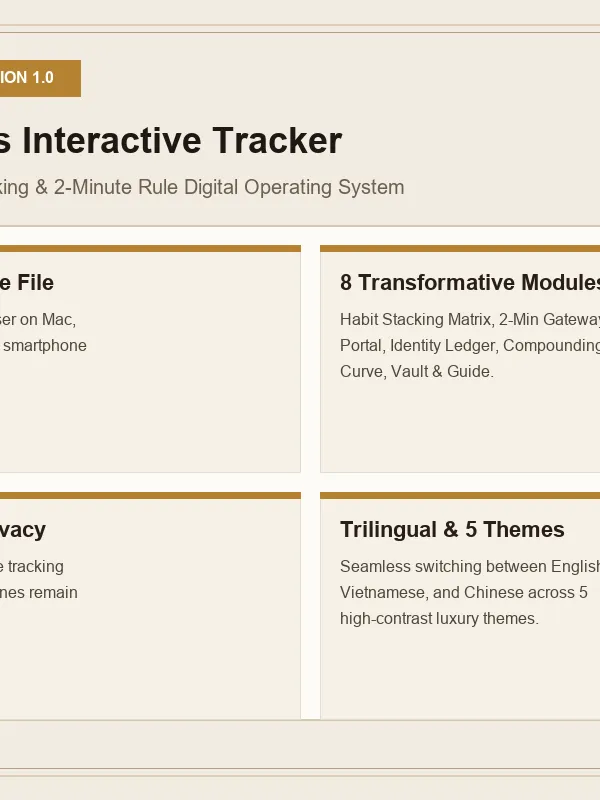
Atomic Habits Habit Stacking & 2-Minute Rule Interactive Tracker Dashboard
$27.99₫609,000

Ivy Lee Method 6-Priority Daily Task Planner & Execution Dashboard
The 100-Year-Old $25,000 Focus Secret — Offline Single-File Interactive Luxury Application
$24.99₫549,000

Flowmodoro Deep Work Interactive Timer & Flow State Analytics Journal
$24.99₫549,000
Guides in this Topic
View all (26) →- Personal Productivity & Habit Architecture
Atomic Habits Habit Stacking & 2-Minute Rule Guide
Master James Clear's habit stacking technique and 2-minute rule to build consistent routines, break procrastination, and scale personal productivity.
Read guide  habits
75 Hard Challenge Rules: The Ultimate Daily Tracking & Anti-Reset Guide
Master 75 Hard rules: two 45-min workouts, water intake schedule, 75 Soft alternative, and anti-reset daily habit tracking system.
Read guide wellness
75 Soft Challenge Rules: Dopamine Reset Habit Guide
Discover 75 Soft Challenge rules. Master dopamine reset protocols, mindful daily workouts, hydration targets, and non-restrictive habit tracking.
Read guide Discipline & Daily Habits
How Many Sleep Cycles a Night: Circadian Rhythm & Energy Routine Guide
Learn how many sleep cycles a night you need to eliminate brain fog, fix circadian rhythm sleep disorders, and reset your sleep schedule effortlessly.
Read guide ADHD Focus & Neurodivergent Productivity
ADHD Dopamine Menu & Executive Dysfunction Routine Guide
Overcome ADHD paralysis and executive dysfunction with a custom dopamine menu: appetizers, entrees, sides, and desserts to reset focus and motivation.
Read guide Neurobiology & High-Performance Biohacking
Andrew Huberman Morning Sunlight & Dopamine Protocol Guide
Master Andrew Huberman's morning routine: sunlight viewing protocol, 90-minute caffeine delay, cold exposure, and baseline dopamine optimization.
Read guide
Topic Pillar
Discipline & Daily Habits
Frameworks, routines, and systems for relentless consistency, morning discipline, and mental fortitude.
Ask Yinyang Masters inside your AI assistant
Get the same calculations and guidance right in your chat: add the free Yinyang Masters app, then ask in plain English. No account needed.
Try asking: “Build me a 30-day morning habit stack.”