



Justin Welsh Solopreneur Operating System: The Complete Architecture & Playbook

The Justin Welsh solopreneur operating system is an asynchronous business architecture engineered to scale a one-person enterprise beyond $5M in annual revenue with >90% profit margins. By integrating media audience flywheels, productized knowledge assets, strict 90-minute deep work timeboxes, and lean software automation, solo operators achieve sovereign financial freedom without hiring full-time employees.
The Paradigm Shift: From Venture Scale to Autonomous Solopreneurship
For decades, modern business culture conditioned aspiring entrepreneurs to equate commercial success with headcount expansion, institutional venture capital, and complex hierarchical management. However, this traditional corporate blueprint frequently results in severe founder burnout, diluted equity ownership, and massive fixed overhead costs.
Justin Welsh—former tech executive who scaled two healthcare tech companies past $50M in annual revenue—pioneered a radical alternative after walking away from corporate exhaustion. His Solopreneur Operating System decouples personal time from enterprise income, demonstrating that an autonomous individual operating from a home office can outperform mid-sized agencies while retaining complete control over personal calendar autonomy.
Traditional Venture Model:
Capital Raise ──► Headcount Bloat ──► High Fixed OPEX ──► 10-20% Net Margin ──► Founder Golden Handcuffs

Justin Welsh Solopreneur OS:
Targeted Audience ──► Digital Product Factory ──► <$1,000 OPEX ──► >90% Net Margin ──► Complete Sovereignty
Traditional Agency vs. Justin Welsh $5M Solopreneur Architecture
To understand why this operating system has captured global attention among digital professionals, consultants, and knowledge workers, examine the operational contrast across core enterprise dimensions:
| Strategic Dimension | Traditional Consulting / Agency Model | Justin Welsh Solopreneur Operating System |
|---|---|---|
| Revenue Ceiling | Capped by billable hours and team capacity | Uncapped via infinite scaling digital assets |
| Operating Margin | 12% – 25% (eroded by payroll and office rent) | 90% – 95% (lean SaaS stack under $1,000/mo) |
| Fulfillment Mode | Synchronous client calls, meetings, revisions | 100% Asynchronous delivery & self-serve portals |
| Customer Acquisition | Outbound cold outreach & expensive paid ads | Organic inbound flywheel via high-leverage content |
| Team Structure | 10 – 50 full-time staff requiring HR management | 0 full-time employees; specialized micro-contractors |
| Calendar Autonomy | 40 – 60 hours/week dictated by client demands | 15 – 20 hours/week of structured deep work sprints |
Pillar 1: The 2-Hour Asynchronous Audience Flywheel
The core driver of the solopreneur architecture is an organic inbound distribution engine that requires less than two hours of daily execution. Rather than spending all day mindlessly engaging on social feeds, Welsh utilizes a standardized Hub-and-Spoke Content Matrix:
- The Saturday Flagship Essay (Hub): Every week, write one 800-to-1,200 word deep dive newsletter essay providing an actionable solution to a specific business bottleneck.
- The 1-to-8 Micro-Repurposing Pipeline (Spokes): Deconstruct that single flagship essay into:
- Two visual breakdown carousels for LinkedIn and Instagram.
- Three high-contrast text observations for X/Twitter.
- Two actionable tactical checklists.
- One community question to harvest reader feedback for next week's topic.
- Copywriting Hook Architecture: Solopreneurs never write from a blank page. They deploy proven psychological hook formulas:
- The Curiosity Gap: "Most founders work 50 hours a week. Here is how I run a $5M portfolio in 15 hours:"
- The Contrarian Truth: "Hiring employees is often an expensive cover-up for broken, inefficient systems."
- The Before-and-After Teardown: "From acute corporate burnout to $150k monthly recurring digital cash flow."
Pillar 2: The Digital Product Factory & Validation Scorecard
A solopreneur cannot reach seven figures relying solely on freelance service delivery. Welsh's architecture transitions specialized expertise into scalable, productized digital assets:
The 0–100 Product Validation Algorithm
Before building any curriculum, software template, or digital toolkit, evaluate the concept across four strict criteria:
- Market Pain Urgency (0–25 points): Is the problem acute, top-of-mind, and causing active financial or operational frustration?
- Personal Authority & Proof (0–25 points): Do you have verifiable personal results and case studies proving your solution works?
- Pricing Autonomy (0–25 points): Can the asset be priced at $100 to $500 with zero raw material marginal costs?
- Speed to Market (0–25 points): Can an operational minimum viable product (MVP) be launched in less than 14 days?
Validation Score ≥ 80 ──► GREENLIGHT: Build Waitlist & Launch MVP in 14 Days
Validation Score 60-79 ──► AMBER: Refine Angle, Test Free Lead Magnet First
Validation Score < 60  ──► RED: Kill or Pivot; Inadequate Market Urgency
To manage your own product pipeline, use the interactive Solopreneur Operating System & One-Person Business Planner, which includes a live validation calculator, tiered pricing simulators, and launch milestone countdowns.
Pillar 3: Daily Deep Work Timeboxing & Boundary Protocols
Running a multi-million-dollar business alone requires ruthless protection of cognitive energy. Solopreneurs do not work long hours; they work intensely focused hours through structured Timeblocking Architecture:
- Block 1: Deep Creative Sprint (07:30 – 09:00): Uninterrupted creation of newsletter essays, digital product curricula, or marketing collateral. Strict airplane mode; zero email.
- Block 2: Audience Distribution (09:15 – 10:00): Publishing pre-scheduled content, engaging with top comments, and establishing strategic peer relationships.
- Block 3: Product Delivery & Systems (10:30 – 12:00): Improving automated email funnels, testing checkout flows, and updating digital templates.
- Block 4: Asynchronous Admin (14:00 – 14:45): Auditing Stripe payouts, answering priority support queries, and outlining tomorrow's top 3 tasks.
- Strict 4:30 PM Shutdown: Complete disconnect from all devices to protect physical recovery and mental longevity.
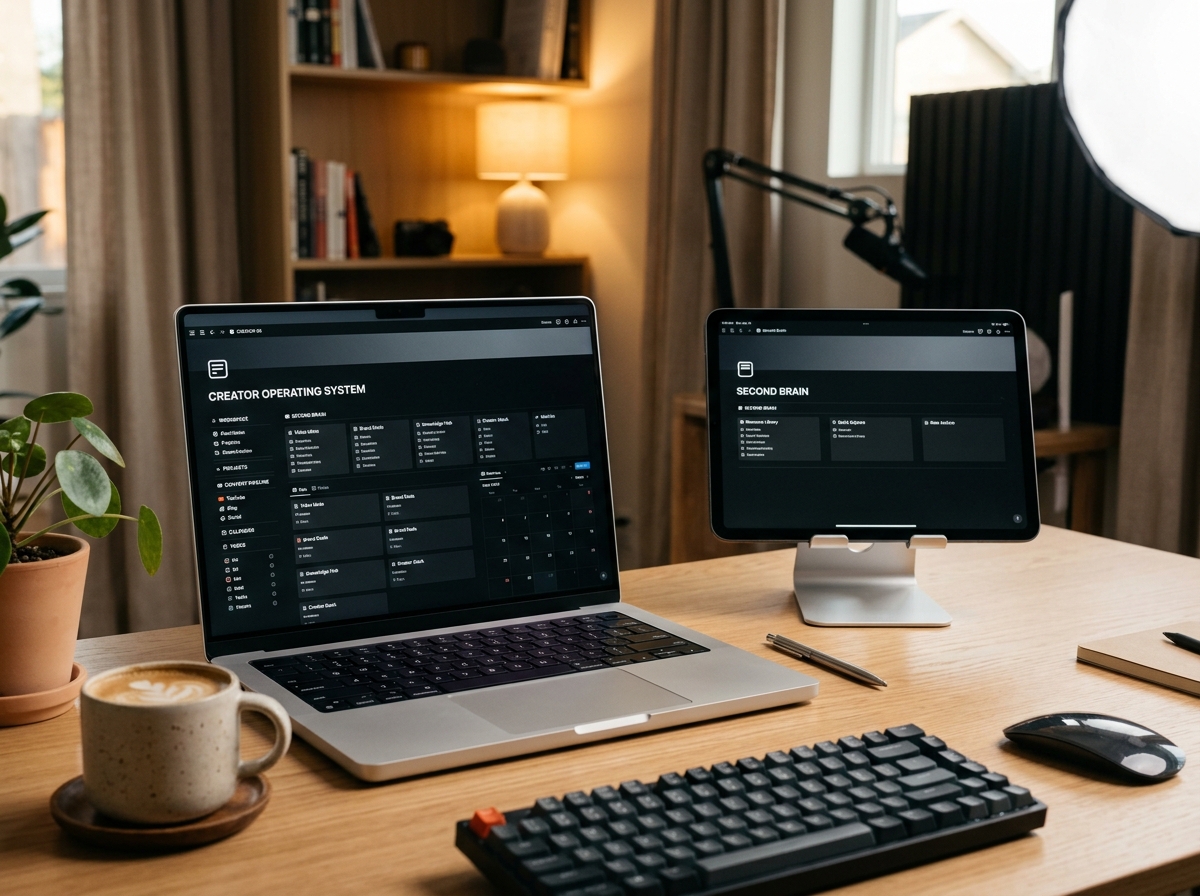
For teams and creators managing complementary media pipelines, the Content Creator Operating System & Second Brain provides full PARA method integration and multi-platform scheduling databases.
Pillar 4: Unit Economics & The 90% Net Margin Standard
Traditional businesses tolerate razor-thin margins because they rely on massive headcount. The solopreneur model protects sovereignty by benchmarking against a 90%+ Net Profit Margin Standard:
$$\text{Net Profit Margin} = \frac{\text{Gross Revenue} - \text{Lean OPEX}}{\text{Gross Revenue}} \times 100 \ge 90%$$
The Lean Zero-Employee Software Stack
- Website & CMS: Webflow or Carrd ($19–$39/year)
- Email Infrastructure: ConvertKit / Kit ($29–$79/month)
- Payment & Merchant of Record: Stripe / Lemon Squeezy (3–5% transaction fee)
- Automation Pipeline: Zapier or Make ($20–$50/month)
- Total Monthly Fixed Overhead: Typically under $500 to $800/month, allowing solo operators to bank over $20,000 to $80,000 in net profit every month.
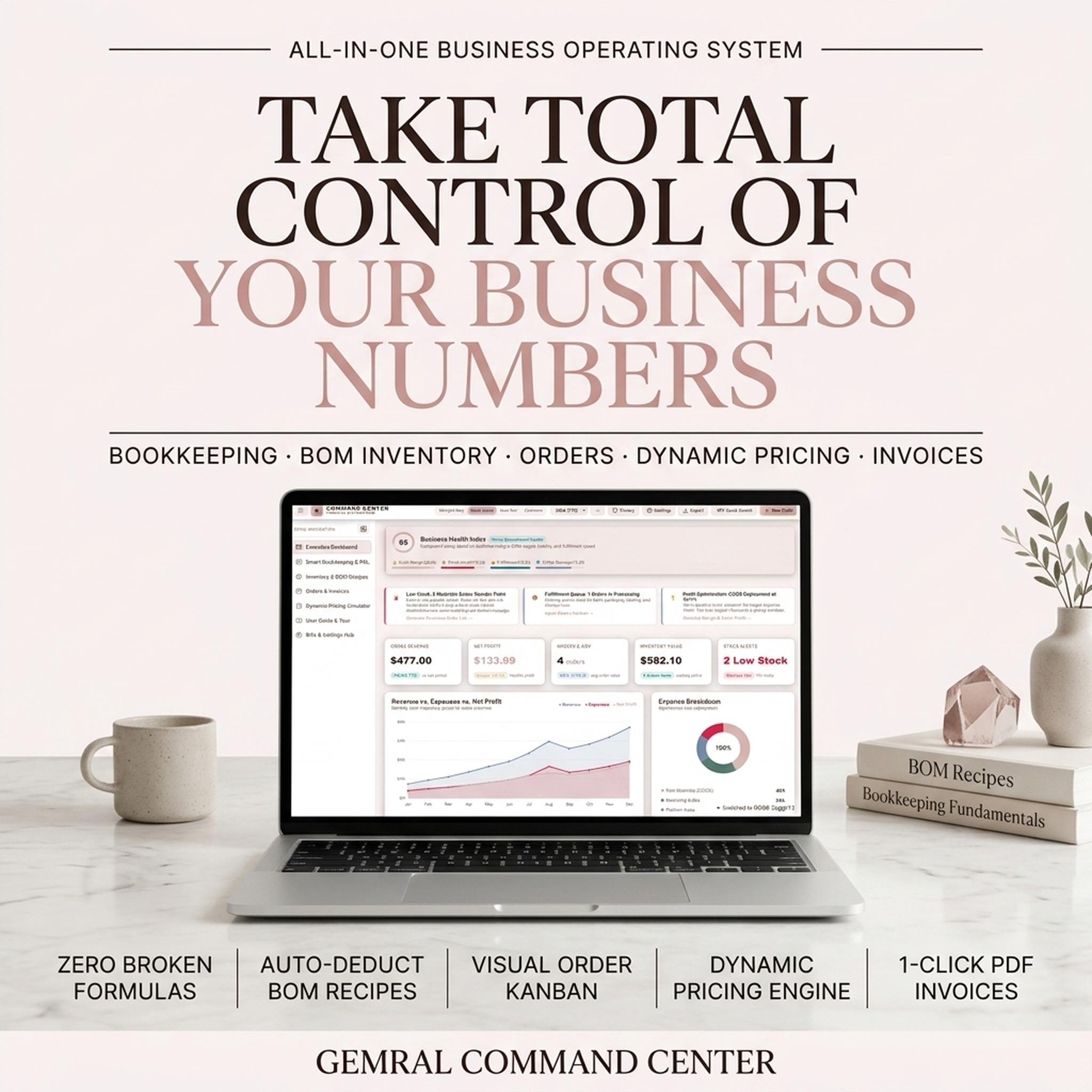
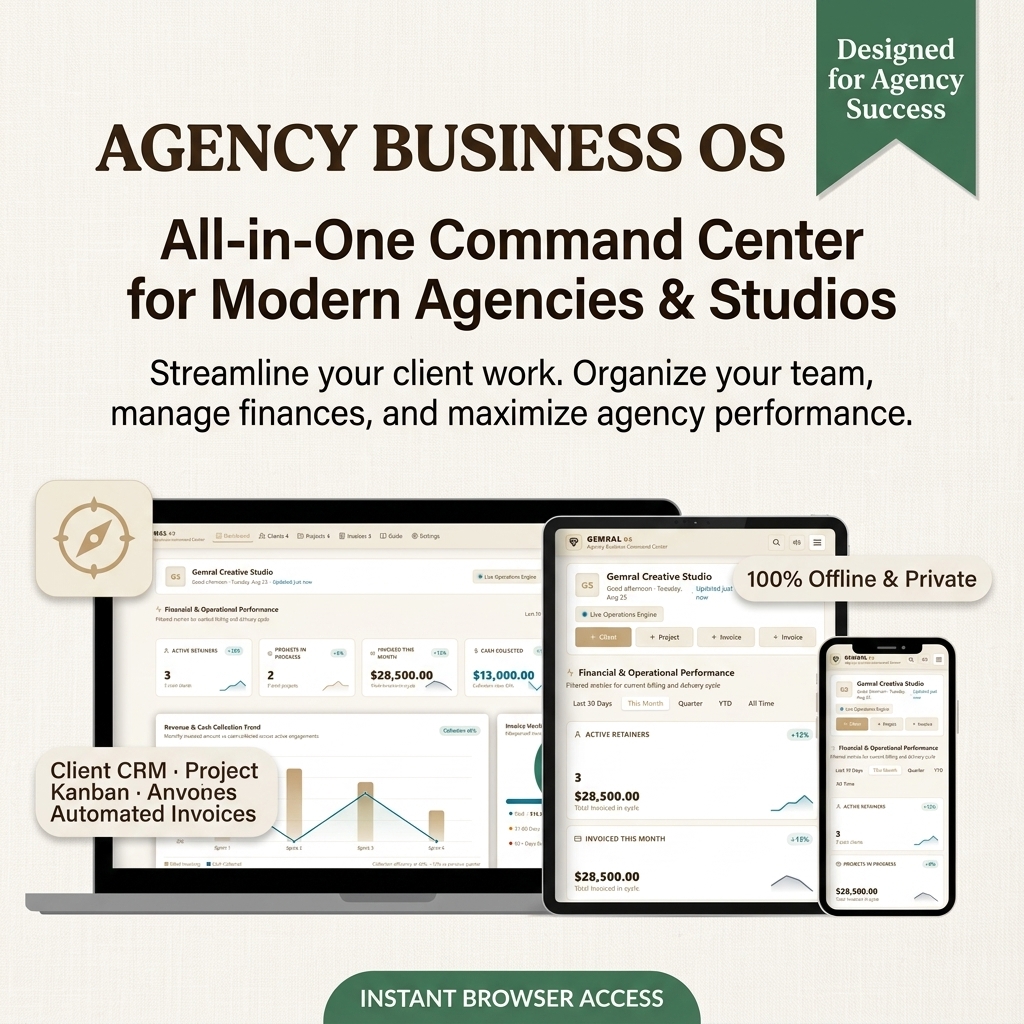
For solo service providers seeking to manage client contracts and cash flow in one unified dashboard, explore the Small Business Command Center and the Agency Business OS.
Strategic Topic Frameworks & Practical Connections
To deepen your practical mastery and build an integrated operational workflow within this topic, explore these complementary guides:
- Implement the execution protocols in Conscious Unbossing: What It Means and How to Build a Career Without Climbing Into Middle Management to systematically strengthen your foundational routine.
- Explore the strategic principles detailed in 4-Day Work Week Schedule Model: Company Trials and Capacity Planning Guide for advanced optimization and mental clarity.
- Apply the structured methods from AI Fatigue at Work: Why AI Tools Are Adding to Burnout and a Workflow System That Fixes It to maintain long-term momentum and consistency.
Frequently Asked Questions
What exactly is the Justin Welsh solopreneur operating system?
It is a comprehensive business framework that teaches knowledge workers how to build a scalable, one-person business. It integrates content creation flywheels, audience building, digital product design, timeboxing, and lean software automation to achieve 7-figure revenue with zero full-time staff.
Can beginners start a one-person business using this model?
Yes. The model begins with identifying your unique personal leverage—the specialized knowledge, skills, or industry insights you already possess. By publishing daily insights on platforms like LinkedIn and X, beginners build an audience first, validate demand, and then launch targeted digital products.
How does a solopreneur handle customer support without employees?
Through asynchronous systems, self-serve onboarding hubs, detailed documentation, and automated email sequences. When customer inquiries arise, automated knowledge bases handle 90% of common questions, leaving only high-touch inquiries for a 15-minute daily admin block.
What is the difference between a freelancer and a solopreneur?
A freelancer trades hours for dollars; if they stop working, their income immediately ceases. A solopreneur builds scalable digital assets, recurring media newsletters, and automated systems that generate revenue around the clock, completely decoupled from clock hours.
Do I need outside funding or venture capital to implement this?
No. One of the greatest advantages of the solopreneur operating system is its near-zero capital requirement. You can launch with a basic computer, an internet connection, and less than $100 in initial domain and hosting costs.
Legal & Business Disclaimer
This guide and associated planning tools are provided for informational and educational purposes only. They do not constitute formal legal, accounting, tax, or financial advisory services. Business outcomes vary substantially based on individual execution, audience demand, and prevailing economic conditions. Consult qualified professionals before executing business transactions.
Tools featured in this guide
Solopreneur Operating System & One-Person Business Planner (Interactive HTML)
$27.99₫609,000
Content Creator Operating System & Second Brain Pipeline
Interactive single-file browser workstation for digital creators, YouTubers, podcasters, and writers powered by Tiago Forte's CODE system and Ali Abdaal's 3-Gear production engine.
$24.99₫549,000
Small Business Command Center & Inventory Bookkeeping
All-in-one operating system for product makers, boutiques, and sellers to manage inventory, BOM costs, orders, and P&L.
$29₫629,000
Agency Business OS & Interactive Client Portal
The all-in-one command center for creative agencies and boutique studios to manage clients, retainers, and billing.
$39₫849,000
Guides in this Topic
View all (10) → Workplace Strategy
Amazon 5-Day RTO Survival Guide & Coffee Badging Framework
Master the Amazon 5-day return-to-office mandate. Learn coffee badging survival tactics, badge tracking spreadsheets, and hybrid schedule management.
Read guide productivity
Dan Koe One-Person Business: 2-Hour Writing Routine
Master Dan Koe's one-person business model. Learn the 2-hour daily writing routine, content ecosystem architecture, and solopreneur monetization.
Read guide Career
Federal Layoff Survival Checklist: Buyouts, Severance, Benefits and Your Move to the Private Sector
A practical checklist for federal employees facing RIFs or buyouts: VSIP vs severance vs VERA, leave payout, FEHB TCC, TSP, ethics rules and a 90-day plan.
Read guide Workplace Operations & Productivity
4-Day Work Week Schedule Model: Company Trials and Capacity Planning Guide
Explore 4-day work week companies, 32-hour schedule models, shift frameworks, and team capacity planning strategies to maximize workplace productivity.
Read guide Productivity
AI Fatigue at Work: Why AI Tools Are Adding to Burnout and a Workflow System That Fixes It
Why AI tools add to workload and burnout, the warning signs of AI fatigue, and a simple delegation and review system to get your time back.
Read guide Career Strategy
Jobs AI Can't Replace: Building an Irreplaceable Human Moat and Career Roadmap
Strategic guide to jobs AI cannot replace. Build human moat skills, map career transition milestones, and launch resilient independent income streams.
Read guide
Topic Pillar
Career Resilience & Workplace
AI-proof careers, solopreneurship, corporate navigation, and future-ready personal moats.
Ask Yinyang Masters inside your AI assistant
Get the same calculations and guidance right in your chat: add the free Yinyang Masters app, then ask in plain English. No account needed.
Try asking: “Find a Yinyang Masters guide about starting a daily spiritual practice.”