



4-Day Work Week Schedule Model: Company Trials and Capacity Planning Guide


The 4-day work week companies model operates on the 100-80-100 principle: employees receive 100% of their baseline compensation for 80% of traditional work hours, provided 100% of baseline productive output is maintained. Successfully transitioning to a compressed 32-hour schedule requires ruthless elimination of bureaucratic meeting bloat, automated asynchronous documentation, and rigorous team capacity modeling.
For over a century, the standard five-day, 40-hour work week has governed corporate commerce. Established during the Industrial Era to regulate assembly line manufacturing, this legacy framework treats human knowledge output as a linear function of seated desk time. In our modern knowledge, software, and creative economies, intellectual fatigue degrades cognitive output exponentially after several hours of continuous focus. Global empirical trials conducted across the United Kingdom, the United States, Germany, and South Africa demonstrate that shortening the work week decreases employee burnout by over 65% while preserving or elevating total enterprise revenue.
However, moving from aspirational vision to operational execution requires meticulous organizational architecture. Companies cannot simply slice off Friday without re-engineering operational workflows, customer coverage rotations, and meeting habits.
1. The Macroeconomic Transition: The 100-80-100 Operating Principle
The global movement spearheaded by 4 Day Week Global and independent corporate pioneers is not an ideological demand for leisure; it is an efficiency thesis rooted in Parkinson's Law (work expands to fill the time allotted for its completion):
- The Core Equation: 100% Compensation for 80% Work Hours in exchange for 100% Productivity Output.
- Empirical Trial Outcomes: In the world’s largest coordinated trial involving 61 UK organizations, 92% of participating companies elected to continue the 4-day policy permanently, citing an average 35% jump in reported revenue compared to historical periods.
- Talent Attraction and Retention Moats: Enterprises offering verified 32-hour schedules observe dramatic reductions in voluntary turnover (down 57%) and a surge in tier-one candidate applications, effectively lowering executive recruitment expenses.
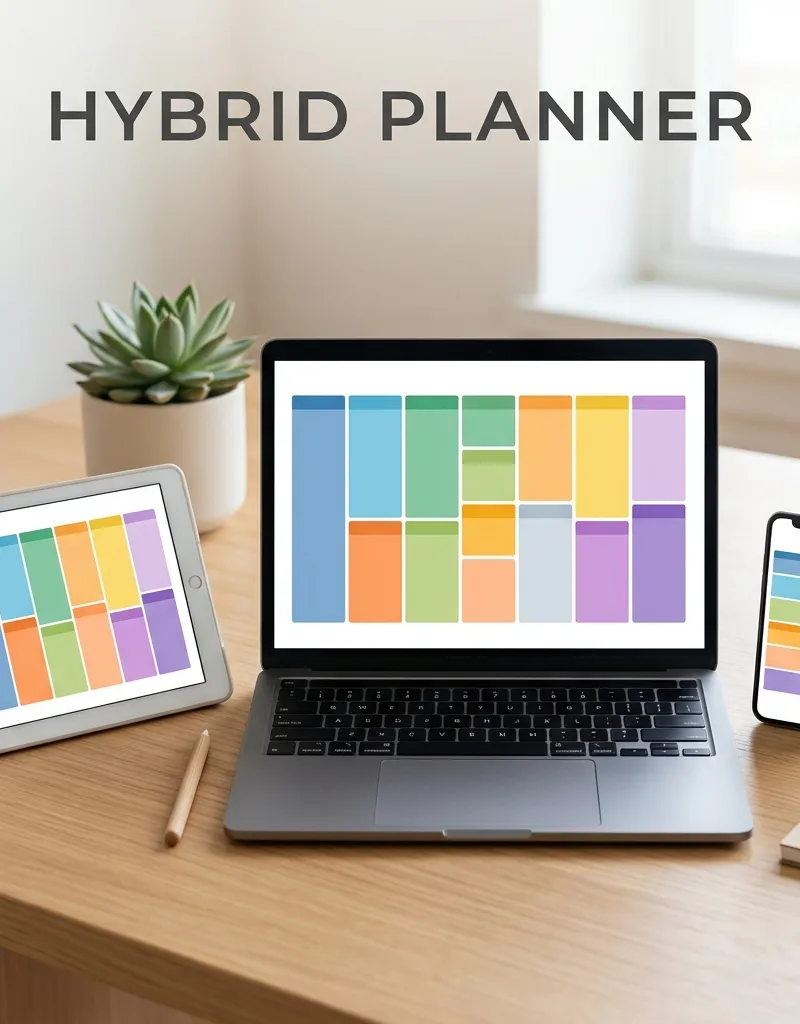
Designing fair shift allocations and calculating departmental coverage is complex. The 4-Day Work Week Team Capacity Planner equips leadership with an automated model for balancing departmental output and project delivery timelines.
2. Structural Scheduling Frameworks: Choosing Your 4-Day Model
Depending on customer interface requirements and client service level agreements (SLAs), organizations implement one of four distinct scheduling archetypes:
- The Coordinated Company-Wide Shutdown: The entire enterprise operates Monday through Thursday and closes completely on Friday. Ideal for internal development shops, software engineering agencies, and consultancies where external customer support can be paused or handled via automated escalation trees.
- The Staggered Team Rotation (Gold / Silver Teams): Departmental staff are split into alternating cohorts (Team A: Monday–Thursday; Team B: Tuesday–Friday). This ensures continuous five-day business responsiveness without subjecting individual knowledge workers to 40 hours of fatigue.
- The Distributed Flex Schedule: Individual employees select their designated weekday off in coordination with cross-functional pairing partners, maintaining comprehensive internal redundancy.
- Seasonal / Summer Compression: Implementing 32-hour weeks during historically quiet quarters to pilot cultural adaptability and refine asynchronous communication rituals.
For organizations balancing both remote flexibility and in-office presence requirements, integrate the Hybrid & Remote Work Schedule Tracker to monitor presence benchmarks without intrusive surveillance.
3. The Mathematics of Eliminating Meeting Bloat and Friction
To reclaim the eight hours surrendered by moving to a 32-hour work week, management must audit company communication channels:
- The Status Update Ban: Eliminate live status check-in meetings. Replace them with structured written updates submitted asynchronously via team dashboards before 09:00 AM on active work days.
- Aggressive Time-Boxing: Default calendar meeting durations should be reduced from 60 minutes to 25 minutes, and 30 minutes to 15 minutes. Meetings with more than four attendees must mandate a circulated one-page memo prior to discussion.
- Deep Work Focus Blocks: Establish enterprise-wide "Focus Mornings" (e.g., 09:00 AM to 12:00 PM Tuesday through Thursday) during which internal Slack messaging, emails, and meetings are strictly prohibited.
Operational leaders can structure their focus windows using the Executive Daily Planner & Priority Matrix to insulate critical priorities from everyday distractions.

4. Operational Guardrails: Preventing Hidden Burnout and Work Creep
A frequent pathology in poorly planned implementations is "compressed week burnout"—where employees work intense 10-hour days Monday through Thursday, resulting in heightened exhaustion rather than rejuvenation:
- Differentiating 4x8 (32 Hours) from 4x10 (Compressed 40 Hours): The true 4-day work week model requires an absolute reduction in working hours to 32 hours, not packing 40 hours into four grueling days.
- Guardrails Against Weekend Slack Intrusion: Establish automated "Do Not Disturb" protocol policies that silence notifications between Thursday 06:00 PM and Monday 08:00 AM.
- Asynchronous Knowledge Architecture: Document all key standard operating procedures (SOPs) in a central digital knowledge base so that project momentum is never held hostage by an individual's scheduled day off.
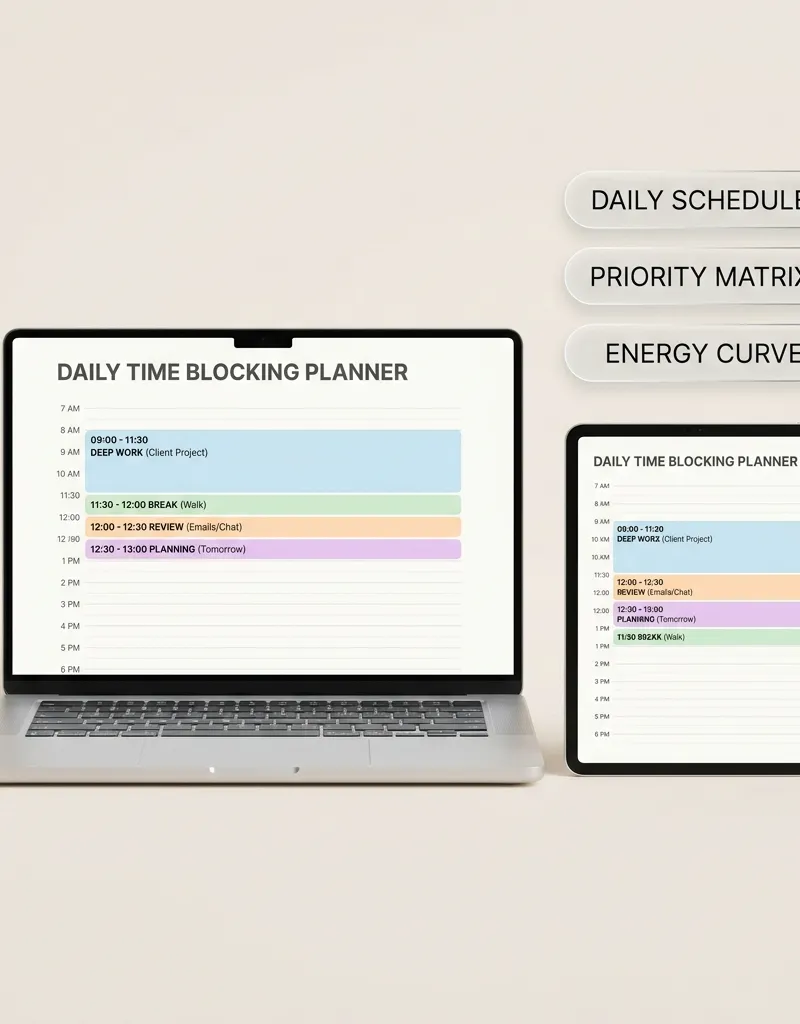
Individual contributors and team leads can maintain peak personal productivity through structured daily intervals with the Time-Blocking Daily Planner.
5. Comparative Evaluation: Standard 5-Day vs. 4x10 vs. True 32-Hour Model
Analyzing the systemic tradeoffs across competing operational frameworks demonstrates why the 32-hour schedule yields superior business outcomes:
| Operational Dimension | Standard 5-Day (40 Hours) | Compressed 4x10 (40 Hours) | True 32-Hour 4-Day Model |
|---|---|---|---|
| Weekly Target Hours | 40 hours | 40 hours | 32 hours |
| Daily Cognitive Load | 8 hours / day | 10 hours / day (severe fatigue) | 8 hours / day (sharp focus) |
| Meeting Culture | Bloated, routine status calls | Often compressed without reduction | Ruthlessly streamlined, async-first |
| Employee Burnout Rate | Baseline high (40–50% reported) | Moderate-High (long daily shifts) | Lowest (-65% drop in trials) |
| Enterprise Output | Diluted by Parkinson's Law | Diminishing returns on hours 9–10 | High velocity, zero busywork |
| Turnover & Retention | Average industry churn | Moderate improvement | Best-in-class retention moats |
| Primary Toolset | Fragmented legacy spreadsheets | Manual punch cards | 4-Day Work Week Team Capacity Planner |
Strategic Topic Frameworks & Practical Connections
To deepen your practical mastery and build an integrated operational workflow within this topic, explore these complementary guides:
- Implement the execution protocols in AI Fatigue at Work: Why AI Tools Are Adding to Burnout and a Workflow System That Fixes It to systematically strengthen your foundational routine.
- Explore the strategic principles detailed in Jobs AI Can't Replace: Building an Irreplaceable Human Moat and Career Roadmap for advanced optimization and mental clarity.
- Apply the structured methods from Amazon 5-Day RTO Survival Guide & Coffee Badging Framework to maintain long-term momentum and consistency.
6. Frequently Asked Questions (FAQ)
Which major companies have successfully adopted a 4-day work week?
Leading global companies including Kickstarter, Buffer, Bolt, Panasonic, and hundreds of tech and service firms have permanently instituted 32-hour or 4-day work weeks, reporting sustained productivity and unprecedented employee retention.
Do employees receive a pay cut under a 32-hour work week model?
No. Under the recognized 100-80-100 model established by 4 Day Week Global, employees receive 100% of their existing salary for 80% of the hours, in exchange for sustaining 100% of baseline business outcomes.
What is the primary difference between a 4x10 schedule and a 32-hour 4-day week?
A 4x10 compressed schedule still requires employees to log 40 total hours across four grueling 10-hour days, which frequently causes late-day cognitive fatigue. The 32-hour model actually shortens total working time by eliminating unproductive meetings and low-value bureaucracy.
How do customer-facing and client service teams maintain SLA coverage?
Client-facing organizations typically implement a staggered cohort system (Team A works Monday–Thursday; Team B works Tuesday–Friday) or utilize cross-trained pairing pods to ensure seamless five-day client responsiveness.
7. Conclusion: The Competitive Advantage of Sovereign Time
The transition toward a four-day work week is not a concession to employee complacency; it is a hard-nosed competitive strategy designed to purge organizational waste and empower high-performing talent.
As artificial intelligence automates routine correspondence and administrative tasks, human cognitive value will be judged by the depth of creative insight and strategic decision-making rather than physical desk presence. Organizations that master team capacity modeling and embrace the 32-hour operating model today will command the most capable, energized, and loyal workforces of the coming decade.
Explore verified real-time macro telemetry, market catalysts, and capital flow intelligence.
Deep structural telemetry tracking workforce productivity shifts, employment participation rates, and macroeconomic yield curves.
Tools featured in this guide

4-Day Work Week Shift & Team Capacity Planner | Interactive 32h Operating System
Model team shifts, cut meeting overload, and protect deep work with a 32-hour work week capacity system.
$22.99₫499,000

Hybrid & Remote Work Schedule Tracker — RTO & Coffee Badging OS
Interactive single-file application to balance in-office attendance, avoid RTO policy penalties, track coffee badging swipes, and calculate commute savings.
$24.99₫549,000
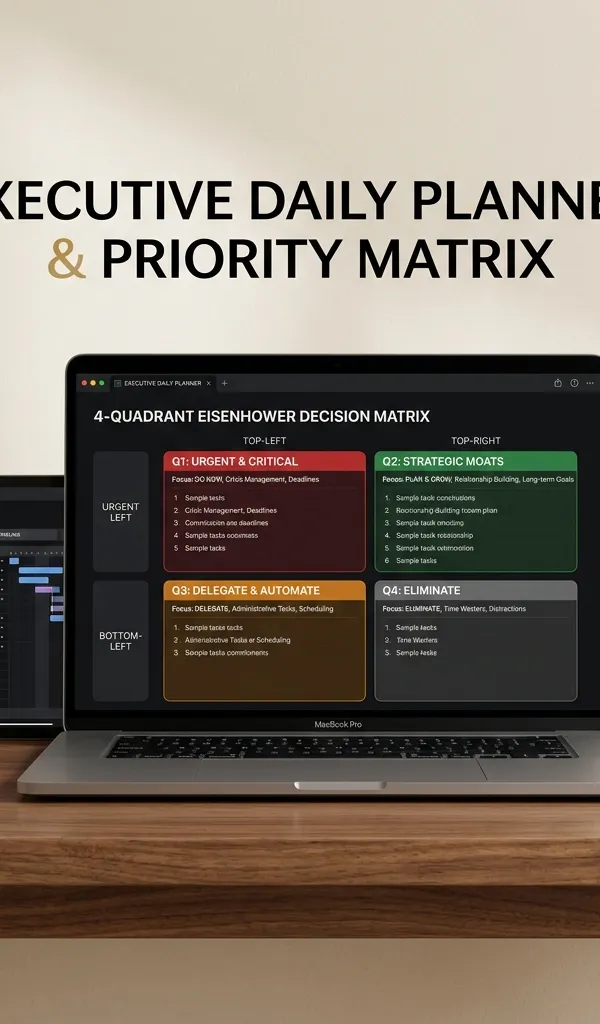
Executive Daily Planner & Priority Matrix — CEO 14h Schedule & Flat Org Operating System
Master High-Leverage Strategic Focus, 4-Quadrant Eisenhower Prioritization, and Flawless Time Blocking
$22.99₫499,000
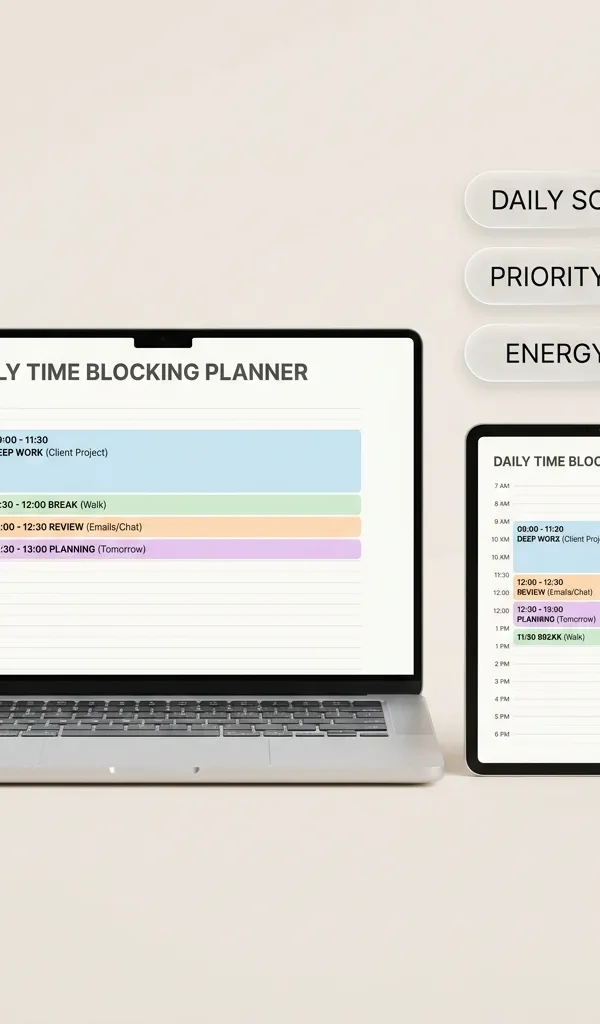
5-Minute Time-Blocking Daily Planner (Executive Edition)
Interactive single-file digital planner designed for intense productivity, 5-minute time-boxing, priority matrices, and deep work blocks.
$24.99₫549,000
Guides in this Topic
View all (10) → Workplace Strategy
Amazon 5-Day RTO Survival Guide & Coffee Badging Framework
Master the Amazon 5-day return-to-office mandate. Learn coffee badging survival tactics, badge tracking spreadsheets, and hybrid schedule management.
Read guide Productivity
AI Fatigue at Work: Why AI Tools Are Adding to Burnout and a Workflow System That Fixes It
Why AI tools add to workload and burnout, the warning signs of AI fatigue, and a simple delegation and review system to get your time back.
Read guide Career Strategy
Jobs AI Can't Replace: Building an Irreplaceable Human Moat and Career Roadmap
Strategic guide to jobs AI cannot replace. Build human moat skills, map career transition milestones, and launch resilient independent income streams.
Read guide Career Navigation
How to Spot Ghost Jobs: AI Screening Audit & Application Tracker
Understand ghost jobs meaning in 2026. Spot fake postings, bypass automated ATS screening bots, and organize applications with private audit sheets.
Read guide Career
Conscious Unbossing: What It Means and How to Build a Career Without Climbing Into Middle Management
What conscious unbossing means, why middle management is shrinking, and a practical individual contributor roadmap for flat organizations.
Read guide productivity
Dan Koe One-Person Business: 2-Hour Writing Routine
Master Dan Koe's one-person business model. Learn the 2-hour daily writing routine, content ecosystem architecture, and solopreneur monetization.
Read guide
Topic Pillar
Career Resilience & Workplace
AI-proof careers, solopreneurship, corporate navigation, and future-ready personal moats.
Ask Yinyang Masters inside your AI assistant
Get the same calculations and guidance right in your chat: add the free Yinyang Masters app, then ask in plain English. No account needed.
Try asking: “Find a Yinyang Masters guide about starting a daily spiritual practice.”