



Conscious Unbossing: What It Means and How to Build a Career Without Climbing Into Middle Management


Conscious unbossing is the deliberate choice to skip or step back from middle management and grow as a senior individual contributor instead. The term spread in 2024 after a Robert Walters survey found 52% of Gen Z professionals did not want to become middle managers.
Where the term comes from
In September 2024, recruitment firm Robert Walters published a survey of about 3,600 Gen Z professionals in the UK. Its headline numbers:
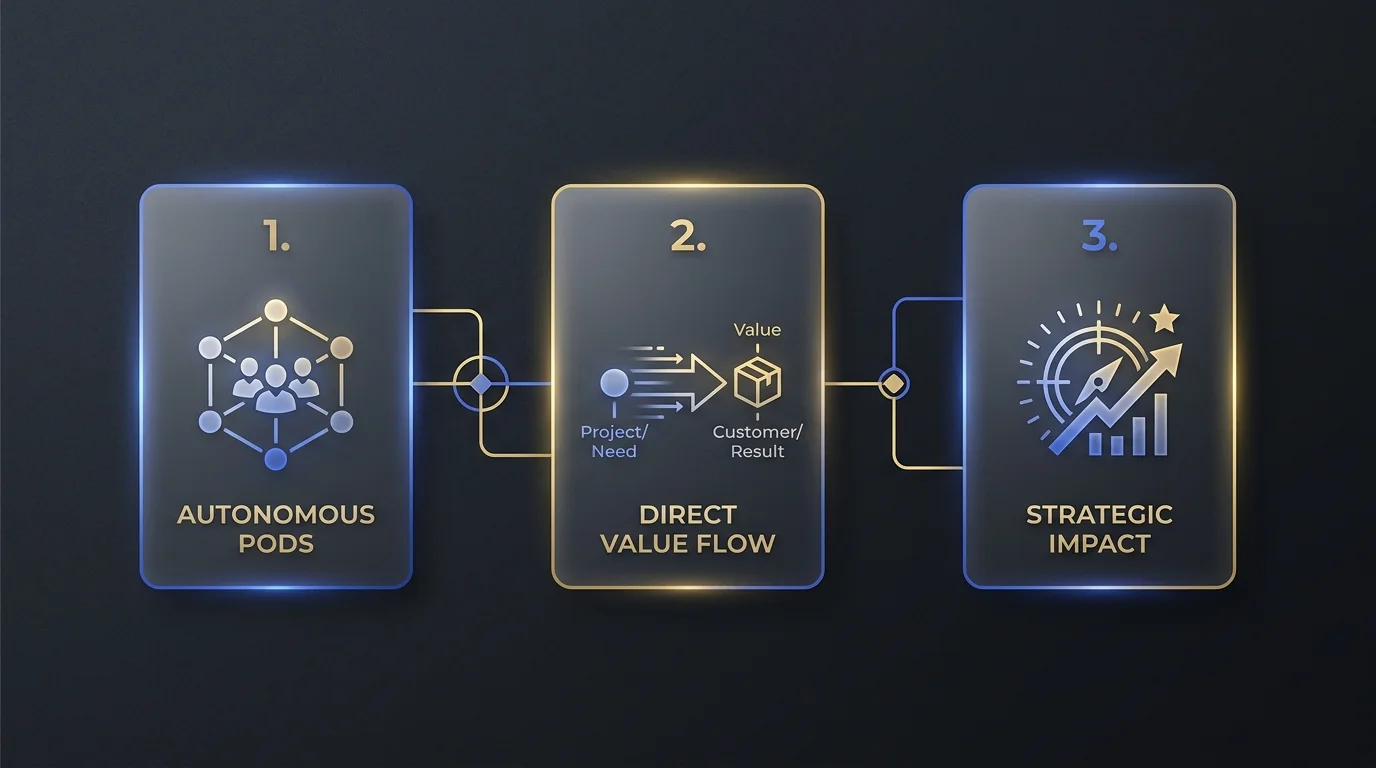
- 52% said they did not want a middle-management role.
- 72% said they would rather advance through an individual route — building skills and expertise — than by managing people.
- Close to 70% described middle management as high stress with low reward.
The company called the pattern "conscious unbossing," and outlets from Fortune to Forbes picked it up. The phrase now covers anyone — not only Gen Z — who chooses depth over headcount.
Why it matters now: the middle is shrinking anyway
The choice is not only personal. Gartner has predicted that by 2026, 20% of organizations will use AI to flatten their structure, eliminating more than half of current middle-management positions. Much of what middle managers do — status reports, scheduling, performance tracking — is exactly what workflow and AI tools automate first.
That leaves two realities at once: fewer management seats, and more people who never wanted them. In a flatter organization, the career ladder turns into a lattice, and the people who thrive are those who can own outcomes without formal authority.
Unbossing is not quitting ambition
Skipping management is not the same as coasting. Senior individual contributors in flat companies are expected to:
- Own a measurable outcome — revenue, reliability, customer retention — not just tasks.
- Lead without authority — align peers through writing, data and trust rather than reporting lines.
- Make decisions in the open — use lightweight processes such as the advice process, where anyone can decide after consulting those affected and those with expertise.
- Keep their skills ahead of automation — so the role survives the next reorganization.

Manager track vs. individual contributor track
| Manager track | Individual contributor track | |
|---|---|---|
| Main output | Team performance | Personal expertise and owned outcomes |
| Day-to-day | Meetings, 1:1s, hiring, reporting | Deep work, design, analysis, mentoring by example |
| Risk in a flattening org | Role may be merged or removed | Role must stay visibly valuable |
| How you grow | Bigger team, bigger budget | Bigger scope, harder problems, higher leverage |
| Pay | Traditional ladder | In many firms, parallel senior/staff/principal levels |
Neither track is better. The mistake is drifting into management because it is the only promotion on offer, or drifting away from it without a plan to keep growing.
An individual contributor roadmap you can start this quarter
- Map your competencies. Rate yourself on depth, scope, influence and business impact. Pick two to push this quarter.
- Build a portfolio of visible projects. For each, write down the problem, your decision, the result and who noticed.
- Document decisions. A short written record of options, trade-offs and the call you made is how influence works without a title.
- Know your market value. Individual contributor pay varies widely; compare base, bonus and equity before assuming management pays more.
- Protect deep-work time. Two to three uninterrupted blocks a week are where senior IC work actually happens.
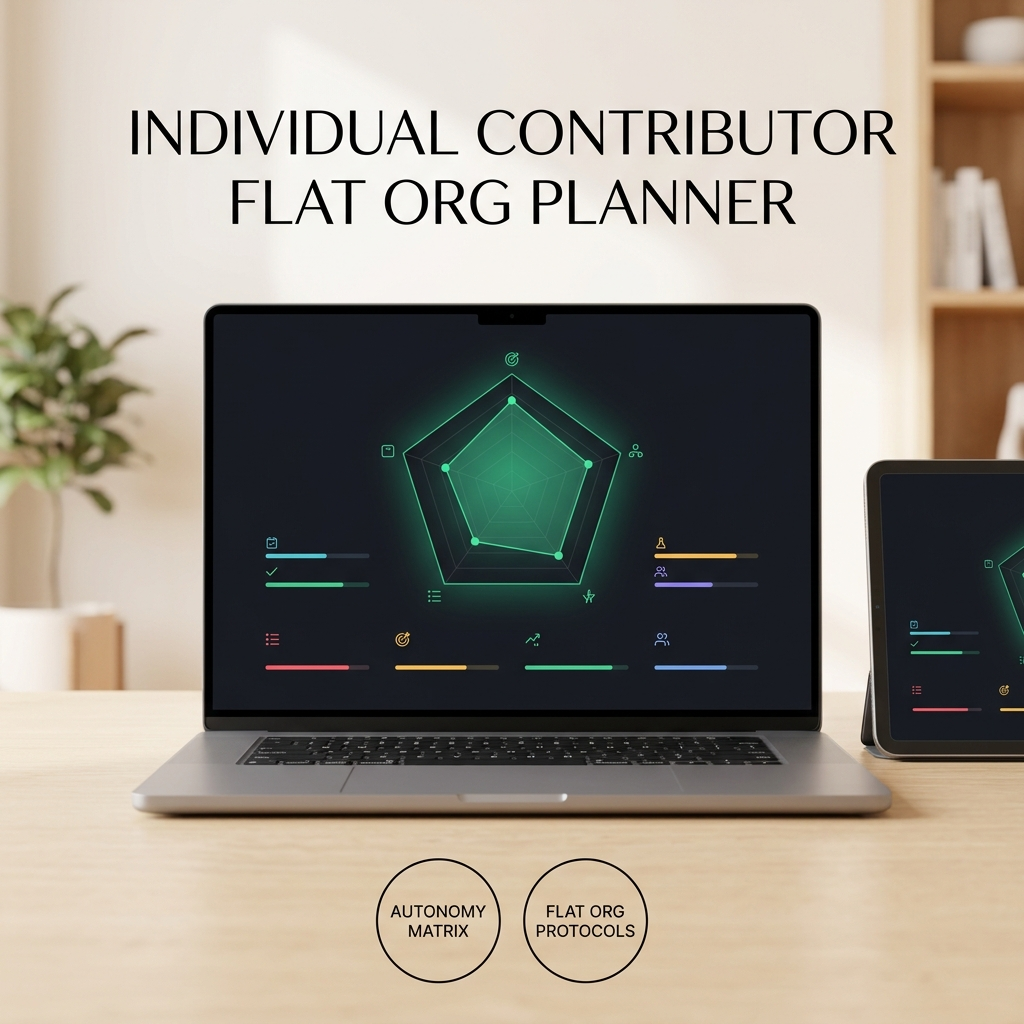
Our Individual Contributor Mastery & Flat Org Planner puts this in one private file: a 10-dimension competency matrix, flat-organization decision protocols including the advice process, a project portfolio tracker with ROI and visibility fields, and a compensation calculator that compares IC pay packages.
Future-proof the path
- To see which of your skills are durable as AI takes over routine work, the AI-Proof Career Planner audits your human-moat skills and maps transition milestones.
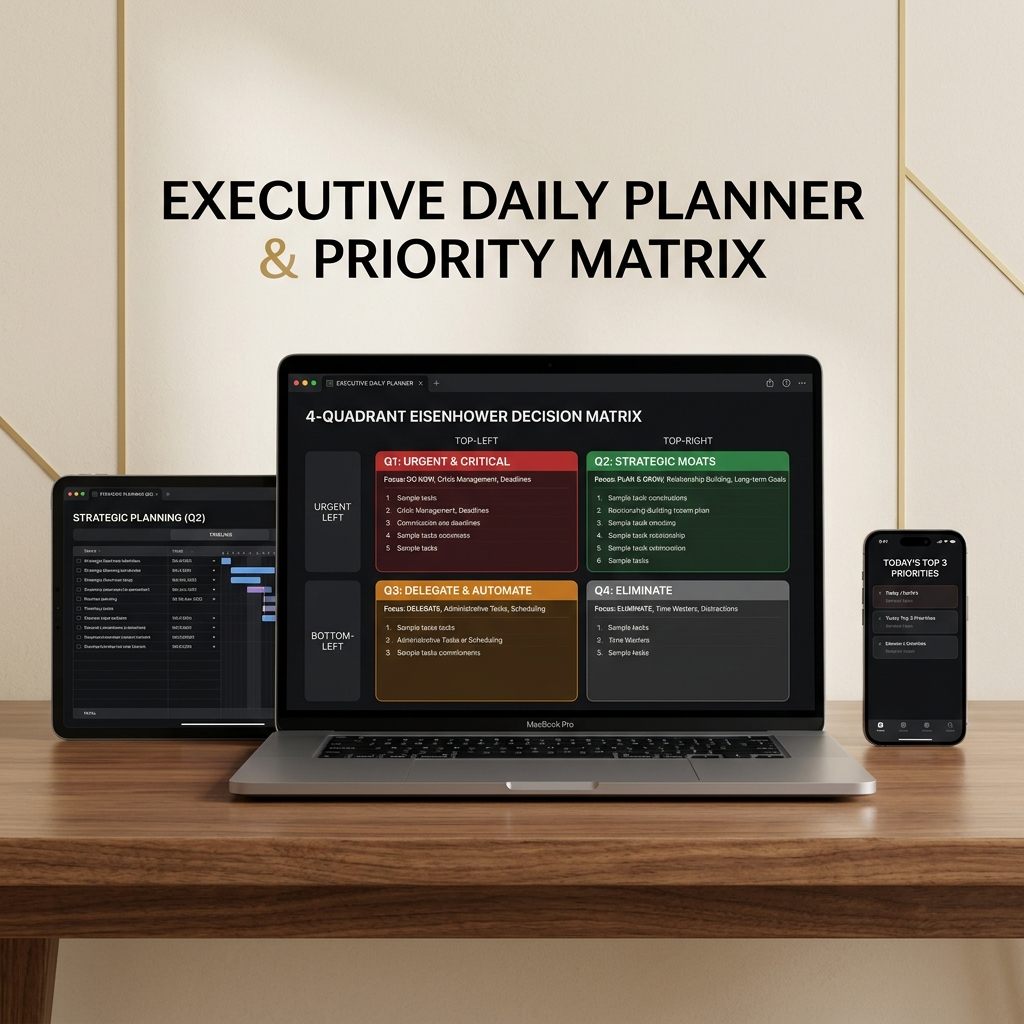
- To protect focus time inside a flat company full of meetings, the Executive Daily Planner & Priority Matrix combines Eisenhower prioritization with time blocking.
- If your organization flattens your role away, the Ultimate Job Hunt & Ghost Job Tracker keeps a search organized and flags listings that never respond.
Common mistakes
- Saying no to management without saying yes to something. Name the scope you want instead.
- Invisible excellence. In flat orgs, work that nobody sees might as well not exist. Write it up.
- Confusing autonomy with isolation. Senior ICs spend real time aligning peers.
- Ignoring the pay ladder. Ask HR whether a staff or principal level exists before you decide.
Strategic Topic Frameworks & Practical Connections
To deepen your practical mastery and build an integrated operational workflow within this topic, explore these complementary guides:
- Implement the execution protocols in 4-Day Work Week Schedule Model: Company Trials and Capacity Planning Guide to systematically strengthen your foundational routine.
- Explore the strategic principles detailed in AI Fatigue at Work: Why AI Tools Are Adding to Burnout and a Workflow System That Fixes It for advanced optimization and mental clarity.
- Apply the structured methods from Jobs AI Can't Replace: Building an Irreplaceable Human Moat and Career Roadmap to maintain long-term momentum and consistency.
FAQ
What does conscious unbossing mean?
Choosing not to pursue a middle-management role and growing as a senior individual contributor instead. The term comes from a 2024 Robert Walters survey in which 52% of Gen Z professionals said they did not want to be middle managers.
Is unbossing only a Gen Z trend?
It started as a Gen Z finding, but any professional who prefers expertise over managing people is making the same choice, especially as companies flatten.
Are companies really cutting middle managers?
Gartner predicted that by 2026, 20% of organizations would use AI to flatten their structures and remove more than half of their current middle-management roles.
Can I earn as much as an individual contributor?
In many companies, yes — parallel staff and principal levels pay comparably to management. It varies by employer, so compare total compensation, not titles.
What is the advice process?
A decision method used in flat organizations: anyone can make a decision after seeking advice from people affected by it and people with relevant expertise.
Explore verified real-time macro telemetry, market catalysts, and capital flow intelligence.
Corporate trend telemetry evaluating managerial span-of-control expansions, organizational layer reductions, and operational agility metrics.
Tools featured in this guide
Individual Contributor Mastery & Flat Org Planner — Unbossing Operating System
The complete interactive career roadmap, autonomous decision matrix, and specialist leverage engine for high-agency professionals thriving without middle management.
$24.99₫549,000
AI-Proof Career & Side-Hustle Transition Planner
Interactive single-file digital tool to audit human-moat skills, map career transition milestones, and manage diversified side-hustle revenue.
$24.99₫549,000
Executive Daily Planner & Priority Matrix — CEO 14h Schedule & Flat Org Operating System
Master High-Leverage Strategic Focus, 4-Quadrant Eisenhower Prioritization, and Flawless Time Blocking
$22.99₫499,000
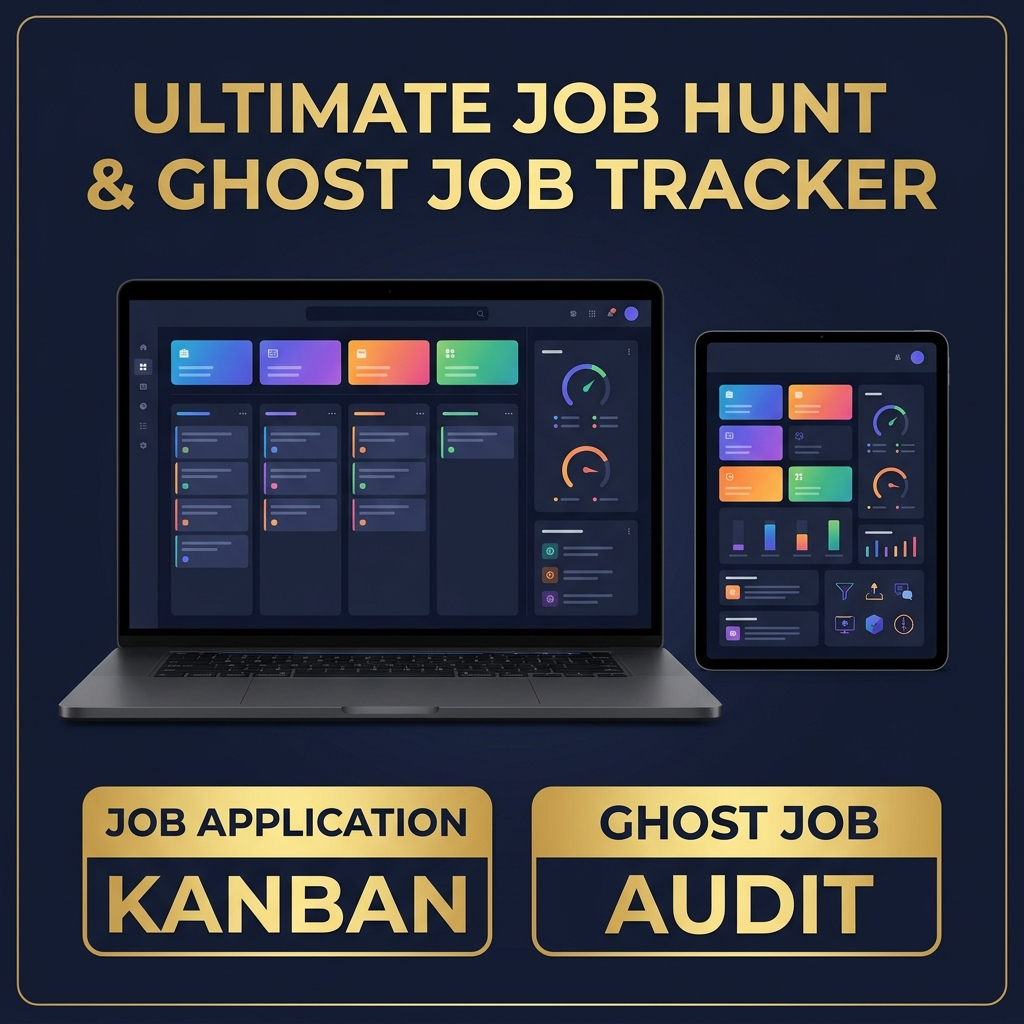
Ultimate Job Hunt & Ghost Job Audit Tracker
Algorithmic Ghost Job Detection, ATS Pipeline & Total Compensation Architecture | Yinyang Masters
$22.99₫499,000
Guides in this Topic
View all (10) → Career
Federal Layoff Survival Checklist: Buyouts, Severance, Benefits and Your Move to the Private Sector
A practical checklist for federal employees facing RIFs or buyouts: VSIP vs severance vs VERA, leave payout, FEHB TCC, TSP, ethics rules and a 90-day plan.
Read guide Career Navigation
How to Spot Ghost Jobs: AI Screening Audit & Application Tracker
Understand ghost jobs meaning in 2026. Spot fake postings, bypass automated ATS screening bots, and organize applications with private audit sheets.
Read guide Workplace Operations & Productivity
4-Day Work Week Schedule Model: Company Trials and Capacity Planning Guide
Explore 4-day work week companies, 32-hour schedule models, shift frameworks, and team capacity planning strategies to maximize workplace productivity.
Read guide Productivity
AI Fatigue at Work: Why AI Tools Are Adding to Burnout and a Workflow System That Fixes It
Why AI tools add to workload and burnout, the warning signs of AI fatigue, and a simple delegation and review system to get your time back.
Read guide Career Strategy
Jobs AI Can't Replace: Building an Irreplaceable Human Moat and Career Roadmap
Strategic guide to jobs AI cannot replace. Build human moat skills, map career transition milestones, and launch resilient independent income streams.
Read guide Workplace Strategy
Amazon 5-Day RTO Survival Guide & Coffee Badging Framework
Master the Amazon 5-day return-to-office mandate. Learn coffee badging survival tactics, badge tracking spreadsheets, and hybrid schedule management.
Read guide
Topic Pillar
Career Resilience & Workplace
AI-proof careers, solopreneurship, corporate navigation, and future-ready personal moats.
Ask Yinyang Masters inside your AI assistant
Get the same calculations and guidance right in your chat: add the free Yinyang Masters app, then ask in plain English. No account needed.
Try asking: “Find a Yinyang Masters guide about starting a daily spiritual practice.”