



Cal Newport Deep Work & Time-Blocking Planner Guide

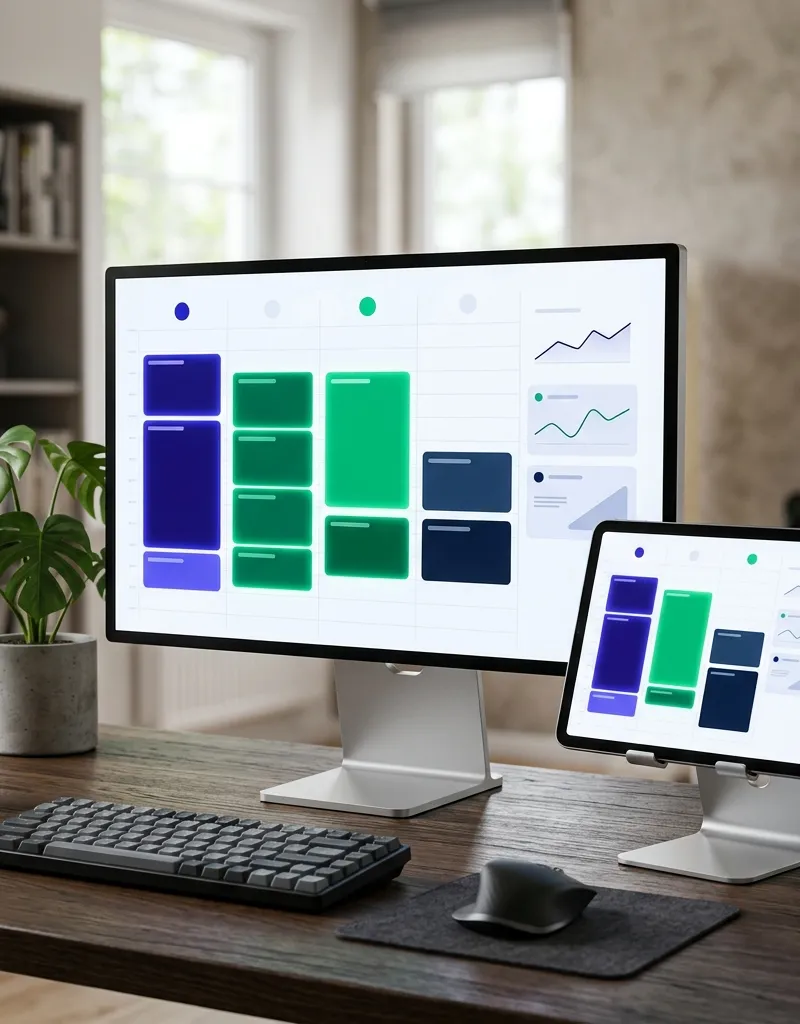
Cal Newport, Georgetown University computer science professor and bestselling author of Deep Work and Slow Productivity, argues that the ability to perform deep, distraction-free work is becoming increasingly rare at the exact moment it is becoming most valuable in our modern cognitive economy.
Deep work represents professional activities performed in a state of distraction-free concentration that push cognitive capabilities to their absolute limit. In contrast to shallow work—non-cognitively demanding, logistical tasks often performed while semi-distracted—deep work creates new value, optimizes skill acquisition, and remains extraordinarily difficult for artificial intelligence and routine offshore labor to replicate.
┌─────────────────────────────────────────────────────────────┐
│          CAL NEWPORT DEEP WORK & ATTENTION ARCHITECTURE     │
├─────────────────────────────────────────────────────────────┤
│ 1. The Deep Work Hypothesis                                 │
│    ├──> High-Value Cognitive Output = (Time Spent) x (Focus)│
│    └──> Elimination of Constant Connectivity & Context Shift│
│ 2. The 4 Scheduling Philosophies                            │
│    ├──> Monastic: Complete isolation from shallow demands    │
│    ├──> Bimodal: Dividing weeks or months into deep retreats │
│    ├──> Rhythmic: Fixed daily recurring blocks (e.g. 8-11am)│
│    └──> Journalistic: Seizing ad-hoc focus hours on the fly │
│ 3. Daily Execution Architecture                             │
│    ├──> 30-Minute Segmented Time-Block Grids                │
│    ├──> Proactive Buffer Blocks for Unplanned Reactive Chaos│
│    └──> Strict Shutdown Complete Ritual & Digital Detox     │
└─────────────────────────────────────────────────────────────┘
1. The Core Deep Work Hypothesis vs. The Shallow Work Trap
In traditional corporate workplaces, knowledge workers confuse busyness with productivity. Constant Slack messaging, rapid-fire email turnaround, and fragmented calendars provide an illusion of intense contribution while preventing genuine intellectual breakthrough.
Newport defines the overarching formula of high-performance knowledge work as:
$$\text{High-Quality Work Produced} = (\text{Time Spent}) \times (\text{Intensity of Focus})$$
When you toggle between an analytical programming task and an incoming email notification, you do not immediately transition 100% of your cognitive power. Instead, you incur Attention Residue—a psychological phenomenon where fragments of attention remain stuck on the previous task. Even brief 10-second checks of your inbox degrade your prefrontal cortex's working memory and problem-solving velocity for up to 20 minutes.

2. The 4 Deep Work Scheduling Philosophies
Deep work cannot simply be left to spontaneous inspiration. Cal Newport identifies four distinct organizational approaches to embedding deep work into a professional schedule:
| Scheduling Philosophy | Core Mechanism | Target Practitioner Profile | Primary Implementation Challenge |
|---|---|---|---|
| Monastic Philosophy | Eliminates or radically minimizes all shallow obligations; lives in near-total isolation. | Novelists, theoretical physicists, solo computer scientists. | Impractical for standard modern corporate roles requiring team collaboration. |
| Bimodal Philosophy | Divides calendar into distinct deep stretches (days/weeks) and open shallow windows. | University professors, researchers, boutique agency founders. | Requires institutional support and high boundary autonomy. |
| Rhythmic Philosophy | Establishes a fixed, habitual daily rhythm (e.g., uninterrupted 5:00 AM – 8:00 AM session). | Engineers, managers, product leaders, full-time knowledge workers. | Demands rigorous sleep consistency and evening shutdown discipline. |
| Journalistic Philosophy | Switches instantly into deep work mode whenever a 60–90 minute window opens up. | Seasoned executives, senior consultants with erratic schedules. | High cognitive friction; requires immense mental training to enter flow instantly. |
For over 90% of corporate professionals and digital creators, the Rhythmic Philosophy serves as the optimal entry point. By chaining deep work to a predictable morning anchor before incoming communications begin, you guarantee that high-leverage intellectual capital is generated before organizational chaos ensues.
3. The Mechanics of Daily Time-Blocking
A generic to-do list is a recipe for procrastination. When faced with an unstructured list of 15 tasks, the brain naturally gravitates toward the easiest, lowest-leverage shallow items to trigger a dopamine spike of perceived progress.
Cal Newport advocates for Time-Blocking (also known as calendar blocking or chunking), wherein every minute of the workday is assigned a specific operational purpose:
- Dual-Column Architecture: The morning block plan is laid out in 30-minute increments in column one. Column two remains reserved for mid-day adjustments when real-world exigencies disrupt the initial projection.
- Batching Shallow Tasks: Administrative obligations—answering transactional emails, filing receipts, quick team catch-ups—are compressed into tight 30-to-45-minute sprint blocks rather than scattered across the day.
- Dedicated Overflow Buffers: Seasoned practitioners schedule 60–90 minutes of unassigned buffer time in the afternoon to absorb unexpected emergencies without blowing up their primary deep work allocations.
- The Fixed-Schedule Shutdown Ritual: Newport insists on an explicit verbal or physical conclusion ritual (e.g., saying aloud "Shutdown complete", closing all browser tabs, reviewing tomorrow's plan). This signals to the brain's Zeigarnik effect that work is securely parked, ending rumination and allowing cognitive rejuvenation.

4. Complementary High-Performance Toolkits
To operationalize Cal Newport's methodology, pairing theoretical knowledge with dedicated interactive workstations dramatically shortens the path from intention to execution:
- Master time-blocking execution with the Cal Newport Deep Work Time-Block Planner & Focus Block Dashboard, featuring reactive Pomodoro focus engines, distraction containment logs, and shutdown ritual checklists.
- Construct irresistible, high-leverage core business offerings without getting trapped in endless feature development using the Alex Hormozi $100M Offers Value Equation Calculator & Leads Dashboard.
- Ruthlessly prune secondary distractions and establish strict focus guardrails with the Warren Buffett 5/25 Avoid-At-All-Costs Planner.
Strategic Topic Frameworks & Practical Connections
To deepen your practical mastery and build an integrated operational workflow within this topic, explore these complementary guides:
- Implement the execution protocols in Eisenhower Matrix & Urgent vs Important Task Delegation Guide to systematically strengthen your foundational routine.
- Explore the strategic principles detailed in Elon Musk's 5-Minute Timeboxing and 5-Step Algorithm: How the Method Works and How to Use It Without Burning Out for advanced optimization and mental clarity.
- Apply the structured methods from Elon Musk First Principles Thinking & 5-Minute Time Boxing Guide to maintain long-term momentum and consistency.
5. Frequently Asked Questions (FAQ)
What is the exact difference between deep work and flow state?
While both involve focused concentration, flow state refers to an optimal subjective psychological experience where time seems to vanish during a challenge-matched activity. Deep work is an operational work discipline focused specifically on generating high-value intellectual output. You can perform effective deep work even on days when flow state feels elusive.
How many hours of deep work can a person perform each day?
According to empirical research cited by Cal Newport and Anders Ericsson, the human brain can sustain a maximum of approximately 4 hours of true, intense, edge-of-capacity deep work per day. Beginners often max out at 60 to 90 minutes before mental fatigue sets in. Attempting 8 to 10 hours of uninterrupted deep work typically results in severe cognitive degradation and low-quality output.
How do I handle unexpected urgent emergencies during a scheduled deep work block?
Time-blocking is not a rigid cage; it is a thoughtful plan for your attention. When an urgent emergency occurs, simply draw a clean line through the remaining afternoon blocks, create an updated column reflecting the reality, allocate 30 minutes to triage the issue, and protect your remaining key priorities.
What should I do if my job requires constant communication on Slack or email?
Cal Newport recommends adopting structured communication intervals. Negotiate with your team or stakeholders to establish designated check-in windows (e.g., 11:30 AM and 4:00 PM) while keeping morning hours reserved for deep project sprints. Clearly communicating your availability windows sets expectations without causing operational paralysis.
Tools featured in this guide
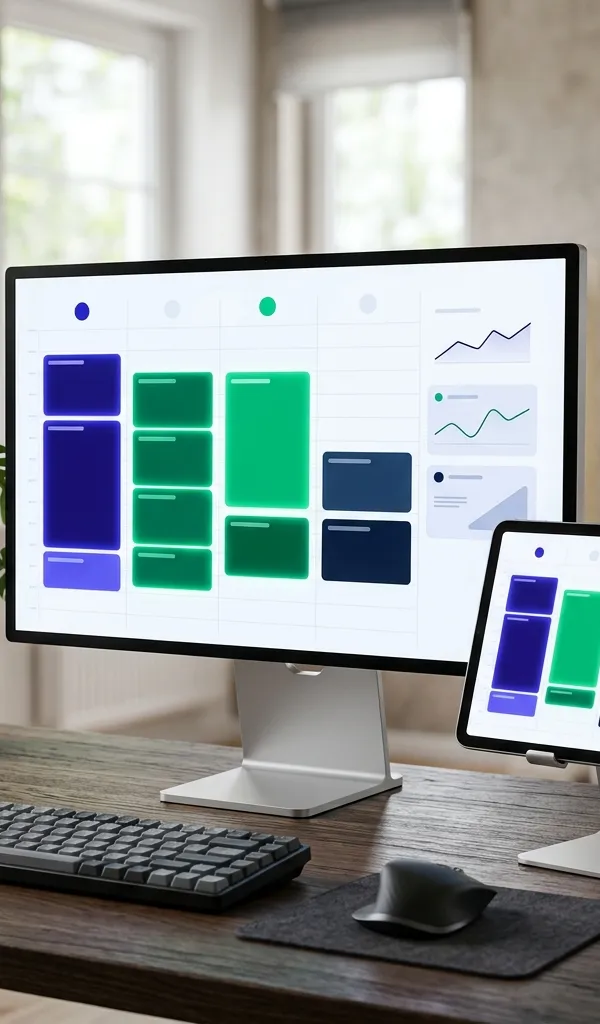
Cal Newport Deep Work Time-Block Planner & Focus Block Dashboard
The definitive single-file interactive workspace engineered for uncompromising cognitive focus, 30-minute time-blocking, distraction isolation, and elite mental output.
$24.99₫549,000

Alex Hormozi $100M Offers Value Equation Calculator & Rule of 100 Leads Dashboard
Interactive single-file digital workstation for engineering Grand Slam Offers, pricing power maximization, and disciplined daily 100-lead client acquisition.
$24.99₫549,000
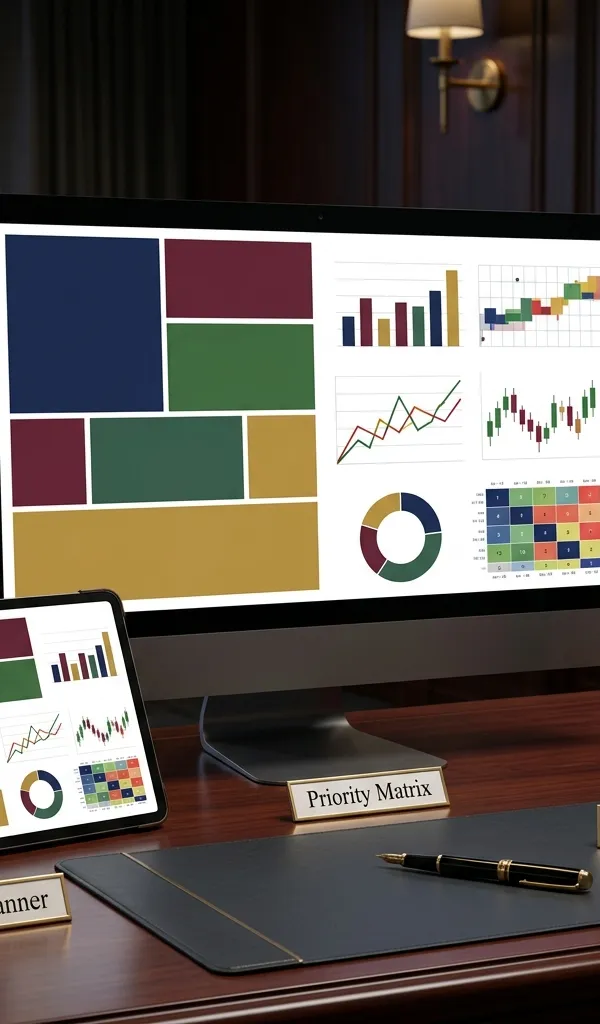
Warren Buffett 5/25 Avoid-At-All-Costs Planner & 20-Slot Life Decision Journal
Interactive single-file digital workstation for ruthless prioritization, 5/25 distraction defense, and Charlie Munger's 20-slot lifetime investment punch card.
$24.99₫549,000
Guides in this Topic
View all (23) →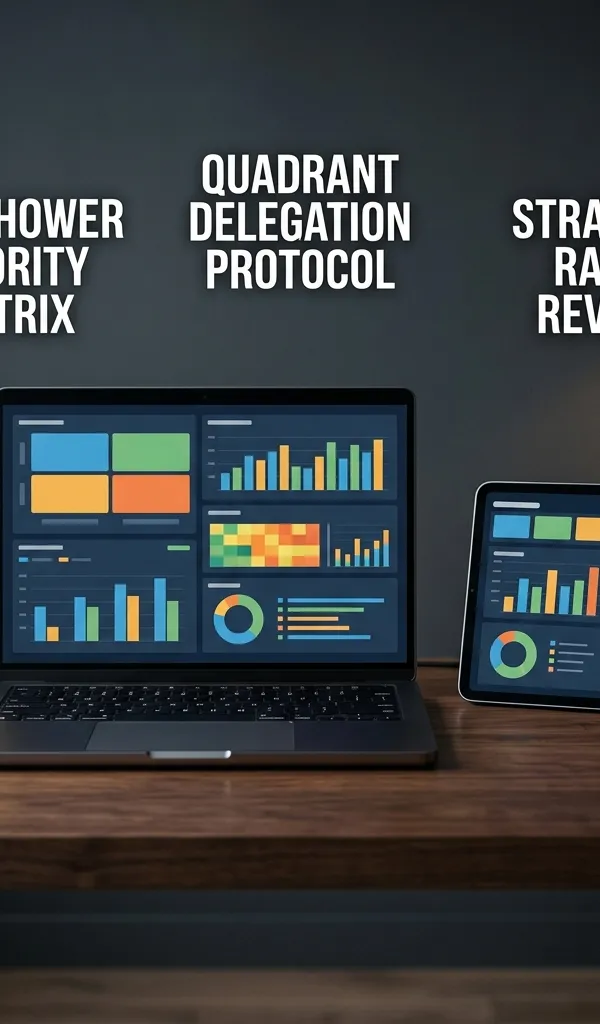 Executive Leadership & Prioritization Systems
Eisenhower Matrix & Urgent vs Important Task Delegation Guide
Master the Eisenhower Matrix 4-quadrant system to defeat the Mere Urgency Effect, automate delegation protocols, and allocate 65%+ focus to Quadrant 2.
Read guide Productivity & Habits
Derek Sivers Hell Yeah or No Decision Matrix & Radical Focus System
Master Derek Sivers' Hell Yeah or No matrix. Learn how saying no to lukewarm requests protects your time, eliminates burnout, and fuels radical focus.
Read guide Productivity & Executive Leadership
Elon Musk 100-Hour Work Week Schedule & 5-Minute Time-Boxing Guide
Master Elon Musk's hardcore schedule, 5-minute time-boxing rule, deep work routine, and ruthless focus frameworks to eliminate procrastination.
Read guide Productivity & Career Strategy
Google 20% Time Rule Side Project Incubation & Income Tracker Guide
Master Google's 20% time rule to incubate side hustles, balance 80/20 deep work, and build diversified sovereign income without corporate burnout.
Read guide Future Skills & Technological Singularity
Ray Kurzweil Singularity 2029 Future Skills Matrix & AI Career Transition Roadmap
Master Ray Kurzweil's Law of Accelerating Returns, navigate 2029 AGI Turing parity, and build 2030 future skill moats against cognitive automation.
Read guide Leadership & Purpose Frameworks
Simon Sinek Start With Why & Golden Circle Purpose Guide
Master Simon Sinek's Start With Why and Golden Circle framework. Discover your core purpose, define guiding principles, and pass the Celery Test.
Read guide
Topic Pillar
Productivity & Deep Work
Time-blocking, personal operating systems, Second Brain architecture, and cognitive optimization.
Ask Yinyang Masters inside your AI assistant
Get the same calculations and guidance right in your chat: add the free Yinyang Masters app, then ask in plain English. No account needed.
Try asking: “Find a Yinyang Masters guide about starting a daily spiritual practice.”