



Jeff Bezos 70% Rule & Type 1 vs Type 2 Decisions Guide


The jeff bezos 70 rule states that high-velocity leaders should make most strategic decisions with roughly 70% of the information they wish they had, rather than waiting for 90%. Waiting for near-certainty leads to organizational slowness, analysis paralysis, and lost competitive advantage in fast-moving global markets.
Articulated in his legendary 2016 Amazon Shareholder Letter, Jeff Bezos revolutionized corporate governance by demonstrating that velocity matters as much as quality in enterprise decision-making. Most corporate bureaucracies suffer a catastrophic failure mode: they treat every minor operational choice as an existential crisis, demanding endless committee reviews, consensus memos, and exhaustive spreadsheets. By distinguishing between irreversible one-way doors and reversible two-way doors, Bezos engineered Amazon into a perpetual Day 1 machine that experiments aggressively, corrects course rapidly, and out-iterates competitors.
1. Deconstructing the 70% Rule: Speed vs. Certainty
In conventional corporate hierarchies, managers operate out of fear. They delay decisions until they possess 90% or more of all conceivable data, believing this eliminates risk. Bezos recognized that this delay creates a far deadlier systemic risk: terminal lethargy.
             THE DATA THRESHOLD CURVE
┌────────────────────────────────────────────────────────┐
│ < 50% Data:  Gambling & Reckless Guesswork             │
│   70% Data:  Optimal High-Velocity Executive Strike Zone │
│ > 90% Data:  Analysis Paralysis & Competitive Slowness │
└────────────────────────────────────────────────────────┘
    * EXECUTE AT 70%, RELY ON SPEEDY COURSE CORRECTION *
Key operational realities behind the 70% principle:
- The Cost of Slowness Outweighs Imperfection: If you are proficient at course correction, being wrong occasionally is far cheaper than being permanently late. In dynamic technology markets, first-mover feedback compounds faster than perfect preliminary theory.
- The Illusion of 100% Certainty: Market dynamics, consumer preferences, and competitor counter-moves are non-linear variables. By the time you accumulate 90% certainty on an emerging trend, the window of strategic advantage has already closed.
- Mastering the Pivot: The 70% rule only functions if your organization cultivates extreme agility in recognizing and repairing suboptimal choices. Bezos famously noted: "If you're good at course correcting, being wrong may be less costly than you think, whereas being slow will be expensive for sure."

2. Type 1 vs. Type 2 Decisions: The Doorway Architecture
The foundational mechanism that unlocks the 70% rule is Bezos's architectural division of all corporate choices into two distinct archetypes:
Type 1 Decisions: The One-Way Door (Irreversible & Consequential)
Type 1 decisions are monumental, high-stakes commitments that cannot be undone once executed.
- The Physical Metaphor: You walk through a doorway, and the heavy door locks behind you. If you dislike what you see on the other side, you cannot walk back through.
- Real-World Examples: Selling your company, entering an entirely new multi-billion-dollar hardware market, acquiring a major competitor, or establishing a core architectural data schema.
- Operating Protocol: These choices should be made deliberately, cautiously, with extensive consultation and near-exhaustive analytical rigor. Fast decisions here can lead to corporate bankruptcy.
Type 2 Decisions: The Two-Way Door (Reversible & Iterative)
Type 2 decisions constitute the overwhelming majority (over 90%) of daily business operations.
- The Physical Metaphor: You step through the doorway into the room. If it proves unproductive or flawed, you turn the knob, step right back through, and sit down where you started. The penalty for being wrong is minimal.
- Real-World Examples: A/B testing a landing page headline, testing a new pricing tier on a cohort of users, piloting a new customer service workflow, or choosing an experimental marketing channel.
- Operating Protocol: These choices should be made rapidly by autonomous individuals or small teams with high domain judgment. Forcing Type 2 decisions through bureaucratic committee reviews demoralizes talented employees and paralyzes innovation.
To operationalize this mental framework across your business or agency, founders deploy the interactive Jeff Bezos Type 1 vs Type 2 Decision Matrix, a structured decision-tree tool that enforces risk categorization, pre-mortems, and autonomous delegation rules.
3. Disagree and Commit: Breaking Consensus Gridlock
A major obstacle to high-velocity execution is the exhausting pursuit of universal agreement. Waiting until every stakeholder is emotionally satisfied turns leadership into a political negotiation.
To resolve genuine deadlocks between brilliant executives, Bezos introduced the principle of Disagree and Commit:
- What It Means: When two domain experts hold diametrically opposed viewpoints after examining the 70% data, the decision-maker or dissenting party explicitly says: "Look, I know we disagree on this, but will you bet on it with me? Disagree and commit?"
- What It Is NOT: It is not passive-aggressive compliance or malicious obedience where someone waits for the project to fail so they can say "I told you so." It is an authentic, wholehearted commitment to dedicate 100% of your energy to making the chosen path succeed, despite personal theoretical reservations.
- The Strategic Benefit: This protocol saves months of unproductive circular debates and allows teams to test hypotheses in the real marketplace instead of boardrooms.

4. Comparing Decision Archetypes Across Elite Frameworks
Understanding how Bezos's models integrate with other proven executive methodologies creates an unstoppable strategic playbook:
| Decision Dimension | Type 1 (One-Way Door) | Type 2 (Two-Way Door) | First Principles (Elon Musk) | 80/20 Rule (Vilfredo Pareto) |
|---|---|---|---|---|
| Primary Goal | Survival & existential security | Speed, learning & experimentation | Fundamental engineering truth | Ruthless efficiency & leverage |
| Data Threshold | 90%+ data & rigorous pre-mortem | 70% data & rapid hypothesis test | Underlying physics & cost breakdown | Identify vital 20% inputs |
| Authority Level | CEO, Board & Senior Leadership | Autonomous individual or small team | Chief Engineer & technical leads | Operations manager / Practitioner |
| Reversibility | Extremely costly or impossible | Cheap, immediate & painless | Rebuilt from elementary truths | Easy subtraction of low-value tasks |
| Speed Bias | Deliberate, methodical, slow | Extremely fast, biased to action | Fast prototyping, hardware iterations | Rapid elimination of waste |
5. Integrating High-Velocity Frameworks into Daily Operations
A high-velocity mindset requires structural integration into your executive calendar and team workflows:
| Bezos Strategic Principle | Tactical Daily Equivalent | Recommended Operating Tool |
|---|---|---|
| Door Classification | Filter all choices into One-Way vs. Two-Way gates | Jeff Bezos Decision Matrix |
| Circadian Cognitive Clarity | Schedule high-IQ Type 1 reviews before lunch | Tim Cook 3:45 AM Routine Dashboard |
| Micro-Time Boxing | Contain Type 2 discussions within 5-minute blocks | Elon Musk 5-Minute Time Boxing Planner |
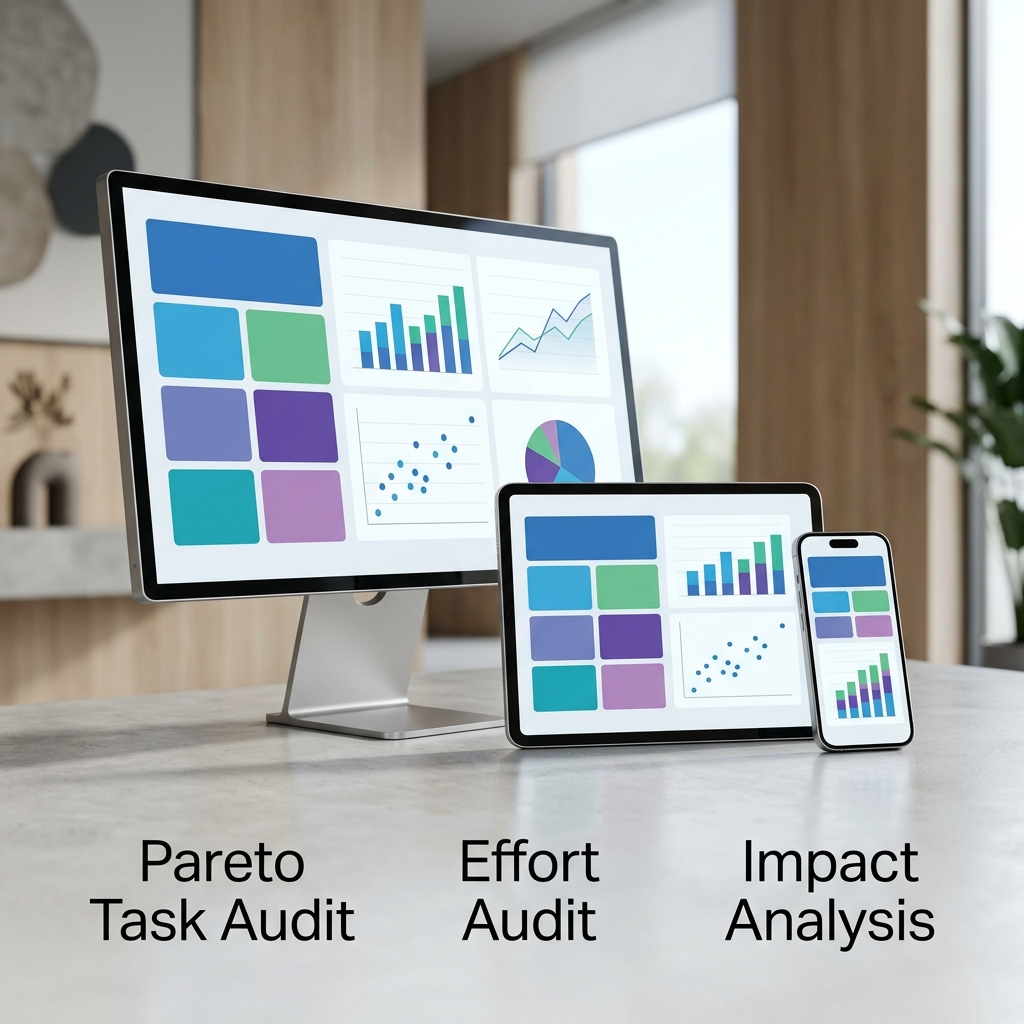
| Eliminating Low-Value Friction | Strip out 80% of repetitive operational bottlenecks | Pareto 80/20 Task Audit Spreadsheet |
6. Five Practical Steps to Implement the 70% Rule in Your Team
- Mandate Door Labels in Proposals: Require every team member submitting an initiative to write at the top of the memo: "This is a Type 2 decision with high reversibility" or "This is a Type 1 decision requiring deep review."
- Replace 30-Slide PowerPoints with 6-Page Narrative Memos: Bezos famously banned PowerPoint at Amazon, replacing it with structured narrative memos read in silence at the beginning of meetings. Narrative text forces intellectual rigor and exposes lazy assumptions.
- Enforce the 70% Data Gate: When an employee hesitates, ask: "Do we have roughly 70% of the facts? What specific data point would change your mind, and how much will it cost in time to acquire it?"
- Celebrate Intelligent Failure: If a Type 2 decision fails, do not penalize the experimenter. Analyze the feedback loop, celebrate the speed of learning, and course-correct immediately.
- Empower Two-Pizza Teams: Keep decision units small enough to be fed by two pizzas (typically 6 to 10 people). Small autonomous teams make rapid Type 2 decisions naturally without bureaucratic overhead.
Strategic Topic Frameworks & Practical Connections
To deepen your practical mastery and build an integrated operational workflow within this topic, explore these complementary guides:
- Implement the execution protocols in Jensen Huang Daily Routine & Flat Organization Management Framework to systematically strengthen your foundational routine.
- Explore the strategic principles detailed in Mark Cuban Shark Tank Productivity Rules: The Effort Metric, No-Meeting Discipline & Business Decision Framework for advanced optimization and mental clarity.
- Apply the structured methods from Mark Zuckerberg Year of Efficiency: Lean Operations Playbook Guide to maintain long-term momentum and consistency.
7. Frequently Asked Questions (FAQ)
What is the biggest mistake companies make with Type 1 and Type 2 decisions?
The single most prevalent mistake is treating reversible Type 2 decisions as if they were fatal Type 1 decisions. As organizations grow, risk aversion leads to excessive consensus-seeking, bogging down simple website edits or marketing tests in months of bureaucratic gridlock.
Does making decisions with 70% information mean being reckless?
No. Acting on less than 50% information is reckless guessing. The 70% threshold represents the golden mean where you possess sufficient empirical data to formulate a strong hypothesis while retaining the speed required to outpace competitors.
How does "Disagree and Commit" differ from standard consensus building?
Consensus building seeks to convince everyone until there are no remaining objections, which frequently waters down the boldest ideas into bland compromises. Disagree and Commit allows leaders to pursue daring, controversial strategies rapidly while ensuring everyone executes with complete loyalty.
How does Jeff Bezos organize his daily decision-making rhythm?
Bezos prioritizes high-cognitive Type 1 decisions between 10:00 AM and 12:00 PM when mental energy peaks. He avoids making critical irreversible choices after 5:00 PM or when fatigued, knowing that executive judgment deteriorates rapidly under exhaustion.
8. Conclusion: Cultivating an Unshakable Day 1 Mentality
Jeff Bezos's 70% rule and doorway decision architecture are not merely managerial techniques; they represent a comprehensive philosophy designed to ward off organizational decay.
In Bezos's taxonomy, Day 2 is stasis, followed by irrelevance, followed by excruciating decline, followed by death. To maintain a dynamic Day 1 culture, you must embrace uncertainty, make decisions with speed and courage, empower front-line autonomy, and trust in your organization's relentless capacity to learn and course-correct.
Explore verified real-time macro telemetry, market catalysts, and capital flow intelligence.
Strategic signals terminal filtering high-conviction catalysts, reversible vs irreversible decision thresholds, and regulatory convergence data.
Tools featured in this guide
Jeff Bezos Type 1 vs Type 2 Decision Making Matrix & 70% Rule Dashboard
High-Velocity Executive Operating System for Two-Way Doors, Disagree and Commit Pacts, and Day 1 Vitality
$24.99₫549,000
Tim Cook 3:45 AM Routine & Operational Excellence Daily Dashboard
$24.99₫549,000
Elon Musk First Principles Thinking & 5-Minute Time Boxing Planner Dashboard
Interactive executive productivity cockpit: deconstruct problems to first principles, eliminate Parkinson law with 5-minute time boxing, and optimize workflows using Musk 5-step algorithm.
$24.99₫549,000
Pareto Principle 80/20 Task Audit & Workflow Optimization Spreadsheet
Interactive Operational Matrix to Eliminate Trivial Busywork, Automate Friction, and Multiply High-Leverage Output
$24.99₫549,000
Guides in this Topic
View all (15) → Tactical Negotiation & Executive Influence Architecture
Never Split the Difference by Chris Voss: Tactical Empathy & High-Stakes Negotiation Guide
Master Never Split the Difference: tactical empathy, calibrated questions, salary negotiation scripts, and high-stakes deal-closing frameworks.
Read guide Executive Strategy & Deep Intellectual Rituals
Bill Gates Think Week Strategy & Yellow Pad Deep Reading Guide
Master Bill Gates' famous Think Week ritual: solitary reading retreats, tactical Yellow Pad note-taking, and strategic thesis memo formulation.
Read guide Executive Leadership & Startup Strategy
What is Founder Mode? Brian Chesky Hands-On Operations Guide
Discover what Founder Mode is, how Brian Chesky operates Airbnb, why traditional manager mode fails, and how to run a high-craft flat organization.
Read guide Multi-Disciplinary Wisdom & Executive Decision Frameworks
Charlie Munger Mental Models & Inversion Decision Matrix Guide
Master Charlie Munger's multi-disciplinary mental models lattice, the fatal inversion thinking principle, and weighted executive decision matrices.
Read guide Executive Leadership & Negotiation Strategy
Donald Trump Daily Schedule: 4-Hour Sleep & Art of the Deal System
Deconstruct the Donald Trump daily schedule, 4-hour sleep routine, timebox system, and Art of the Deal negotiation strategies for peak productivity.
Read guide High-Performance Execution & Productivity Architecture
The 10X Rule by Grant Cardone: Massive Action, Extreme Target Setting & Market Domination Guide
Master Grant Cardone's 10X Rule: 10X goal-setting, the 4 degrees of action, overcoming fear of rejection, and daily execution architectures.
Read guide
Topic Pillar
Leadership & Mental Models
High-stakes decision frameworks, first-principles reasoning, and executive operational mastery.
Ask Yinyang Masters inside your AI assistant
Get the same calculations and guidance right in your chat: add the free Yinyang Masters app, then ask in plain English. No account needed.
Try asking: “Find a Yinyang Masters guide about starting a daily spiritual practice.”