



Mark Cuban Shark Tank Productivity Rules: The Effort Metric, No-Meeting Discipline & Business Decision Framework

Mark Cuban's Shark Tank productivity rules center on ruthless calendar defense, asynchronous email communication, and the non-negotiable Effort Metric—the foundational principle that effort is the only competitive variable fully within an entrepreneur's control, enabling high-stakes operational velocity and decisive business execution.
As the billionaire investor, long-tenured star of ABC's Shark Tank, and former majority owner of the Dallas Mavericks, Mark Cuban has evaluated thousands of business pitches and built multi-billion-dollar enterprises from scratch. From selling garbage bags door-to-door in Pittsburgh to founding MicroSolutions and selling Broadcast.com to Yahoo for $5.7 billion, Cuban's trajectory is defined by unconventional operating principles. While modern corporate culture glorifies marathon meetings, bloated decks, and performative busywork, Cuban champions extreme operational frugality and aggressive intellectual preparation.
Whether navigating a high-pressure venture negotiation on Shark Tank or scaling a portfolio company, Cuban's operational playbook strips away enterprise friction to focus on two core drivers: solving real customer problems and outworking the competition.
1. The Core Productivity Architecture: Asynchronous Command & No-Meeting Discipline
The most controversial and defining element of Mark Cuban's personal operating system is his absolute refusal to participate in recurring meetings or phone calls. In an era where middle management schedules 30-minute status check-ins for tasks solvable in three sentences, Cuban manages hundreds of companies and investments almost exclusively through asynchronous email.
+-----------------------------------------------------------------------------------+
|                     CUBAN ASYNCHRONOUS PRODUCTIVITY FILTER                        |
+-----------------------------------------------------------------------------------+
|  INCOMING REQUEST --> Can it be solved via email in 2-3 sentences?                |
|         |-- YES ----> Answer immediately with actionable decision; archive.       |
|         \-- NO -----> Refuse phone call/meeting; demand structured executive memo.|
+-----------------------------------------------------------------------------------+
1. The Asynchronous Email Protocol
Cuban treats email as a searchable, permanent audit log of commitments and strategy. By handling company communication via email:
- Instant Searchability: Every decision, contract parameter, and financial metric is permanently documented and instantly retrievable without reliance on meeting minutes.
- Batched Attention: Rather than fracturing executive focus with real-time interruptions, communication occurs at the investor's cadence—typically in early mornings and late evenings.
- Elimination of Fluff: Phone calls and in-person meetings inherently encourage small talk, delayed agendas, and posturing. Text-based communication forces founders to state their ask, back it with data, and propose solutions succinctly.
2. The Ruthless No-Meeting Filter
Cuban has famously noted: "No meetings unless someone is writing a check." When an entrepreneur requests 45 minutes of face time, they are asking to seize synchronous cognitive capacity. If a matter cannot be summarized in an executive bulleted memo, it signifies that the underlying thinking is muddled. By rejecting 99% of calendar invites, Cuban preserves 6 to 8 hours of uninterrupted deep work and strategic analysis every day.
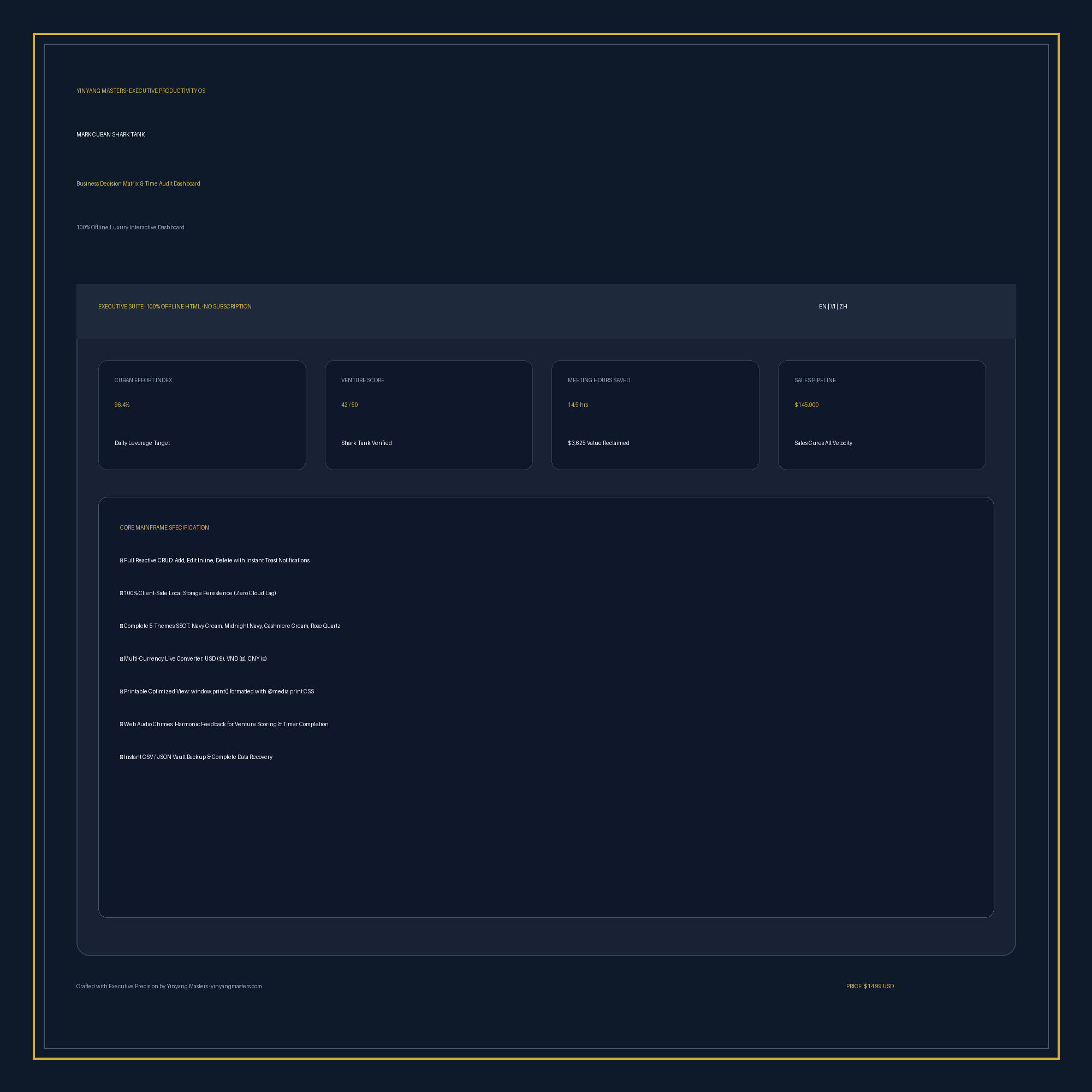
To operationalize this executive audit in your own workflow, high-output operators implement the Mark Cuban Shark Tank Business Decision Matrix & Time Audit Dashboard, systematically scoring meeting utility and reallocating low-leverage hours into revenue-generating sales activities.
2. The Effort Metric: "Work Like Someone Is Working 24 Hours a Day to Take It from You"
In his bestselling manifesto How to Win at the Sport of Business, Cuban codifies his most famous operational mantra:
"Work like there is someone working 24 hours a day to take it away from you."
Most struggling founders attribute business stagnation to external headwinds: macroeconomic downturns, algorithm shifts, lack of venture funding, or incumbent protectionism. Cuban flatly rejects these excuses through the doctrine of The Effort Metric.
+-------------------------------------------------------------------------------+
|                             THE CUBAN EFFORT METRIC                           |
+-------------------------------------------------------------------------------+
|  OUTCOMES = [Controllable: 100% Relentless Effort] x [Market Feedback Loops]  |
|  Excuses (Funding, Network, Economy) = Cognitive Friction (Eliminate)         |
+-------------------------------------------------------------------------------+
The Three Operational Tenets of the Effort Metric:
- Domain Immersion: In any industry you enter, you must read every trade journal, test every competitor product, study regulatory filings, and master technical nuances until you possess asymmetric market knowledge.
- First In, Last Out Execution: When Cuban built MicroSolutions, he slept on the floor of his office, ate mustard and ketchup sandwiches, and stayed up until 2:00 AM reading software manuals so he could answer customer queries better than IBM consultants.
- Intellectual Honesty: Effort is not about logging 90 hours of mindless scrolling or administrative tweaking; it is about confronting the most agonizing, high-leverage challenges that competitors deliberately avoid (e.g., cold calling 50 prospects a day, refactoring buggy checkout code).
Complementing this relentless drive with structured multi-channel systems like the Solopreneur Operating System One-Person Business Planner ensures that founder energy is channeled directly into customer acquisition rather than disorganized chaos.
3. The Shark Tank Evaluation Protocol: What Cuban Looks for in 60 Seconds
Across 16 seasons and hundreds of transactions on Shark Tank, Mark Cuban has refined a rapid cognitive triage matrix to evaluate startups within the first three minutes of a pitch. Behind the theatrical television format lies a rigorous venture capitalist checklist:
| Evaluation Vector | Red Flag (Immediate "I'm Out") | Green Flag (Cuban Invests) |
|---|---|---|
| Sales Validation | "We have 100,000 app downloads but zero revenue." | "We did $400,000 in sales out of our garage with zero ad spend." |
| Founder Self-Awareness | Arrogance, defensiveness, or inability to answer unit economics. | Candid acknowledgment of weaknesses and crystal-clear understanding of COGS. |
| Intellectual Property & Moat | A generic commodity easily replicated by Amazon or white-label factories. | Patented proprietary mechanism, deep trade secret, or defensible customer lock-in. |
| Capital Allocation | "We need $500K for a fancy marketing agency and celebrity influencer ads." | "We need capital strictly for inventory manufacturing to fulfill confirmed purchase orders." |
| Customer Problem Fit | A solution in search of a problem (gimmicky novelty items). | Solves a visceral, quantifiable pain point that customers actively beg to pay for. |
The "Sales Cures All" Doctrine
Cuban's foundational business axiom is that sales cures all. Internal friction, partnership disputes, and operational inefficiencies can all be navigated if an enterprise possesses a torrent of incoming customer revenue. Conversely, the most sophisticated organizational charts and branding strategies cannot rescue a company that cannot close transactions.
4. Daily Schedule Architecture: How a Billionaire Audits Time
Unlike internet gurus who prescribe rigid, performative 14-step morning rituals consisting of ice baths, red-light therapy, and journaling before sunrise, Mark Cuban’s daily routine is grounded in practical pragmatism and extreme agency:
+-----------------------------------------------------------------------------------+
|                        MARK CUBAN TYPICAL DAILY ENERGY CADENCE                    |
+-----------------------------------------------------------------------------------+
| 06:30 - 08:30 | Morning Triage: First wave of email processing & macro news       |
| 08:30 - 11:30 | Deep Immersion: Uninterrupted research, product testing, readings |
| 11:30 - 13:00 | Physical Conditioning: High-intensity basketball or elliptical    |
| 13:00 - 17:00 | Portfolio Operations: Asynchronous deal review & customer checks  |
| 17:00 - 21:00 | Family & Unplugged Recovery: Zero work interruptions              |
| 21:00 - 23:30 | Late-Night Email Sweep: Achieving Inbox Zero before sleep         |
+-----------------------------------------------------------------------------------+
Key Operating Principles of the Schedule:
- No Alarm Clocks When Possible: Prioritizing genuine biological recovery over artificial sleep deprivation. Peak cognitive alertness is necessary to outmaneuver corporate competitors.
- Micro-Triaging Throughout the Day: Instead of allowing thousands of unread emails to accumulate into an intimidating backlog, Cuban answers messages in 30-to-60-second bursts between tasks, achieving continuous Inbox Zero.
- Reading Over Consuming: Cuban spends at least three hours every single day reading books, industry reports, academic papers, and technical whitepapers. In his view, reading is the most asymmetric investment a leader can make.
Teams scaling toward multi-million-dollar turnover coordinate their operations through the Small Business Command Center, implementing real-time inventory tracking, P&L visibility, and automated client workflows modeled after institutional best practices.
5. Strategic Frameworks: Mark Cuban vs. Traditional Executive Management
To understand why Cuban consistently outperforms legacy conglomerates, analyze his operational paradigms against conventional MBA corporate governance:
| Strategic Dimension | Traditional Corporate / MBA Management | Mark Cuban Shark Tank Framework |
|---|---|---|
| Communication Cadence | Synchronous Zoom calls, recurring status meetings, and PowerPoint decks | Asynchronous email, 2-sentence executive decisions, and zero status check-ins |
| Competitive Moat | Raising large venture capital rounds to outspend competitors on paid ads | Relentless sweat equity, asymmetric product knowledge, and organic word-of-mouth sales |
| Customer Discovery | Expensive focus groups, third-party surveys, and market research agencies | Founder answering support emails directly and personally calling first 1,000 customers |
| Organizational Philosophy | Multi-tiered middle management with distributed accountability | Flat operational teams where every individual directly touches product or revenue |
| Risk Management | Risk mitigation through bureaucratic consensus and decision delays | Rapid experimentation: fail fast, learn instantly, and iterate without ego |
| Execution Enabler | Complex ERP software with steep learning curves | Agile dashboards like GTD Master Workflow Dashboard |
Strategic Topic Frameworks & Practical Connections
To deepen your practical mastery and build an integrated operational workflow within this topic, explore these complementary guides:
- Implement the execution protocols in Mark Zuckerberg Year of Efficiency: Lean Operations Playbook Guide to systematically strengthen your foundational routine.
- Explore the strategic principles detailed in The 48 Laws of Power by Robert Greene: Workplace Survival & Strategic Defense Guide for advanced optimization and mental clarity.
- Apply the structured methods from Sam Altman Daily Routine: Unreasonable Conviction & AI Workflow Guide to maintain long-term momentum and consistency.
6. Frequently Asked Questions (FAQ)
What is Mark Cuban's number one rule for business success?
Mark Cuban's primary rule for business success is that sales cures all. No business has ever failed because it had too many paying, satisfied customers. If you can consistently generate revenue by solving a legitimate problem for your target audience, every other operational, logistical, and organizational bottleneck can be systematically resolved along the way.
Why does Mark Cuban refuse to do business meetings or phone calls?
Cuban avoids in-person meetings and phone calls because they are synchronous, non-searchable time drains that encourage small talk and inefficiency. By conducting communication almost entirely via email, he creates an instantaneous written record, responds at his own strategic pace, and preserves up to 8 hours a day for reading, research, and deep operational execution.
How can a small business founder apply the "Effort Metric" without burning out?
The Effort Metric is not about frantic, sleepless exhaustion; it is about directing 100% of your cognitive energy into high-leverage activities that move the revenue needle while ruthlessly cutting performative busywork. Doing an Effort Audit means eliminating pointless social media scrolling, canceling unproductive meetings, and dedicating uninterrupted blocks of time to customer outreach, product quality, and sales conversations.
What is Mark Cuban's advice for launching a startup with zero capital?
Cuban recommends starting as a service business or bootstrapping with sweat equity rather than seeking venture capital prematurely. In his view, raising capital is an obligation, not an accomplishment. By selling your skills, pre-selling products to early adopters, and doing the grueling manual labor yourself, you retain 100% equity and build an unbreakable operational foundation.
How does Mark Cuban decide whether an entrepreneur on Shark Tank is worth investing in?
Within minutes of a pitch, Cuban evaluates whether the founder intimately understands their unit economics (COGS, CAC, LTV), whether they possess an undeniable competitive advantage (patent, technical edge, or exclusive distribution), and whether they exhibit the relentless drive to outwork their competitors rather than looking for a celebrity savior to run the business for them.
7. The 5-Step Executive Action Blueprint: Implementing Cuban Discipline Today
Transform your business from a reactive meeting trap into a high-margin, customer-obsessed execution machine with this 5-step operational protocol:
- Conduct a Ruthless Calendar Audit: Review every recurring meeting on your calendar over the past 30 days. Cancel at least 70% of them immediately and convert the updates into a bulleted weekly asynchronous email digest.
- Institute the 3-Sentence Email Rule: Force yourself and your leadership team to communicate internal requests in three sentences or less: the background, the exact data point, and the specific decision required.
- Reclaim 2 Hours of Daily Market Immersion: Block two uninterrupted hours every single morning to study industry trends, analyze competitors' customer complaints, and read technical trade documentation.
- Directly Interface with 10 Customers Daily: Strip away the barrier between leadership and the market. Spend 30 minutes every afternoon personally answering customer support tickets or calling recent purchasers to understand their real motivations.
- Standardize Institutional Decisions with Interactive Dashboards: Deploy the Mark Cuban Shark Tank Business Decision Matrix & Time Audit Dashboard to eliminate cognitive bias, rigorously audit time expenditures, and scale your enterprise with billionaire-grade focus.
Business is the ultimate 24/7 sport. When you eliminate performative friction, master your numbers, and outwork everyone in your domain, market victory becomes an inevitable mathematical certainty.
Explore verified real-time macro telemetry, market catalysts, and capital flow intelligence.
Tactical financial toolset for founders to model valuation equations, debt service coverage, and capital efficiency.
Tools featured in this guide
Mark Cuban Shark Tank Business Decision Matrix & Time Audit Dashboard
Evaluate Ventures Like a Shark · Eliminate Low-Value Meetings · Master 24-Hour Founder Effort
$29.99₫659,000
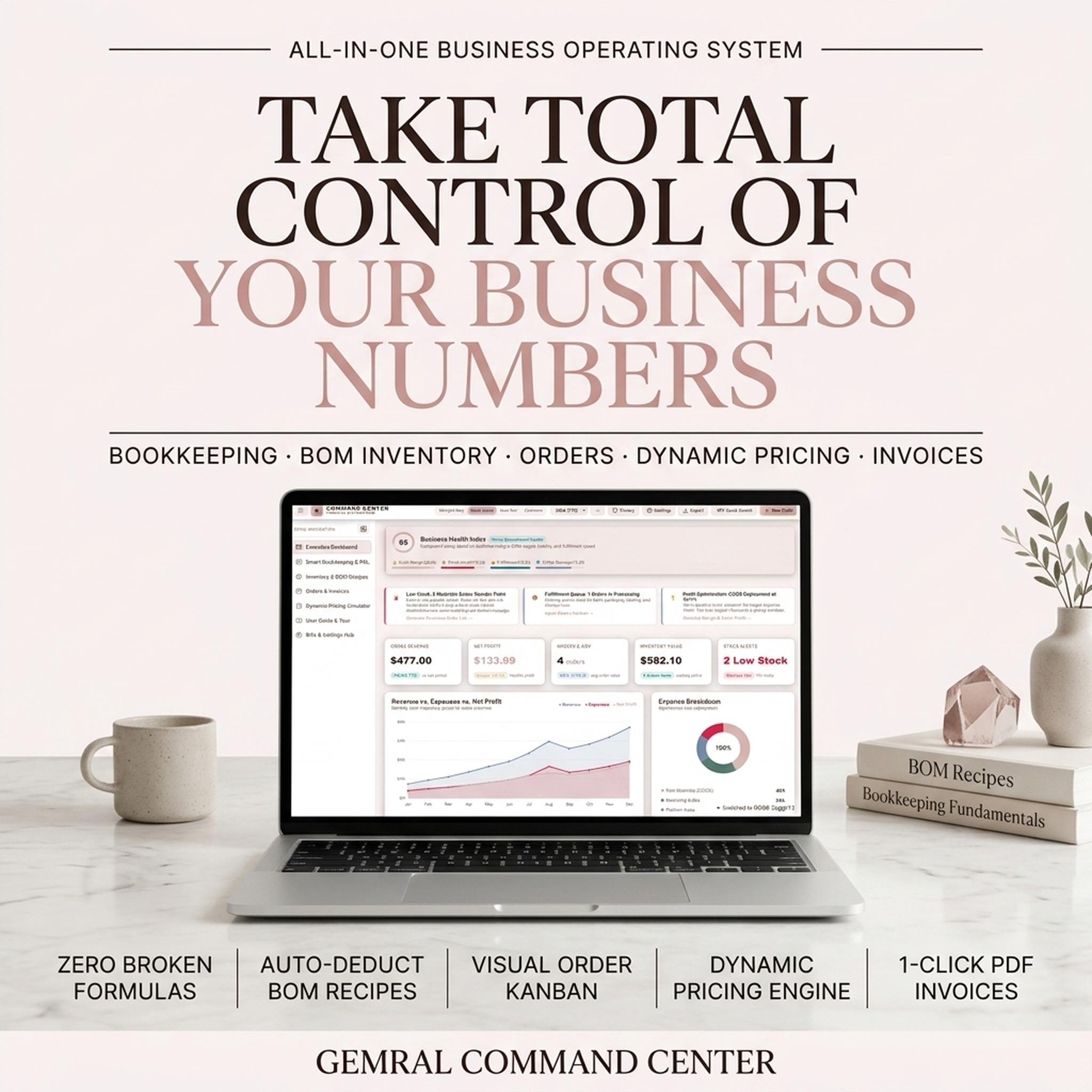
Small Business Command Center & Inventory Bookkeeping
All-in-one operating system for product makers, boutiques, and sellers to manage inventory, BOM costs, orders, and P&L.
$29₫629,000
Solopreneur Operating System & One-Person Business Planner (Interactive HTML)
$27.99₫609,000
Getting Things Done GTD Master Workflow Dashboard & Weekly Review Checklist
$24.99₫549,000
Guides in this Topic
View all (15) → Tactical Negotiation & Executive Influence Architecture
Never Split the Difference by Chris Voss: Tactical Empathy & High-Stakes Negotiation Guide
Master Never Split the Difference: tactical empathy, calibrated questions, salary negotiation scripts, and high-stakes deal-closing frameworks.
Read guide Executive Leadership & Negotiation Strategy
Donald Trump Daily Schedule: 4-Hour Sleep & Art of the Deal System
Deconstruct the Donald Trump daily schedule, 4-hour sleep routine, timebox system, and Art of the Deal negotiation strategies for peak productivity.
Read guide Executive Leadership
Jensen Huang Daily Routine & Flat Organization Management Framework
Inside the Jensen Huang daily routine and Nvidia flat org model. Learn 5:00 AM mornings, zero 1-on-1 meeting rules, and executive priority planning.
Read guide Executive Performance & Cognitive Energy Management
Steve Jobs Daily Routine & Ruthless Simplicity: Minimalist Protocol Guide
Discover Steve Jobs' daily routine, mirror reflection habit, uniform system, and ruthless 2x2 prioritization matrix to eliminate decision fatigue.
Read guide Executive Strategy & Deep Intellectual Rituals
Bill Gates Think Week Strategy & Yellow Pad Deep Reading Guide
Master Bill Gates' famous Think Week ritual: solitary reading retreats, tactical Yellow Pad note-taking, and strategic thesis memo formulation.
Read guide Executive Leadership & Startup Strategy
What is Founder Mode? Brian Chesky Hands-On Operations Guide
Discover what Founder Mode is, how Brian Chesky operates Airbnb, why traditional manager mode fails, and how to run a high-craft flat organization.
Read guide
Topic Pillar
Leadership & Mental Models
High-stakes decision frameworks, first-principles reasoning, and executive operational mastery.
Ask Yinyang Masters inside your AI assistant
Get the same calculations and guidance right in your chat: add the free Yinyang Masters app, then ask in plain English. No account needed.
Try asking: “Find a Yinyang Masters guide about starting a daily spiritual practice.”