



The Small Business Cash Flow & Profit Margin Framework


According to data published by the U.S. Small Business Administration (SBA), over 82% of small business failures are directly attributable to poor cash flow management. A business can boast record top-line revenue, robust order volume, and healthy customer acquisition, yet still spiral into insolvency if cash is tied up in slow-paying accounts receivable, excess inventory, or unmonitored recurring overhead.
Understanding the difference between accounting profit and real cash flow is the defining characteristic of a resilient business owner. This guide breaks down the essential mechanics of small business financial management, establishes a reliable Profit & Loss (P&L) monitoring cadence, and provides frameworks for calculating your exact operational break-even point.
1. Profit vs. Cash Flow: The Critical Distinction
Many first-time entrepreneurs conflate Net Income on an accrual P&L statement with Cash in the Bank. This dangerous misunderstanding causes acute liquidity crises:

- Net Profit: An accounting calculation representing Revenue earned minus Expenses incurred during a specific period. It does not reflect whether customers have actually paid their bills or when inventory invoices are due.
- Operating Cash Flow: The actual net movement of physical currency into and out of your commercial bank accounts.
If your agency or boutique consultancy books $50,000 in services this month with 30-day payment terms, your accounting statement shows $50,000 in revenue. However, if your payroll and software bills of $30,000 are due on the 15th, you will face an overdraft crisis unless you maintain an adequate liquid cash reserve.
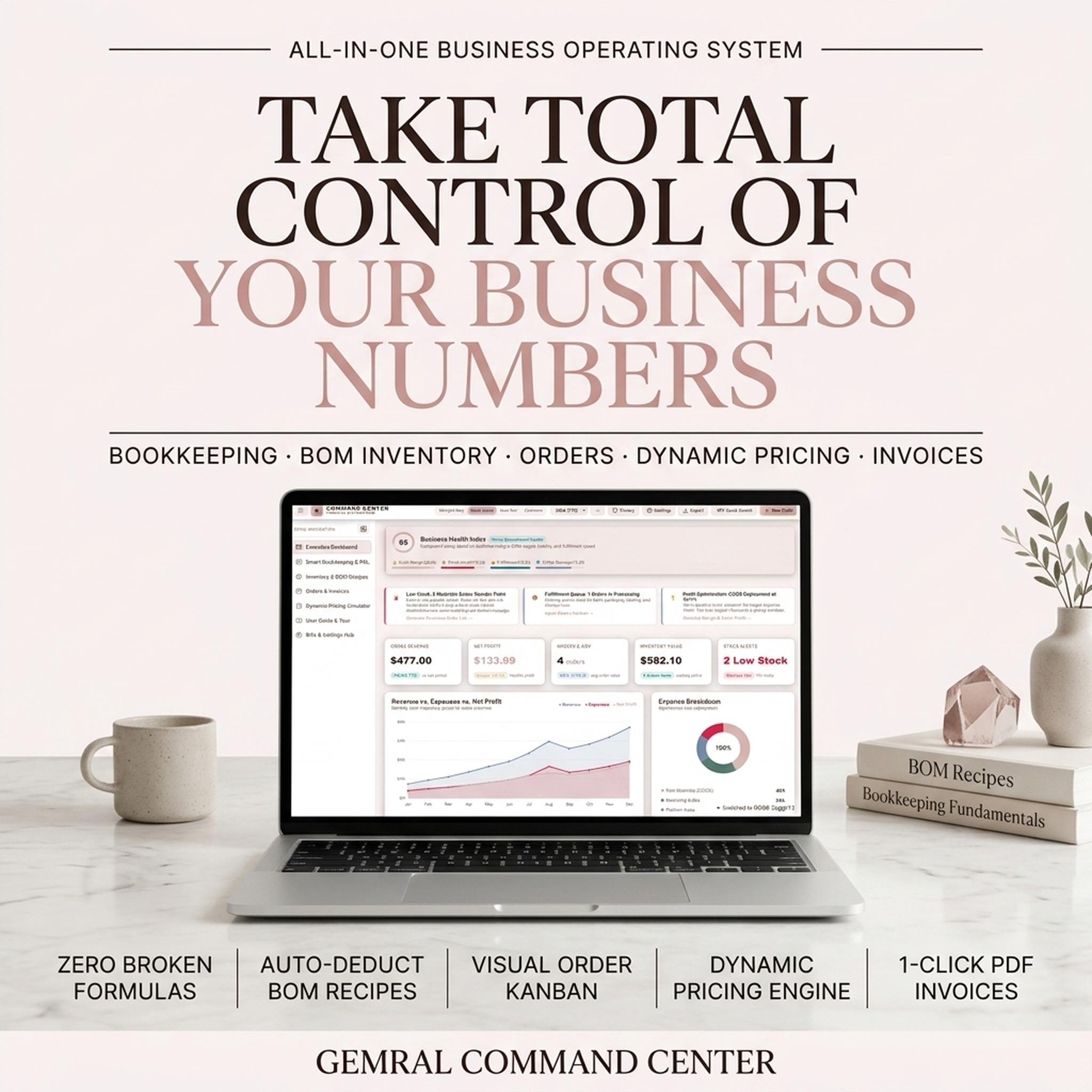
To track this discrepancy in real time without paying for complex accounting subscriptions, independent operators rely on standalone tools like the Small Business Operations & Financial Command Center.
Disclaimer: This interactive tool is intended for personal practice and informational purposes only, not professional financial or medical advice.
2. Calculating Your Operational Break-Even Point
Every business owner must know their exact Break-Even Point (BEP)—the minimum dollar volume of sales required to cover all fixed and variable costs without incurring a loss:
$$\text{Break-Even Sales} = \frac{\text{Total Fixed Operating Expenses}}{\text{Contribution Margin Ratio}}$$
Where: $$\text{Contribution Margin Ratio} = \frac{\text{Revenue} - \text{Variable Costs (COGS)}}{\text{Revenue}}$$
Walkthrough Example:
- Fixed Monthly Overhead: $12,000 (Rent, base salaries, software, insurance, utilities).
- Average Order Value: $200
- Direct Variable Cost per Order: $60 (Merchant processing fees, packaging, labor).
- Contribution Margin per Order: $200 - $60 = $140 (70% margin).
- Break-Even Dollar Volume: $12,000 / 0.70 = $17,143 per month (or exactly 86 orders).
Knowing that your business requires $17,143 each month to achieve baseline survival allows you to set unambiguous daily and weekly sales benchmarks.
3. The 3 Financial Tiers of Small Business Budgeting
To ensure stability throughout seasonal cycles, business owners should organize their operating cash into three distinct operational accounts:
| Small Business Account Tier | Recommended Cash Buffer | Allocation Percentage of Revenue | Core Operational Purpose | Access Governance & Banking Controls |
|---|---|---|---|---|
| Tier 1: Operating Expense (OpEx) | 1.5 to 2.0 months of operating bills | 50% - 65% of net revenues | Covering day-to-day payroll, inventory vendor invoices, rent, and software | Active debit card & commercial checking |
| Tier 2: Tax & Regulatory Reserve | Projected tax liability | 20% - 30% of gross profits | Quarterly estimated taxes, state franchise fees, and annual audit retainers | Restricted transfers only; no debit card issued |
| Tier 3: Strategic Growth & Emergency | 3.0 to 6.0 months of fixed overhead | 10% - 20% of net profits | Absorbing acute revenue dips, seasonal slow months, and funding equipment CapEx | High-yield business savings / offline reserve |

4. Establishing a Weekly Cash Flow Rhythm
Managing cash flow is not an annual tax season exercise; it requires a disciplined weekly operational cadence:
- Every Monday Morning (Accounts Receivable Sweep): Review aging invoices. Immediately trigger automated reminders for balances past due 7, 14, or 30 days.
- Every Wednesday Midweek (Vendor Payables Review): Audit outgoing disbursements. Schedule vendor payments to take advantage of early-pay discounts while preserving operational cash until invoice due dates.
- Every Friday Afternoon (Weekly Cash Flash Report): Reconcile ending bank balances across all business accounts. Cross-reference personal net worth allocations using comprehensive financial dashboards like the Personal & Business Finance Command Center.
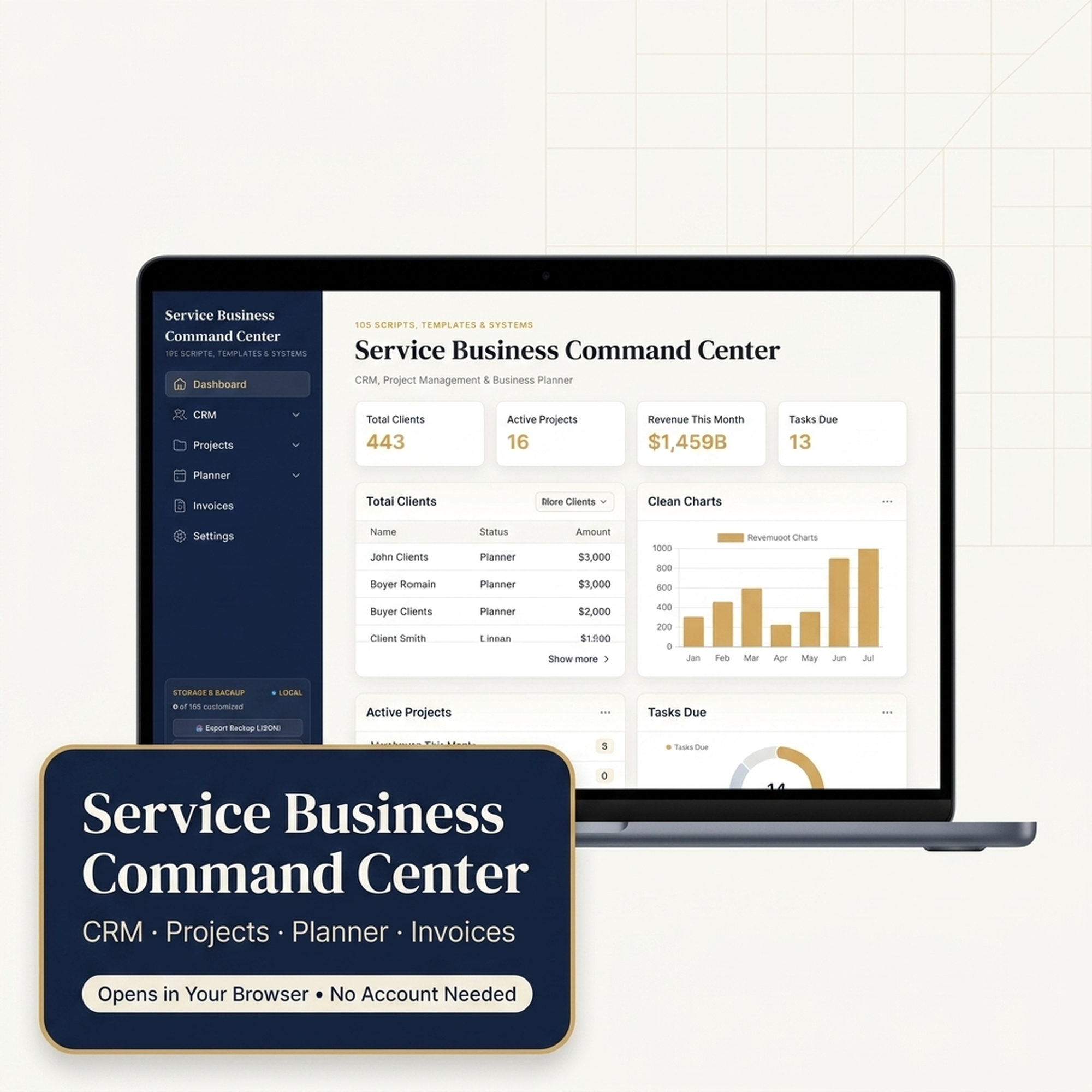
- End of Month (P&L Variance Review): Compare actual expenditures against budgeted forecasts. For service-based firms, monitor billing retainers and project burn rates using the Service Business Command Center.
Strategic Topic Frameworks & Practical Connections
To deepen your practical mastery and build an integrated operational workflow within this topic, explore these complementary guides:
- Implement the execution protocols in Warren Buffett 5/25 Rule & Avoid-At-All-Costs Planner Guide to systematically strengthen your foundational routine.
- Explore the strategic principles detailed in Alex Hormozi $100M Offers: Value Equation & The Rule of 100 Leads Guide for advanced optimization and mental clarity.
- Apply the structured methods from Commercial Real Estate Underwriting & Cap Rate Financial Modeling to maintain long-term momentum and consistency.
5. Frequently Asked Questions (FAQ)
What is the fundamental difference between Net Profit and Operating Cash Flow?
Net Profit is an accounting figure showing total earned revenue minus expenses over a period on an accrual basis, regardless of when cash is collected. Operating Cash Flow measures the real physical currency moving into and out of your company bank account. A business can be profitable on paper while becoming insolvent due to delayed client payments.
How do I calculate the operational break-even point for my small business?
Divide total monthly fixed expenses (rent, base salaries, software, insurance) by your contribution margin ratio. The contribution margin ratio equals (Revenue minus Variable Costs) divided by Revenue. This calculation reveals the exact dollar revenue required to cover costs without taking a loss.
How much liquid cash reserve should a growing small business maintain?
A healthy small business should maintain at least 3 to 6 months of fixed operational expenses in an untouchable emergency reserve, in addition to a 1.5-month rolling buffer in its active operating checking account.
How can a business eliminate accounts receivable payment delays?
To accelerate client cash collections: mandate upfront deposits (e.g., 50% upfront, 50% upon delivery) for projects, transition recurring clients to automated credit card or ACH retainers, institute early payment discounts (e.g., 2% discount for payment within 10 days), and enforce strict late fees.
6. Conclusion
Mastering business finance is not about complicated corporate accounting; it is about building an unshakeable operational cash fortress. By enforcing disciplined tier allocations, calculating your exact break-even requirements, and utilizing transparent private financial systems, you protect your enterprise from insolvency and create the financial foundation for sustainable long-term expansion.
Explore verified real-time macro telemetry, market catalysts, and capital flow intelligence.
Interactive business financial models calculating operating cash flow velocity, burn rate limits, and debt coverage safeguards.
Research & References
- [1]U.S. Small Business Administration — Manage Your Finances ↗
- [2]IRS — Self-Employed Individuals Tax Center ↗
For comprehensive editorial standards and health/financial disclaimers, view our Editorial Policy.
Tools featured in this guide
Small Business Command Center & Inventory Bookkeeping
All-in-one operating system for product makers, boutiques, and sellers to manage inventory, BOM costs, orders, and P&L.
$29₫629,000
Personal Finance Command Center & Wealth Dashboard
Luxury financial operating system for zero-based budgeting, net worth tracking, debt elimination, and FIRE planning.
$24₫529,000
Service Business Command Center & Client CRM OS
Complete interactive business operating system for service providers, consultants, freelancers, and coaches.
$24₫529,000
Guides in this Topic
View all (17) → Agency & Freelance
The Modern Freelancer & Boutique Agency Business Operating System
Run your digital agency or freelance business with high-efficiency systems. Master client portals, retainer pipelines, and cash flow operations.
Read guide Business Strategy & Offer Architecture
Alex Hormozi $100M Offers: Value Equation & The Rule of 100 Leads Guide
Master Alex Hormozi's $100M Offers value equation, Grand Slam offer architecture, and the Rule of 100 leads system to scale enterprise revenue.
Read guide Real Estate Investment
Commercial Real Estate Underwriting & Cap Rate Financial Modeling
Master commercial real estate underwriting. Learn Cap Rate calculation, Net Operating Income (NOI), Debt Service Coverage, and sensitivity modeling.
Read guide Quantitative & Crypto
Crypto Trading Journal Template & Systematic Risk Management Guide
Master crypto trading journal template practices. Track win rates, risk-reward ratios, drawdown metrics, and mental discipline for consistent performance.
Read guide investing
Howard Marks Second-Level Thinking & Market Cycles Due Diligence Guide
Learn Howard Marks second-level thinking and market cycle analysis: master risk asymmetry, crowd psychology contrarianism, and rigorous due diligence.
Read guide Career & Money
Severance Package Negotiation Checklist: What to Check, What to Ask For, and How Long Your Money Will Last
A practical severance checklist: deadlines, what to negotiate, taxes, health coverage, and how to calculate your emergency-fund runway after a layoff.
Read guide
Topic Pillar
Wealth, Business & Real Estate
Financial models, risk asymmetry, commercial underwriting, and scalable wealth building systems.
Ask Yinyang Masters inside your AI assistant
Get the same calculations and guidance right in your chat: add the free Yinyang Masters app, then ask in plain English. No account needed.
Try asking: “Find a Yinyang Masters guide about starting a daily spiritual practice.”