



Flowmodoro Technique: Deep Work Flow State Timer, Ratio Rules & Anti-Burnout Guide

The Flowmodoro technique is a modern flow-state productivity framework that replaces rigid 25-minute countdown timers with an open-ended stopwatch count-up protocol. You work uninterrupted until your natural concentration breaks, then calculate rest time by dividing total focused minutes by five to prevent mental fatigue and executive burnout.
Traditional time management models often sabotage high-cognitive work. When software developers, writers, academic researchers, and financial analysts operate in hyper-focus, the sudden ringing of a 25-minute Pomodoro timer snaps the prefrontal cortex out of immersion. Returning to that exact depth of mental synthesis takes an average of 23 minutes. Flowmodoro solves this cognitive friction by aligning external time tracking with biological neurochemistry.
1. The Neurobiology of Deep Work: Why Traditional Pomodoro Fails Complex Cognition
The standard Pomodoro Technique was created in the late 1980s by Francesco Cirillo for discrete academic drills and administrative sorting. It assumes human stamina behaves like a mechanical piston, delivering equal energy in fixed 25-minute intervals. However, modern cognitive neuroscience—rooted in Mihaly Csikszentmihalyi’s seminal research on Flow State—proves that complex synthesis requires deep neural ramp-up:
- The Immersion Phase (Minutes 0–15): The brain clears attentional residue from emails, notifications, and environmental noise. Alpha wave activity stabilizes as task-irrelevant neurons quiet down.
- The Flow State Threshold (Minutes 15–25): The brain enters transient hypofrontality, down-regulating the inner critic in the dorsolateral prefrontal cortex. Dopamine, norepinephrine, and anandamide surge, unlocking hyper-focus and rapid pattern recognition.
- The Interruption Penalty: If a mechanical buzzer sounds at minute 25, the fragile neurochemical equilibrium collapses. Forcing a 5-minute break right when complex insight begins creates cognitive friction, frustration, and lost momentum.
Flowmodoro respects neural momentum. Instead of counting down to an arbitrary deadline, it counts up like a silent chronograph, observing your natural focus window without imposing artificial interruption.
2. The Core Mechanics of the Flowmodoro Protocol
Implementing the Flowmodoro method requires only four systematic rules:
Rule 1: The Zero-Interruption Trigger
Select a single, high-leverage objective. Eliminate all ambient distractions, close extraneous browser tabs, activate Do Not Disturb, and start an upward-counting stopwatch.
Rule 2: Open-Ended Immersion
Work continuously for as long as your concentration remains clean and effortless. Do not glance at the timer. Whether you work for 38 minutes or 87 minutes, your physiological capacity and task complexity dictate session duration.
Rule 3: Organic Termination
Stop the timer only when you experience an authentic cognitive stall: eye strain, wandering attention, physical restlessness, or task completion. Record your exact focused minutes.
Rule 4: The 1:5 Dynamic Rest Ratio
Calculate earned rest by dividing your total focused session by 5 (or multiplying by 0.20). Step away from screens for genuine somatic decompression:
- Focused for 25 minutes: Earn 5 minutes of rest.
- Focused for 50 minutes: Earn 10 minutes of rest.
- Focused for 75 minutes: Earn 15 minutes of rest.
- Focused for 100 minutes: Earn 20 minutes of rest.
3. Comprehensive Model Comparison: Flowmodoro vs. Pomodoro vs. 52/17 vs. Time Blocking
Choosing the optimal time-architecture framework depends on the cognitive nature of your work:
| Productivity Architecture | Timer Dynamic | Ideal Task Domain | Break Structure | Primary Risk Factor |
|---|---|---|---|---|
| Flowmodoro Technique | Count-Up Stopwatch (Open) | Coding, writing, strategy, research, creative design | Proportional 1:5 earned rest | Over-exhaustion without self-awareness |
| Classic Pomodoro (25/5) | Count-Down Timer (Fixed) | Email triaging, filing, data cleanup, routine homework | Rigid 5m short / 15m long break | Destroys deep immersion thresholds |
| 52/17 Desktime Rule | Count-Down Timer (52m) | Balanced corporate knowledge work, sprint sprints | Fixed 17m physical detachment | Still interrupts organic flow states |
| Ultradian Rhythm (90m) | Count-Down Block (90m) | Masterclasses, deep architecture, physical athletic training | Fixed 20–30m restorative cycle | Too rigid for dynamic daily schedules |
| Fluid Time Blocking | Calendar Block (Open) | Executive leadership, client advisory, strategy sessions | Contextual transition gaps | High calendar drift and boundary decay |
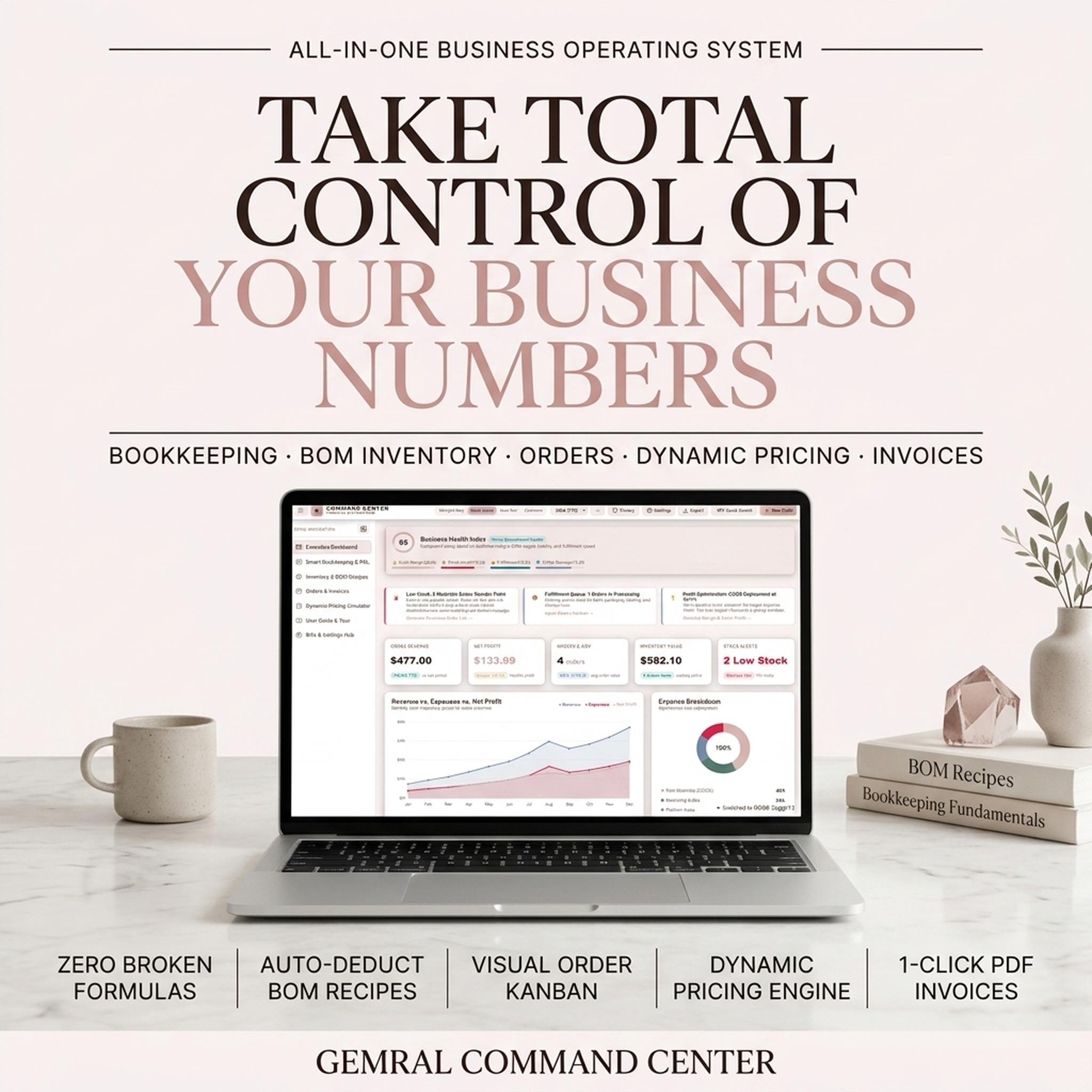
When scaling your daily executive output, pair your flow timer with an integrated Flowmodoro Deep Work Timer & Flow State Journal. For structured behavioral habits across your morning, integrate an Atomic Habits Habit Stacking Tracker and coordinate asynchronous project execution inside a GTD Master Workflow Dashboard alongside the Small Business Command Center.
4. The 7 Environmental & Psychological Flow Triggers
Flow is not an accidental stroke of good fortune; it is a predictable neurobiological state accessible through systematic environmental conditioning. To ensure your Flowmodoro stopwatch sessions reliably transition past the 15-minute threshold, calibrate these seven essential catalysts:
- Clear, Singular Objective: Enter each session with a granular output definition (e.g., "Refactor the authentication middleware error handler" rather than "Work on backend"). Ambiguity creates subconscious hesitation that stalls immersion.
- The 4% Challenge-Skills Sweet Spot: Research popularized by Steven Kotler indicates that flow occurs when task difficulty exceeds your perceived skill level by approximately 4%. If a project is too effortless, boredom prompts distraction; if excessively punishing, anxiety triggers cognitive paralysis.
- Immediate Somatic Feedback Loops: You must know instantaneously whether your current actions are succeeding. Writers track word counts, engineers run automated test suites, and analysts watch numerical reconciliation sheets.
- Attentional Sensory Deprivation: Background visual clutter and intermittent noises trigger microscopic vigilance responses in the amygdala. Wear active noise-canceling headphones, dim ambient room lighting to focus spotlight illumination on your desk, and minimize browser viewports to a single document.
- The Parking Lot Protocol for Intrusive Thoughts: When working deeply, the subconscious mind will inevitably produce tangential reminders ("Remember to buy groceries", "Reply to Sarah's email"). Rather than abandoning your flow session, write the thought immediately on a physical index card designated as your "Parking Lot" and resume focus in under three seconds.
- Pre-Flow Ignition Ritual: Anchor the start of your count-up timer to a repeatable physical sensory sequence. Pouring fresh mineral water, adjusting your chair ergonomics, and executing three deep diaphragmatic breaths signals the autonomic nervous system that high-order synthesis is about to begin.
- Absolute Boundary Sovereignty: Communicate proactive asynchronous status to collaborators. Deep cognitive states collapse if you anticipate a prospective message or tap on the shoulder. Inform colleagues of your focus windows or use automated workspace status flags.
5. Avoiding the Hyper-Focus Trap: Managing Mental Fatigue & Eye Strain
Because the Flowmodoro protocol removes artificial constraints, high performers occasionally fall into cognitive over-exertion. Running an unbroken 3-hour marathon without hydration or posture realignment leads to afternoon mental crash. To safeguard sustained energy across 8 to 10 hours:
The 90-Minute Hard Ceiling
Human biological ultradian cycles peak between 90 and 110 minutes. Even if you feel immortal at minute 95, initiate a controlled cognitive landing. Wind down your active thoughts, write a 2-sentence bookmark of where to resume, and claim your well-earned 18-to-20-minute rest window.
True Somatic Decompression vs. Dopamine Traps
Your earned break is not free time to scroll short-form social feeds or read inflammatory news headlines. Digital consumption floods working memory with chaotic inputs, preventing the Default Mode Network (DMN) from consolidating insights. High-value somatic breaks include:
- Walking outside while viewing natural panoramic horizons.
- Deep somatic stretching and cervical spine mobility exercises.
- Drinking 500ml of water infused with trace mineral electrolytes.
- Silent box breathing (4s inhale, 4s hold, 4s exhale, 4s hold).
6. Daily Implementation Blueprint: From Morning Sprint to Evening Log
Integrate Flowmodoro seamlessly into your professional workday using this three-session structure:
08:30 – 10:00 | Session 1: Deep Analytical Architecture (80m Focus → 16m Somatic Walk)
10:16 – 11:45 | Session 2: Core Creative / Code Synthesis (65m Focus → 13m Sunlight & Hydration)
11:58 – 13:00 | Nourishment, Natural Daylight & Restorative Reset (60m Complete Detachment)
13:00 – 14:15 | Session 3: Secondary Deep Sprint (50m Focus → 10m Posture Stretch)
14:25 – 17:00 | Low-Cognitive Buffer: Asynchronous Communications, Email Zero & Planning
By capping intense deep work at 3.5 to 4 cumulative daily hours, you achieve more breakthroughs than 8 hours of fractured multi-tasking.
Strategic Topic Frameworks & Practical Connections
To deepen your practical mastery and build an integrated operational workflow within this topic, explore these complementary guides:
- Implement the execution protocols in Getting Things Done (GTD): The Master Guide to Stress-Free Productivity, Inbox Zero & External Mind Architecture to systematically strengthen your foundational routine.
- Explore the strategic principles detailed in The Ivy Lee Method: 6 Daily Priorities for Extreme Executive Focus for advanced optimization and mental clarity.
- Apply the structured methods from Marie Kondo Digital Declutter & Spark Joy Workspace Guide to maintain long-term momentum and consistency.
7. Frequently Asked Questions About Flowmodoro
What is the exact formula for Flowmodoro break time?
Divide your total focused minutes by 5 (Total Minutes / 5). Alternatively, multiply focused minutes by 0.2. For example, 45 minutes of focus yields exactly 9 minutes of restorative break.
Is Flowmodoro better than the Pomodoro Technique?
Yes, for unstructured, high-cognition tasks like computer programming, strategic planning, novel writing, and mathematical analysis. For transactional, repetitive tasks like clearing inbox backlog or filing invoices, the standard 25-minute Pomodoro remains effective.
What should I do if my focus breaks after only 12 minutes?
Take a short 2-minute break, log any unexpected distraction or energy dip, and reset your environment. Flowmodoro adapts to your real biological capacity rather than judging your output against artificial rigid timers.
Can individuals with ADHD benefit from Flowmodoro?
Extremely well. Individuals with ADHD frequently struggle with abrupt artificial alarms that snap them out of intense hyper-focus. Flowmodoro honors their natural hyper-focus while providing a clear mathematical bridge back to physical self-care.
How do you handle unexpected external interruptions during a Flowmodoro sprint?
If an unavoidable physical disruption occurs (e.g., an urgent phone call or family emergency), pause your stopwatch immediately. If the interruption lasts under two minutes, resume the timer. If it exceeds five minutes, log your completed minutes as a finished session, take your proportional 1:5 break, and start a fresh sprint afterward.
What is the optimal acoustic environment for Flowmodoro sessions?
Cognitive acoustics vary by task profile. For complex logic and syntactic writing, absolute silence or pink noise provides superior retention without semantic interference. For high-cadence execution or routine architecture, instrumental ambient soundtracks, 40 Hz gamma binaural rhythms, or low-tempo electronic soundscapes help sustain transient hypofrontality.
What tools are recommended for Flowmodoro tracking?
Use a dedicated digital stopwatch or an interactive browser workspace like our Flowmodoro Deep Work Timer & Flow State Journal, which automatically calculates earned rest ratios and tracks flow quality over time.
Tools featured in this guide
Flowmodoro Deep Work Interactive Timer & Flow State Analytics Journal
$24.99₫549,000
Atomic Habits Habit Stacking & 2-Minute Rule Interactive Tracker Dashboard
$27.99₫609,000
Getting Things Done GTD Master Workflow Dashboard & Weekly Review Checklist
$24.99₫549,000
Small Business Command Center & Inventory Bookkeeping
All-in-one operating system for product makers, boutiques, and sellers to manage inventory, BOM costs, orders, and P&L.
$29₫629,000
Guides in this Topic
View all (23) →- Executive Productivity & Time Management
Getting Things Done (GTD): The Master Guide to Stress-Free Productivity, Inbox Zero & External Mind Architecture
Master David Allen's GTD workflow. Learn the 5-step capture-to-engage process, achieve Inbox Zero, and build a stress-free external second brain.
Read guide  Executive Productivity & Time Management
The Ivy Lee Method: 6 Daily Priorities for Extreme Executive Focus
Master the 100-year-old Ivy Lee Method to streamline daily task management, conquer decision fatigue, and focus relentlessly on six high-impact goals.
Read guide productivity
The 1-3-5 Rule Daily Task Matrix: Anti-Overwhelm Focus & Productivity Guide
Master the 1-3-5 rule daily productivity system: organize 1 big goal, 3 medium tasks, and 5 quick wins to eliminate burnout and maintain daily focus.
Read guide productivity
Andy Grove High Output Management & OKR Goal Planning Guide
Master Andy Grove's High Output Management principles and OKR goal setting. Learn how the Intel CEO designed high-leverage organizational systems.
Read guide productivity
Marie Kondo Digital Declutter & Spark Joy Workspace Guide
Master Marie Kondo's routine for digital decluttering. Clear desktop chaos, reach inbox zero, and curate an intentional, spark-joy digital workspace.
Read guide productivity
Second Brain Productivity System: The Ali Abdaal & Tiago Forte Creator OS Guide
Master the second brain productivity system with Tiago Forte's PARA method and Ali Abdaal's YouTube workflow template for modern content creators.
Read guide
Topic Pillar
Productivity & Deep Work
Time-blocking, personal operating systems, Second Brain architecture, and cognitive optimization.
Ask Yinyang Masters inside your AI assistant
Get the same calculations and guidance right in your chat: add the free Yinyang Masters app, then ask in plain English. No account needed.
Try asking: “Find a Yinyang Masters guide about starting a daily spiritual practice.”