



The Ivy Lee Method: 6 Daily Priorities for Extreme Executive Focus

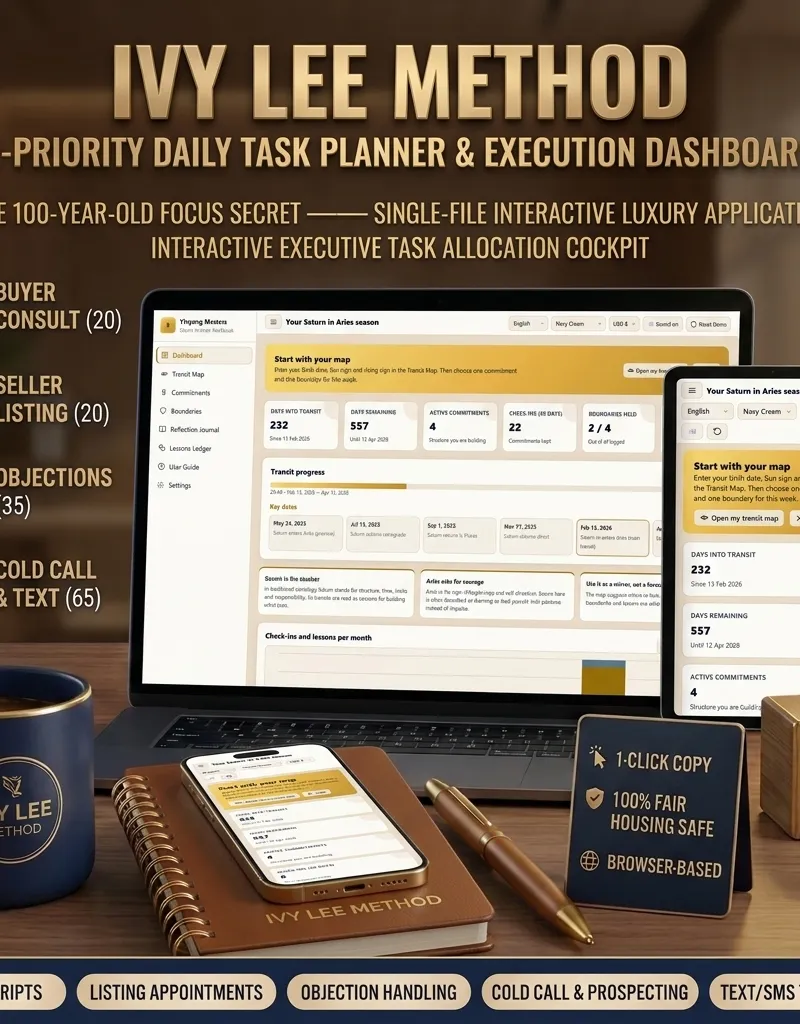
The Ivy Lee method is a century-old productivity routine that prescribes writing down exactly six critical daily priorities each evening, ranking them in strict order of importance, and tackling them one by one the next morning without multitasking. It eliminates decision fatigue and guarantees relentless execution on high-leverage outcomes.
In an era saturated with sophisticated task-management apps, artificial intelligence copilots, and complex notification algorithms, modern professionals find themselves more overwhelmed and distracted than ever before. Yet, over a century ago in 1918, a renowned public relations pioneer and productivity consultant named Ivy Lee handed steel magnate Charles M. Schwab a deceptively simple framework that revolutionized industrial efficiency at Bethlehem Steel. Schwab was so profoundly impressed by the explosive surge in executive output across his corporation that he wrote Lee an unsolicited check for $25,000—equivalent to over $500,000 in today's currency.
1. The 5 Rules of the Ivy Lee Method
The enduring brilliance of the Ivy Lee method resides in its ruthless simplicity. There are no complicated hierarchies, complex sub-tasks, or time-tracking overheads. The framework operates on five non-negotiable operational principles:
- Evening Reflection: At the conclusion of each workday, take 15 minutes to write down the six most important tasks you must accomplish tomorrow. Do not write seven; do not write ten. Write exactly six.
- Ruthless Prioritization: Arrange those six items strictly in order of their true strategic importance, from priority number one down to number six.
- Morning Single-Tasking: When you arrive at your workspace the following morning, direct your entire cognitive bandwidth toward Task #1. Do not check social media, answer non-urgent emails, or glance at Task #2 until Task #1 is finished.
- Sequential Discipline: Approach the remainder of your day in identical fashion. If Task #1 takes until lunch, that is acceptable. When it is completed, move to Task #2. If interruptions occur, immediately return to your active priority upon resuming work.
- Nightly Rollover & Re-Evaluation: At the end of the day, any uncompleted tasks are rolled into a new list of six priorities for tomorrow. Repeat the cycle every evening.
To translate these principles into modern digital execution, professionals implement The Ivy Lee Method 6-Priority Daily Task Planner, combining sequential single-tasking with visual focus timers and completion analytics.
2. Why It Works: The Neuroscience of Cognitive Load & Decision Fatigue
Why does a century-old routine handwritten on a simple index card consistently outperform complex modern project management software? The answer lies in human cognitive architecture:
1. Eliminating Morning Decision Fatigue
Human willpower is governed by glucose metabolism in the prefrontal cortex. When you begin your morning staring at an unorganized inbox with dozens of competing demands, you exhaust critical executive energy simply deciding what to work on. Planning your six priorities the evening before means you hit the ground running with zero cognitive friction.
2. Radical Reduction of the Switching Cost
Modern neuroscience demonstrates that human beings cannot multitask. What we call multitasking is actually rapid task-switching. Each transition incurs an "attention residue" that degrades IQ, increases cortisol, and impairs working memory. By committing to sequential single-tasking, you allow the brain to plunge into deep flow state.
+-----------------------------------------------------------+
|          ATTENTION RESIDUE VS. SEQUENTIAL EXECUTION       |
+-----------------------------------------------------------+
| Multitasking : Task A <-> Task B <-> Email (High Friction) |
| Ivy Lee Flow : [Task 1 Done] -> [Task 2 Done] -> [Task 3] |
+-----------------------------------------------------------+
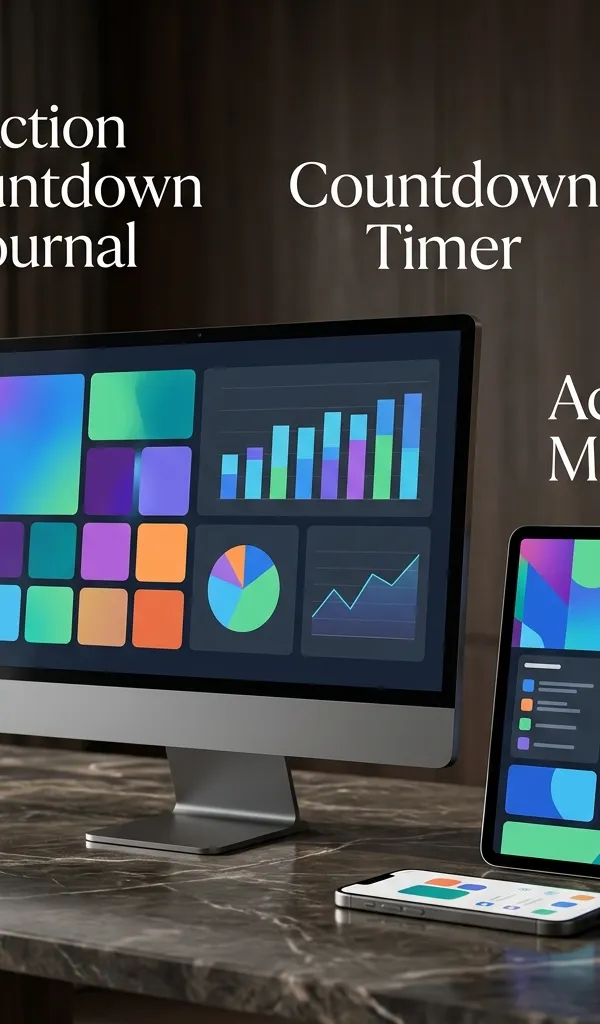
When you face initial resistance at the start of Task #1, pair Ivy Lee with the 5-4-3-2-1 ignition countdown from The 5 Second Rule Action Journal to immediately propel yourself into motor action.
3. The Power of Artificial Constraints: The Rule of Six
A common objection to the Ivy Lee method is: "Only six tasks? I have thirty things to do every day!"
That objection fundamentally misunderstands the difference between activity and accomplishment. Parkinson's Law dictates that work expands to fill the time available for its completion. Conversely, constraints breed ruthless clarity.
When you permit yourself an endless to-do list:
- Low-value administrative busywork crowds out strategic deep work.
- You experience illusory satisfaction from ticking off ten minor errands while your highest-leverage business objective remains untouched.
- At the end of the day, you feel physically exhausted yet professionally stalled.
By capping your list at exactly six items, you force a forced-choice triage. You are compelled to separate the vital few from the trivial many, honoring the Pareto Principle where 20% of your inputs generate 80% of your commercial returns.
4. Integrating Ivy Lee with Modern Behavioral Systems
The Ivy Lee method does not exist in isolation; it serves as the tactical tip of the spear within a broader personal productivity ecosystem:
- Macro to Micro Alignment: Pair your six daily tasks with the broader contextual capture pipelines of the Getting Things Done (GTD) Master Workflow Dashboard. GTD captures all open loops, while Ivy Lee selects the day's six focal points.
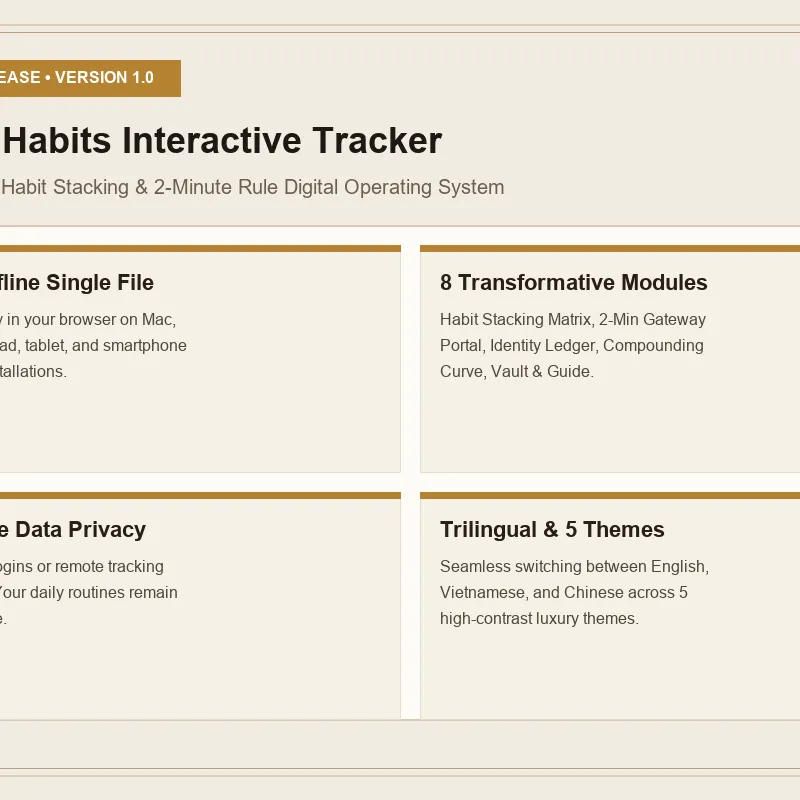
- Habit Architecture: Use the Atomic Habits Habit Stacking Tracker to chain your 15-minute evening Ivy Lee planning session directly after your final coffee cup or laptop shutdown ritual.
5. Comparative Evaluation: Elite Task Prioritization Frameworks
Understanding the structural trade-offs between competing prioritization models ensures you deploy the right framework for your specific operational context:
| Prioritization Framework | Ivy Lee Method | Eisenhower Matrix | Getting Things Done (GTD) | Pomodoro Technique |
|---|---|---|---|---|
| Core Philosophy | Sequential single-tasking on 6 vital goals | 4-quadrant triage (Urgent vs. Important) | 5-phase external capture & processing | Fixed 25-minute sprints & 5-minute rest |
| Best Used For | Daily executive deep work & focus | Strategic delegation & triage | Complex multi-project coordination | Combating stamina fatigue & procrastination |
| Constraint Model | Rigid cap: exactly 6 tasks per day | Categorical classification (Do/Decide/Delegate/Drop) | Unlimited contextual action lists | Structured time intervals |
| Cognitive Friction | Minimal (pen and paper or simple board) | Moderate (requires matrix categorization) | High (requires disciplined weekly maintenance) | Minimal (requires simple clock timer) |
| Recommended Tool | Ivy Lee Priority Planner | Eisenhower Matrix Dashboard | GTD Master Dashboard | Flowmodoro Timer |

Strategic Topic Frameworks & Practical Connections
To deepen your practical mastery and build an integrated operational workflow within this topic, explore these complementary guides:
- Implement the execution protocols in Marie Kondo Digital Declutter & Spark Joy Workspace Guide to systematically strengthen your foundational routine.
- Explore the strategic principles detailed in Pareto 80/20 Rule Productivity & Task Audit Guide for advanced optimization and mental clarity.
- Apply the structured methods from The 7 Habits of Highly Effective People by Stephen Covey: Complete Architecture Guide to maintain long-term momentum and consistency.
6. Frequently Asked Questions (FAQ)
What happens if I do not finish all six tasks by the end of the day?
That is completely normal and expected. The objective of the Ivy Lee method is not to mechanically check off six boxes every 24 hours; it is to ensure that whatever time you had was invested in the single most important task available. Unfinished tasks simply roll over to your evening prioritization review.
Why does Ivy Lee specify six tasks instead of three or ten?
Six is the psychological sweet spot. Three tasks is often too restrictive for modern knowledge workers who must balance strategic initiatives with operational upkeep. Ten tasks triggers cognitive overwhelm and invites dilution. Six provides adequate scope while enforcing meaningful prioritization.
How do I handle urgent incoming emergencies that disrupt Task #1?
Distinguish between genuine existential crises and other people's manufactured urgency. If a server crashes or a major client calls with an emergency, address the issue immediately. However, once the crisis is resolved, do not drift into random inbox triage; return immediately to your designated priority task.
Should I include routine personal habits like exercising on my Ivy Lee list?
Generally, no. Established personal habits should be anchored via environmental cues and habit stacking rather than consuming one of your six precious cognitive slots. Reserve your Ivy Lee list for deliberate professional, creative, or strategic outcomes that require focused cognitive exertion.
Can the Ivy Lee method be customized for software developers or creators?
Yes. Many technical professionals adapt the method by designating Tasks #1 and #2 for deep uninterrupted coding or writing blocks (90 to 120 minutes each), leaving Tasks #3 through #6 for code reviews, administrative syncs, and team communications.
7. Action Blueprint: Your 7-Day Ivy Lee Focus Calibration
To experience the profound mental clarity that transformed Charles Schwab's executive team, commit to this 7-day protocol:
- Day 1 (The Clean Slate): Close your thirty open browser tabs. Tonight at 5:30 PM, spend 15 minutes writing down your six tasks for tomorrow. Rank them 1 through 6.
- Day 2 (The Single-Tasking Test): Tomorrow morning, open nothing except the materials required for Task #1. Work on it until completed before touching Task #2.
- Day 3 (The Friction Audit): Notice how often your brain attempts to escape into email or social media when Task #1 becomes difficult. Resist the urge; stay with the friction.
- Day 4 (The Honest Rollover): If Task #4, #5, or #6 remain incomplete, roll them over tonight without self-judgment. If a task rolls over three days in a row, either delete it or delegate it.
- Day 5–7 (Systematize with Technology): Transition your practice into an interactive, self-contained dashboard using The Ivy Lee Method 6-Priority Daily Task Planner to track focus duration, analyze completion velocity, and achieve effortless daily mastery.
Simplicity is the ultimate sophistication. By restricting your daily ambition to six vital priorities and executing them with sequential courage, you transcend modern distraction and build a legacy of undeniable accomplishment.
Tools featured in this guide
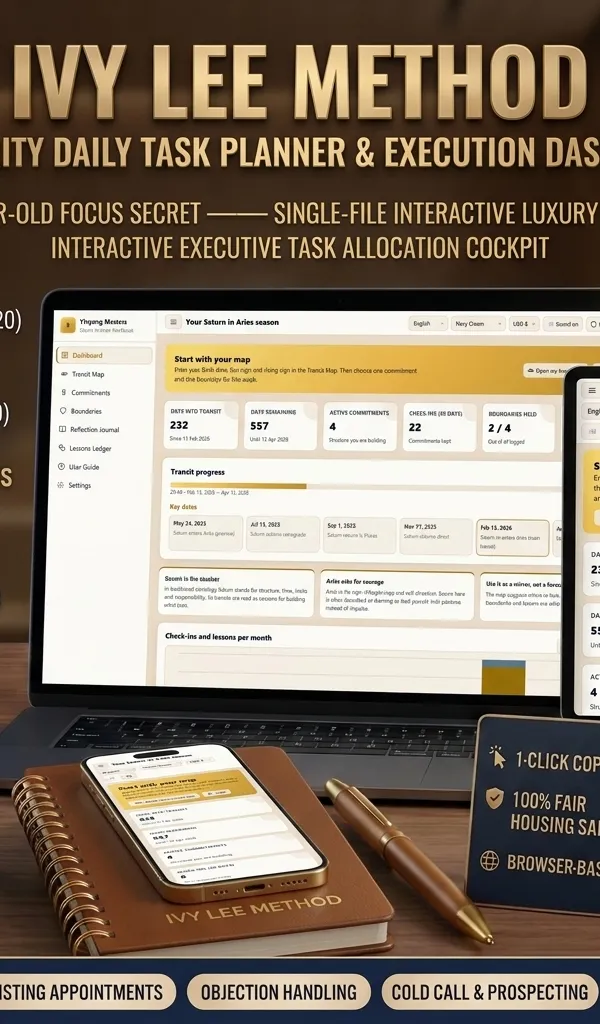
Ivy Lee Method 6-Priority Daily Task Planner & Execution Dashboard
The 100-Year-Old $25,000 Focus Secret — Offline Single-File Interactive Luxury Application
$24.99₫549,000
The 5 Second Rule Action Journal & Anti-Procrastination Daily Matrix
Mel Robbins Neuroscience-Backed Metacognitive Interactive Dashboard for Instant Execution
$22.99₫499,000
Atomic Habits Habit Stacking & 2-Minute Rule Interactive Tracker Dashboard
$27.99₫609,000

Getting Things Done GTD Master Workflow Dashboard & Weekly Review Checklist
$24.99₫549,000
Guides in this Topic
View all (23) →- Executive Productivity & Time Management
Getting Things Done (GTD): The Master Guide to Stress-Free Productivity, Inbox Zero & External Mind Architecture
Master David Allen's GTD workflow. Learn the 5-step capture-to-engage process, achieve Inbox Zero, and build a stress-free external second brain.
Read guide  Mindset & Productivity Systems
Flowmodoro Technique: Deep Work Flow State Timer, Ratio Rules & Anti-Burnout Guide
Master the Flowmodoro technique to enter unbroken deep work flow states. Learn the stopwatch count-up protocol, 1:5 break ratios, and anti-burnout rules.
Read guide productivity
The 1-3-5 Rule Daily Task Matrix: Anti-Overwhelm Focus & Productivity Guide
Master the 1-3-5 rule daily productivity system: organize 1 big goal, 3 medium tasks, and 5 quick wins to eliminate burnout and maintain daily focus.
Read guide productivity
Second Brain Productivity System: The Ali Abdaal & Tiago Forte Creator OS Guide
Master the second brain productivity system with Tiago Forte's PARA method and Ali Abdaal's YouTube workflow template for modern content creators.
Read guide productivity
Andy Grove High Output Management & OKR Goal Planning Guide
Master Andy Grove's High Output Management principles and OKR goal setting. Learn how the Intel CEO designed high-leverage organizational systems.
Read guide Deep Work & Peak Productivity
Cal Newport Deep Work & Time-Blocking Planner Guide
Master Cal Newport's Deep Work rules, daily time-blocking templates, shutdown rituals, and slow productivity strategies to eliminate distractions.
Read guide
Topic Pillar
Productivity & Deep Work
Time-blocking, personal operating systems, Second Brain architecture, and cognitive optimization.
Ask Yinyang Masters inside your AI assistant
Get the same calculations and guidance right in your chat: add the free Yinyang Masters app, then ask in plain English. No account needed.
Try asking: “Find a Yinyang Masters guide about starting a daily spiritual practice.”