



The 7 Habits of Highly Effective People by Stephen Covey: Complete Architecture Guide

The 7 Habits of Highly Effective People by Dr. Stephen R. Covey establishes a principle-centered framework for personal sovereignty and collaborative leadership. By progressing along the Maturity Continuum from dependence to independence and ultimately interdependence, professionals master the Quadrant 2 time matrix, preserve production capability, and build enduring institutional trust.
┌──────────────────────────────────────────────────────────────────────────┐
│                   THE COVEY MATURITY CONTINUUM FLYWHEEL                  │
│                                                                          │
│                       [ INTERDEPENDENCE ]                                │
│                     PUBLIC VICTORY (We Can)                              │
│         Habit 4: Think Win-Win                                           │
│         Habit 5: Seek First to Understand, Then to Be Understood         │
│         Habit 6: Synergize                                               │
│                               ▲                                          │
│                               │                                          │
│                        [ INDEPENDENCE ]                                  │
│                    PRIVATE VICTORY (I Can)                               │
│         Habit 1: Be Proactive                                            │
│         Habit 2: Begin with the End in Mind                              │
│         Habit 3: Put First Things First (Quadrant 2)                     │
│                               ▲                                          │
│                               │                                          │
│                         [ DEPENDENCE ]                                   │
│                        VICTIMHOOD (You Care for Me / You Fail Me)        │
│                                                                          │
│                 ════════════════════════════════════                     │
│                 HABIT 7: SHARPEN THE SAW (Continuous Renewal)             │
│                 Physical • Mental • Spiritual • Social/Emotional         │
└──────────────────────────────────────────────────────────────────────────┘
1. The Character Ethic vs. Personality Ethic: Foundation of Effectiveness
Dr. Stephen Covey begins his seminal work by examining two centuries of success literature. He uncovered a critical cultural divergence:
- The Personality Ethic (Post-WWI): Focuses on quick-fix social optics, superficial charm, public relations manipulation, and behavioral hacking. It treats interpersonal effectiveness as a transactional cosmetic technique.
- The Character Ethic (Classical Tradition): Grounds enduring achievement in fundamental human principles: integrity, humility, fidelity, temperance, courage, justice, and the law of the harvest.
Covey demonstrates that real effectiveness cannot be faked through conversational tricks or motivational soundbites. Just as a farmer cannot cram planting and harvesting into a single frantic autumn weekend, true personal and professional influence requires the steady, seasonal cultivation of deep character traits.
2. The Maturity Continuum: Private Victory Precedes Public Victory
True effectiveness follows a natural sequence: you cannot run before you learn to walk, and you cannot build collaborative organizational synergy before establishing private self-governance.
┌──────────────────────────────────────────────────────────────────────────┐
│                      THE THREE MATURITY STAGES                           │
│                                                                          │
│   DEPENDENCE (The Paradigm of "You")                                     │
│   • "You need to take care of me."                                       │
│   • Blaming external circumstances, managers, or economics for failure.  │
│                                                                          │
│                               ▲                                          │
│            [ PRIVATE VICTORY: HABITS 1, 2, 3 ]                           │
│                               │                                          │
│   INDEPENDENCE (The Paradigm of "I")                                     │
│   • "I am self-reliant, responsible, and capable of autonomous choice."  │
│   • Mastery over personal impulses, schedules, and values.               │
│                                                                          │
│                               ▲                                          │
│            [ PUBLIC VICTORY: HABITS 4, 5, 6 ]                            │
│                               │                                          │
│   INTERDEPENDENCE (The Paradigm of "We")                                 │
│   • "We can combine our talents to create what none can achieve alone."  │
│   • High-trust emotional bank accounts, mutual benefit, and synergy.     │
└──────────────────────────────────────────────────────────────────────────┘
Habit 1: Be Proactive
Proactivity is not mere initiative; it is the fundamental realization that between stimulus and response, human beings possess the freedom to choose. Reactive individuals allow weather, social mood, and organizational turbulence to dictate their actions. Proactive individuals focus exclusively within their Circle of Influence (factors they can directly control) rather than agonizing over their Circle of Concern (macro events outside their immediate authority).
To build relentless accountability and eliminate victim mentality in daily operations, deploy the Extreme Accountability & Operational Discipline Log.
Habit 2: Begin with the End in Mind
All things are created twice: first mentally (in vision, mission, and architecture), and second physically (in construction, code, and execution). Living without a personal mission statement is like building a ladder against the wrong wall—every rung climbed simply accelerates arrival at the wrong destination.
Habit 3: Put First Things First
Habit 3 is the physical creation of Habits 1 and 2. It requires translating abstract personal values into operational weekly scheduling, subordinating emotional impulses to high-priority commitments.
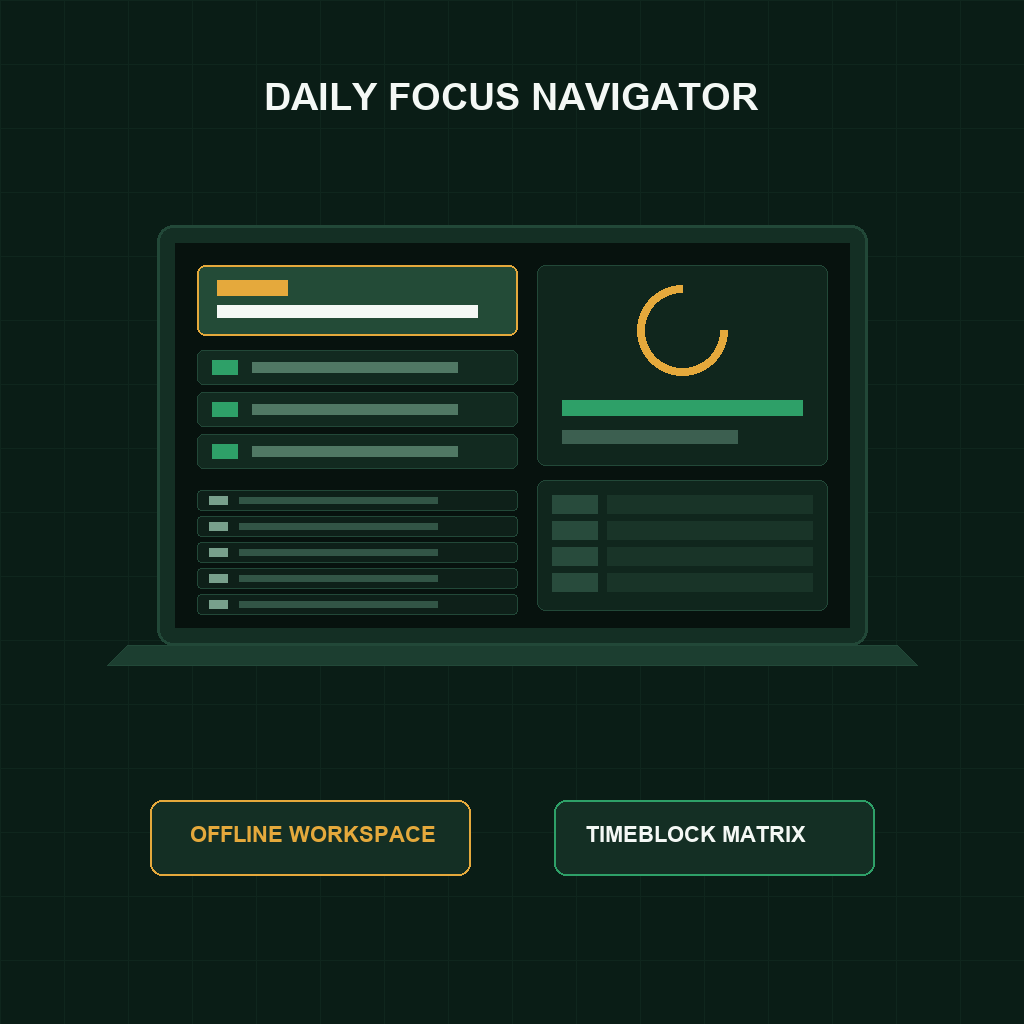
To translate your primary goals into a disciplined daily workflow, utilize the structured Daily Focus Task Matrix.
3. The Time Management Matrix: Dominating Quadrant 2
Covey categorizes all human activity across two fundamental axes: Urgent (requires immediate attention, rings the bell, presses upon us) and Important (contributes to long-term mission, core values, and strategic leverage).
┌──────────────────────────────────────┬──────────────────────────────────────┐
│             URGENT                   │            NOT URGENT                │
├──────────────────────────────────────┼──────────────────────────────────────┤
│  QUADRANT 1: THE CRISIS FIREFIGHTER  │  QUADRANT 2: THE PRINCIPLE LEADER    │
│  • Pressing deadlines                │  • Strategic planning & architecture │
│  • Medical & server emergencies      │  • Proactive relationship building   │
│  • Immediate production failures     │  • Deep learning & skill refinement  │
│  • Immediate executive escalations   │  • System maintenance & renewal      │
│                                      │                                      │
│  IMPACT: Stress, burnout, crisis     │  IMPACT: Vision, balance, leverage,  │
│  cycles, reactive firefighting.      │  sustainable high performance.       │
├──────────────────────────────────────┼──────────────────────────────────────┤
│  QUADRANT 3: THE DECEPTION TRAP      │  QUADRANT 4: THE ESCAPISM WASTE      │
│  • Unnecessary phone interruptions   │  • Mindless social media doom-scroll │
│  • Low-value status meetings         │  • Trivial busywork and escapism     │
│  • Other people's urgent trivia      │  • Compulsive distraction habits     │
│  • Immediate non-strategic emails    │  • Excessive low-value entertainment │
│                                      │                                      │
│  IMPACT: Short-term focus, feeling   │  IMPACT: Lethargy, stagnation, loss  │
│  busy without real accomplishment.   │  of professional accountability.     │
└──────────────────────────────────────┴──────────────────────────────────────┘
Why Quadrant 2 Is the Linchpin of High Effectiveness
Effective executives do not live in Quadrant 1; they shrink Quadrant 1 by investing heavily in Quadrant 2. When you proactively maintain machinery, communicate transparently with stakeholders, and clarify project specifications, operational emergencies rarely materialize.
Because Quadrant 2 tasks are not urgent, they will never act upon you; you must act upon them. To shift execution from reactive triage to proactive strategic control, implement the Quadrant 2 High-Leverage Planner & Execution System.
4. Public Victory: Interdependence, Win-Win & Synergy
Once private victory is achieved, leaders step into the interpersonal arena. Interdependence requires building substantial credits in the Emotional Bank Account of colleagues, partners, and family members through courtesy, keeping promises, clarifying expectations, demonstrating personal integrity, and offering sincere apologies when mistakes occur.
┌──────────────────────────────────────────────────────────────────────────┐
│                   THE THREE HABITS OF INTERDEPENDENCE                    │
│                                                                          │
│   HABIT 4: THINK WIN-WIN                                                 │
│   • Abandon zero-sum scarcity mentalities.                               │
│   • Seek mutual benefit in all commercial and personal contracts.        │
│   • If a mutually enriching solution cannot be found: Agree to No Deal.  │
│                                                                          │
│   HABIT 5: SEEK FIRST TO UNDERSTAND, THEN TO BE UNDERSTOOD               │
│   • The single most important principle in human communication.          │
│   • Abandon autobiographical listening (evaluating, probing, advising).  │
│   • Practice empathetic listening with ears, eyes, and heart.            │
│                                                                          │
│   HABIT 6: SYNERGIZE                                                     │
│   • 1 + 1 = 3, 10, or 100.                                               │
│   • Valuing differences rather than demanding conformity.                │
│   • Catalyzing creative third alternatives during heated disagreements.  │
└──────────────────────────────────────────────────────────────────────────┘
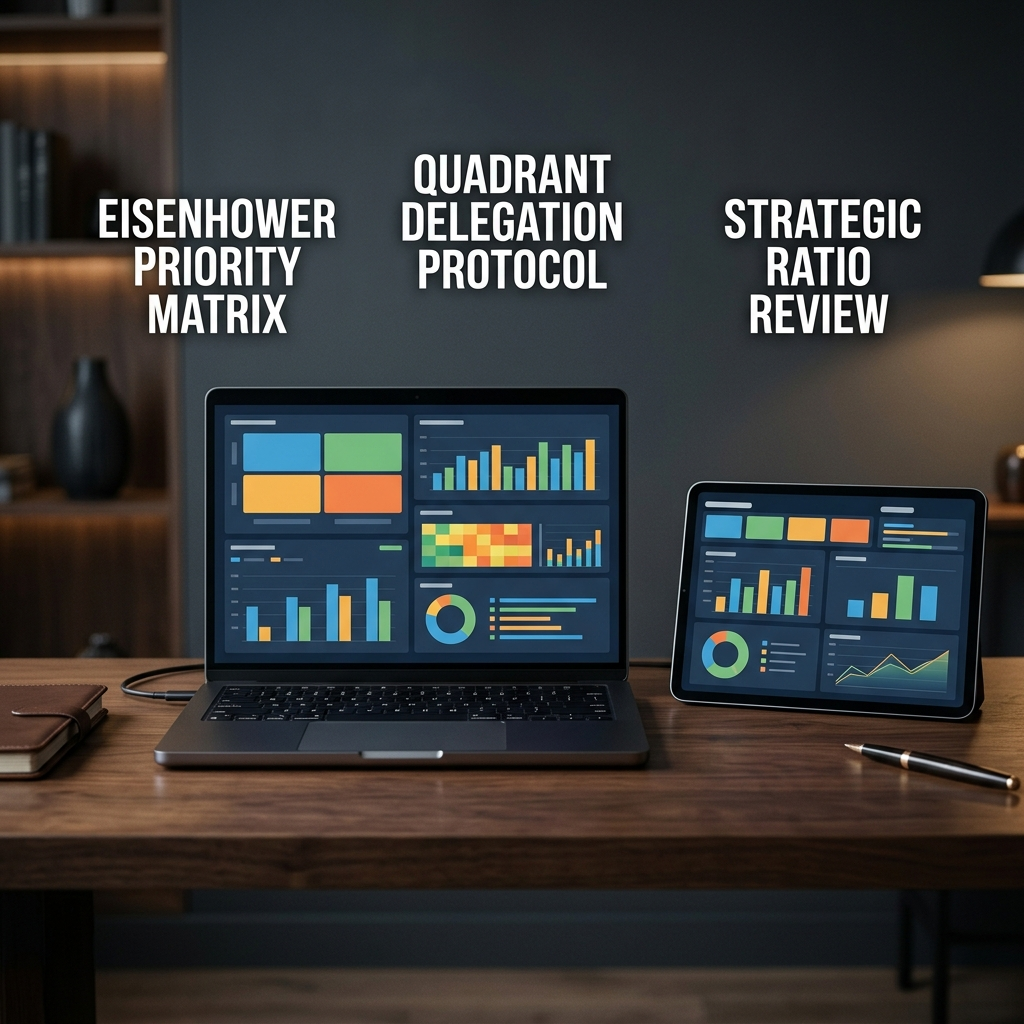
To coordinate cross-functional teams, delegate tasks without micromanagement, and eliminate friction, apply the Executive Priority & Delegation Dashboard.
5. Habit 7: Sharpen the Saw (The Four Dimensions of Renewal)
The parable of the woodcutter who is too busy sawing to sharpen his dull blade illustrates modern executive burnout. Habit 7 represents your personal production capability (PC), renewing your physical, spiritual, mental, and social assets:
┌──────────────────────────────────────────────────────────────────────────┐
│                   THE 4 DIMENSIONS OF SYSTEMIC RENEWAL                   │
│                                                                          │
│   1. PHYSICAL RENEWAL                                                    │
│   • Cardiovascular endurance, functional strength, restorative sleep.    │
│   • Whole-food nutrition, biomarker tracking, physical resilience.       │
│                                                                          │
│   2. MENTAL RENEWAL                                                      │
│   • Reading profound literature outside your immediate technical field.  │
│   • Analytical writing, disciplined journaling, deliberate study.        │
│                                                                          │
│   3. SPIRITUAL RENEWAL                                                   │
│   • Meditation, prayer, immersion in nature, timeless philosophy.        │
│   • Re-examining core personal values and personal mission clarity.      │
│                                                                          │
│   4. SOCIAL & EMOTIONAL RENEWAL                                          │
│   • Nurturing deep interpersonal intimacy and uncompromised trust.       │
│   • Altruistic service, empathetic connection, emotional contribution.   │
└──────────────────────────────────────────────────────────────────────────┘

6. The P/PC Balance: The Core Definition of True Effectiveness
Covey derives the ultimate definition of effectiveness from Aesop’s fable of the goose and the golden egg:
- P (Production): The golden eggs (revenue, quarterly deliverables, completed tickets, short-term profit).
- PC (Production Capability): The goose (the health, morale, technology stack, and psychological reserves that generate the eggs).
If an organization exploits its engineers to hit arbitrary short-term product deadlines while ignoring code refactoring, equipment upgrades, and physical burnout, it is killing the goose to extract short-term eggs. True effectiveness resides in the dynamic equilibrium between production and production capability.
7. The Time Management Matrix: Comparative Quadrant Archetypes
The following operational matrix details the behavioural symptoms, psychological costs, and corrective systems across all four activity quadrants:
| Quadrant Dimension | Q1: Urgent & Important (Crisis) | Q2: Not Urgent & Important (Leadership) | Q3: Urgent & Not Important (Deception) | Q4: Not Urgent & Not Important (Waste) |
|---|---|---|---|---|
| Core Character | Firefighting, imminent deadlines | Vision, deep work, prevention | Trivial demands of others | Mindless digital escapism |
| Typical Activities | Crashing servers, urgent PR crises | Strategic planning, relationship care | Unplanned calls, shallow meetings | Endless social doom-scrolling |
| Emotional State | Chronic anxiety, adrenaline burnout | Serene focus, strategic control | Frantic confusion, fake busyness | Numbness, lethargy, regret |
| Organizational Impact | High churn, catastrophic errors | Compounding growth, market moats | Diluted execution, wasted talent | Total stagnation, zero output |
| Time Allocation Target | Minimize via Q2 prevention | Maximize (60–80% of weekly hours) | Delegate or eliminate entirely | Ruthlessly eliminate |
| Operating Framework | Triage firefighting protocols | Quadrant 2 Execution Planner | Executive Delegation Dashboard | Operational Discipline Log |
Strategic Topic Frameworks & Practical Connections
To deepen your practical mastery and build an integrated operational workflow within this topic, explore these complementary guides:
- Implement the execution protocols in Building a Second Brain Summary: Tiago Forte PARA Method Guide to systematically strengthen your foundational routine.
- Explore the strategic principles detailed in The 4-Hour Workweek by Tim Ferriss: Productivity Automation & Lifestyle Design Guide for advanced optimization and mental clarity.
- Apply the structured methods from The 1-3-5 Rule Daily Task Matrix: Anti-Overwhelm Focus & Productivity Guide to maintain long-term momentum and consistency.
Frequently Asked Questions (FAQ)
What are the 7 Habits of Highly Effective People in order?
The habits follow a progressive continuum: 1. Be Proactive, 2. Begin with the End in Mind, 3. Put First Things First (Private Victory / Independence); 4. Think Win-Win, 5. Seek First to Understand, Then to Be Understood, 6. Synergize (Public Victory / Interdependence); and 7. Sharpen the Saw (Continuous Renewal).
What is the difference between urgent and important in Covey's matrix?
Urgent tasks demand immediate reaction—they press upon us and create short-term noise (such as an incoming call or urgent email). Important tasks contribute directly to long-term mission, core values, and strategic goals (such as skill development, relationship building, and health). Truly effective individuals focus on important, non-urgent Quadrant 2 activities.
Why does Private Victory always precede Public Victory?
You cannot authentically collaborate with others (interdependence) until you possess full self-control over your own impulses, promises, and schedules (independence). Attempting to deploy teamwork techniques without foundational personal integrity leads to superficial manipulation, resentment, and organizational collapse.
What does the P/PC balance mean in management?
P stands for Production (the desired results or golden eggs), while PC stands for Production Capability (the asset or goose that produces the results). Management effectiveness requires balancing immediate outputs with long-term asset health, team sustainability, and infrastructure maintenance.
Notice & Organizational Psychology Disclaimer: This analysis is published strictly for educational, executive leadership development, and organizational effectiveness purposes. It examines theories, models, and frameworks originating from The 7 Habits of Highly Effective People by Dr. Stephen R. Covey. This publication is an independent guide and is not affiliated with, sponsored by, or endorsed by FranklinCovey Co. or Simon & Schuster. Leadership and corporate transformations involve organizational and individual variables. No guarantee of commercial results, promotion, or specific financial return is expressed or implied.
Tools featured in this guide
Stephen Covey 7 Habits Execution System & Quadrant 2 Priority Planner
$14.99₫329,000
Eisenhower Priority Matrix Dynamic Dashboard & Task Delegation Workbook
Master the art of presidential decision-making: differentiate urgent from important, eliminate the mere urgency effect, and delegate low-value tasks with an executive single-file interactive workspace.
$24.99₫549,000
1-3-5 Rule Daily Task Matrix Planner and Priority Timeblock System
$29.99₫659,000
Navy SEAL Extreme Accountability & Daily Discipline Journal
Interactive single-file command center for the 4:30 AM wake-up protocol, extreme ownership after-action reviews, and daily battle planning.
$22.99₫499,000
Guides in this Topic
View all (23) →- Executive Productivity & Lifestyle Design Architecture
The 4-Hour Workweek by Tim Ferriss: Productivity Automation & Lifestyle Design Guide
Master The 4-Hour Workweek: DEAL framework, 80/20 Pareto elimination, automation systems, virtual assistants, and escape 9-to-5 corporate slavery.
Read guide - productivity
The 1-3-5 Rule Daily Task Matrix: Anti-Overwhelm Focus & Productivity Guide
Master the 1-3-5 rule daily productivity system: organize 1 big goal, 3 medium tasks, and 5 quick wins to eliminate burnout and maintain daily focus.
Read guide  productivity
Second Brain Productivity System: The Ali Abdaal & Tiago Forte Creator OS Guide
Master the second brain productivity system with Tiago Forte's PARA method and Ali Abdaal's YouTube workflow template for modern content creators.
Read guide productivity
Andy Grove High Output Management & OKR Goal Planning Guide
Master Andy Grove's High Output Management principles and OKR goal setting. Learn how the Intel CEO designed high-leverage organizational systems.
Read guide- Executive Leadership & Prioritization Systems
Eisenhower Matrix & Urgent vs Important Task Delegation Guide
Master the Eisenhower Matrix 4-quadrant system to defeat the Mere Urgency Effect, automate delegation protocols, and allocate 65%+ focus to Quadrant 2.
Read guide  productivity
Marie Kondo Digital Declutter & Spark Joy Workspace Guide
Master Marie Kondo's routine for digital decluttering. Clear desktop chaos, reach inbox zero, and curate an intentional, spark-joy digital workspace.
Read guide
Topic Pillar
Productivity & Deep Work
Time-blocking, personal operating systems, Second Brain architecture, and cognitive optimization.
Ask Yinyang Masters inside your AI assistant
Get the same calculations and guidance right in your chat: add the free Yinyang Masters app, then ask in plain English. No account needed.
Try asking: “Find a Yinyang Masters guide about starting a daily spiritual practice.”