



Andy Grove High Output Management & OKR Goal Planning Guide


Andy Grove’s High Output Management is an operational discipline asserting that a manager’s total output equals the output of their organization plus the output of neighboring teams influenced by them. By deploying Objectives and Key Results (OKRs) and high-leverage managerial activities, his methodology maximizes company-wide productivity and strategic alignment.
Most corporate managers mistake frantic activity for actual output. They spend forty hours a week answering reactive emails, attending unstructured status meetings, and policing routine employee tasks. In the landmark management treatise High Output Management, former Intel CEO Andy Grove dismantled this confusion by applying rigorous manufacturing engineering principles to executive leadership.
Grove demonstrated that leadership is not an art of charismatic persuasion, but an operational system of inputs, throughputs, and outputs. By focusing exclusively on activities that generate disproportionate organizational leverage, leaders can navigate hyper-competitive market shifts and accelerate company growth.
The Core Equation of Managerial Output
Grove formulated the foundational mathematical axiom of management:
$$\text{Manager's Output} = \text{Output of Organization} + \text{Output of Neighboring Teams Influenced}$$
┌────────────────────────────────────────────────────────┐
│             ANDY GROVE'S LEVERAGE ARCHITECTURE         │
├────────────────────────────────────────────────────────┤
│ High-Leverage Activities (Disproportionate Output):    │
│ • Developing 1-on-1 performance coaching protocols     │
│ • Formulating clear, measurable quarterly OKRs         │
│ • Cultural training that influences hundreds of hires  │
├────────────────────────────────────────────────────────┤
│ Low/Negative-Leverage Activities (Value Destroyers):   │
│ • Unprepared ad-hoc emergency meetings                 │
│ • Micromanaging standardized clerical tasks            │
│ • Indecisive delays during critical crossroads         │
└────────────────────────────────────────────────────────┘
A manager produces nothing on their own; their work product is entirely reflected in the collective capability, speed, and accuracy of the individuals they supervise and influence. Therefore, an hour spent training ten junior engineers has vastly higher leverage than an hour spent debugging a single routine line of code.
Deconstructing the OKR Framework: Objectives & Key Results
Andy Grove invented the OKR methodology at Intel (initially called iMBOs or Intel Management by Objectives) to execute the historic pivot from memory chips to microprocessors. John Doerr later studied under Grove and introduced the framework to Google in 1999.
An effective OKR pair answers two fundamental operational questions:
- The Objective (Where are we going?): Qualitative, inspirational, concrete, and action-oriented. It sets an ambitious strategic vector.
- The Key Results (How do we know we got there?): Quantitative, measurable, time-bound, and verifiable. It must leave zero room for subjective argument regarding completion.
The Anatomy of an Executive OKR
OBJECTIVE: Dominate enterprise cloud server reliability in Q3.
├── KEY RESULT 1: Reduce P0 platform downtime from 0.4% to <0.01%.
├── KEY RESULT 2: Deploy multi-region failover automation across all tier-1 clusters.
└── KEY RESULT 3: Attain customer NPS score of >= 74 on quarterly enterprise reviews.
Conventional MBOs vs. Andy Grove High-Output OKRs
The matrix below contrasts legacy top-down performance appraisals with Grove's dynamic execution system:
| Dimension | Legacy Annual Management by Objectives (MBO) | Andy Grove High-Output OKR System |
|---|---|---|
| Cadence & Agility | Annual rigid review tied directly to compensation | Quarterly dynamic cycles; decouple scoring from bonus salary |
| Goal Ambition | Full completion expected (encourages sandbagging) | Sweet spot is 60%-70% completion (demands ambitious stretch) |
| Transparency | Private agreements between boss and employee | Publicly visible to every employee across the entire company |
| Alignment Vector | Strict top-down hierarchy cascades slowly | 50% bottom-up team initiative; 50% executive direction |
| Tracking Rigor | Subjective annual end-of-year review narrative | Weekly measurable milestone check-ins with quantitative data |
The Art of the Effective One-on-One (1-on-1)
Grove considered the manager-employee one-on-one meeting the single highest-leverage touchpoint in corporate governance. A well-conducted ninety-minute 1-on-1 can enhance an employee's performance, alignment, and morale for two full weeks.
To achieve maximum leverage, Grove established three strict 1-on-1 rules:
- The Agenda Belongs to the Subordinate: The employee prepares the outline, identifies bottlenecks, and highlights emerging risks. The manager primarily listens, asks probing questions, and removes roadblocks.
- Hold Meetings in the Subordinate's Environment: Meeting near the employee's desk or on neutral ground eliminates artificial executive hierarchy and encourages candid psychological safety.
- Take Detailed Written Notes: Documenting mutual commitments ensures continuity between meetings and signals that the conversation has genuine institutional importance.
Strategic High-Leverage Operating Workspaces
To operationalize Andy Grove's principles, deploy structured quarterly OKR matrices, and eliminate organizational friction, utilize these dedicated interactive applications:
- Establish quarterly objectives, track key result confidence scores, and run high-leverage 1-on-1s with the High Output Management & OKR Quarterly Execution Matrix.
- Foster a dynamic growth mindset and continuous improvement culture using the Satya Nadella Learn-It-All Growth Mindset Execution System.
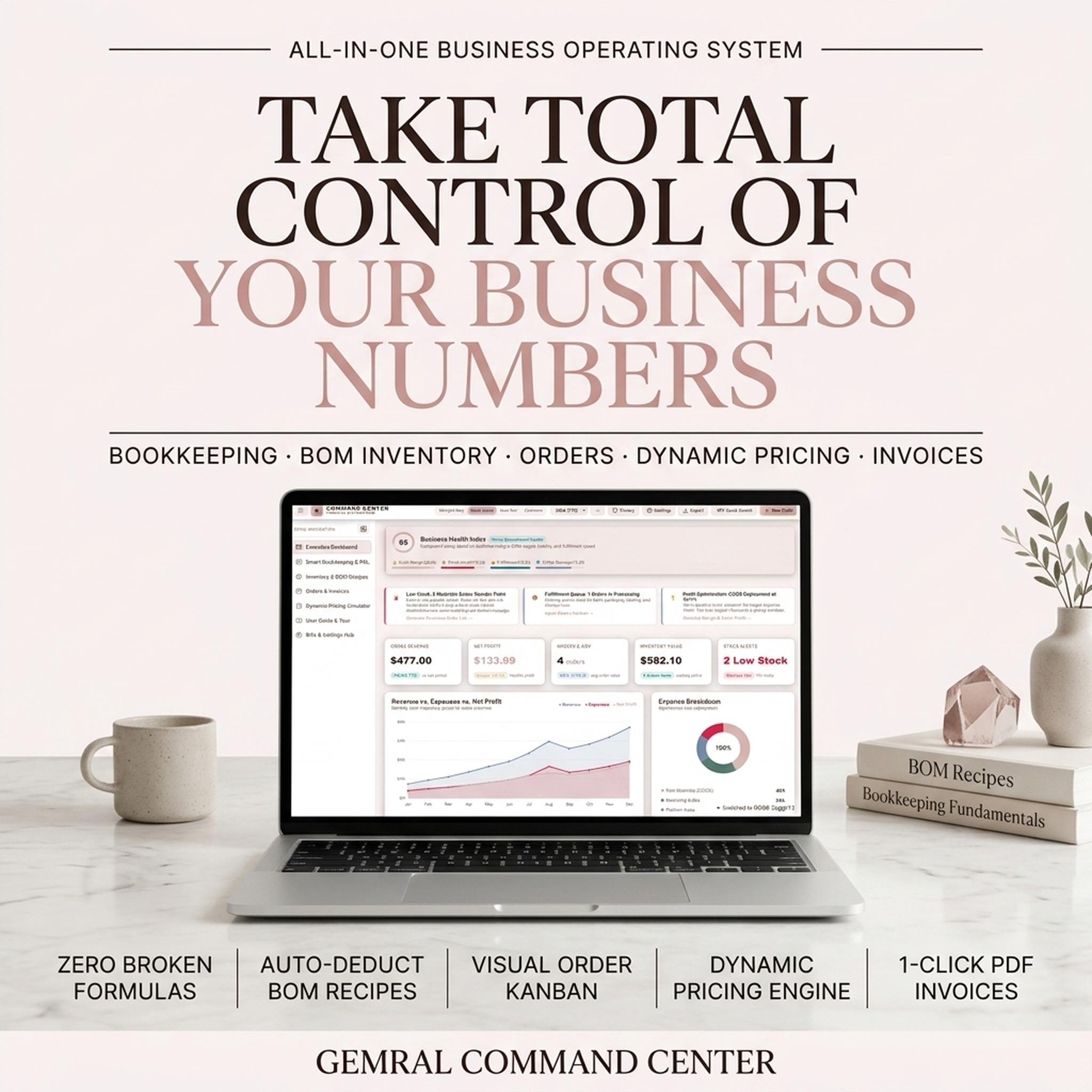
- Centralize financial ledgers, customer pipelines, and multi-team initiatives through the Small Business Command Center.
- Prioritize daily breakthrough tasks and protect focus with the 1-3-5 Rule Daily Task Matrix & Anti-Overwhelm Focus Dashboard.
Strategic Topic Frameworks & Practical Connections
To deepen your practical mastery and build an integrated operational workflow within this topic, explore these complementary guides:
- Implement the execution protocols in Cal Newport Deep Work & Time-Blocking Planner Guide to systematically strengthen your foundational routine.
- Explore the strategic principles detailed in Eisenhower Matrix & Urgent vs Important Task Delegation Guide for advanced optimization and mental clarity.
- Apply the structured methods from Elon Musk's 5-Minute Timeboxing and 5-Step Algorithm: How the Method Works and How to Use It Without Burning Out to maintain long-term momentum and consistency.
Frequently Asked Questions
Why did Andy Grove decouple OKRs from direct financial compensation?
If annual bonuses are tied 1-to-1 to OKR completion rates, employees naturally sandbag by proposing conservative, unchallenging targets that they are completely certain to hit. Decoupling bonuses allows teams to set audacious 10x goals without fear of personal financial penalty if they reach 70%.
What is the ideal number of OKRs for a team per quarter?
Grove recommended establishing no more than three to five Objectives per quarter, with each Objective supported by two to four Key Results. Committing to more than five objectives diffuses focus and reduces overall team velocity.
How does Andy Grove define a 'managerial bottleneck'?
A bottleneck occurs whenever an operational workflow halts because it requires a specific manager's sign-off, review, or decision. Grove advised managers to establish clear inspection limits and automated criteria so routine work flows freely without waiting for executive approval.
Can solo entrepreneurs and small startups use OKRs?
Yes. OKRs are especially potent for small teams and solo operators because they prevent shiny-object syndrome. Setting three quarterly objectives forces an entrepreneur to say no to dozens of distracting, low-margin opportunities.
Disclaimer: This operational manual is developed for organizational management, leadership development, and strategic execution education. Adapt framework metrics to match industry regulations and company scale.
Research & References
- [1]Harvard Business Review — Andy Grove’s Management Legacy ↗
- [2]Wikipedia — High Output Management & OKR System Architecture ↗
- [3]WhatIsAnOKR — The Origin of Objectives and Key Results at Intel ↗
For comprehensive editorial standards and health/financial disclaimers, view our Editorial Policy.
Tools featured in this guide
Andy Grove High Output Management & OKR Quarterly Execution Matrix
$24.99₫549,000
Satya Nadella Learn-It-All Growth Mindset Execution System & Executive Daily Matrix
$24.99₫549,000
Small Business Command Center & Inventory Bookkeeping
All-in-one operating system for product makers, boutiques, and sellers to manage inventory, BOM costs, orders, and P&L.
$29₫629,000
1-3-5 Rule Daily Task Matrix Planner and Priority Timeblock System
$29.99₫659,000
Guides in this Topic
View all (23) →- productivity
The 1-3-5 Rule Daily Task Matrix: Anti-Overwhelm Focus & Productivity Guide
Master the 1-3-5 rule daily productivity system: organize 1 big goal, 3 medium tasks, and 5 quick wins to eliminate burnout and maintain daily focus.
Read guide  productivity
Marie Kondo Digital Declutter & Spark Joy Workspace Guide
Master Marie Kondo's routine for digital decluttering. Clear desktop chaos, reach inbox zero, and curate an intentional, spark-joy digital workspace.
Read guide Mindset & Productivity Systems
Flowmodoro Technique: Deep Work Flow State Timer, Ratio Rules & Anti-Burnout Guide
Master the Flowmodoro technique to enter unbroken deep work flow states. Learn the stopwatch count-up protocol, 1:5 break ratios, and anti-burnout rules.
Read guide Leadership & Purpose Frameworks
Simon Sinek Start With Why & Golden Circle Purpose Guide
Master Simon Sinek's Start With Why and Golden Circle framework. Discover your core purpose, define guiding principles, and pass the Celery Test.
Read guide Executive Leadership & Effectiveness Architecture
The 7 Habits of Highly Effective People by Stephen Covey: Complete Architecture Guide
Master the 7 Habits of Highly Effective People: Stephen Covey time management matrix, Quadrant 2 focus, private vs public victory, and weekly planning.
Read guide- Executive Productivity & Lifestyle Design Architecture
The 4-Hour Workweek by Tim Ferriss: Productivity Automation & Lifestyle Design Guide
Master The 4-Hour Workweek: DEAL framework, 80/20 Pareto elimination, automation systems, virtual assistants, and escape 9-to-5 corporate slavery.
Read guide
Topic Pillar
Productivity & Deep Work
Time-blocking, personal operating systems, Second Brain architecture, and cognitive optimization.
Ask Yinyang Masters inside your AI assistant
Get the same calculations and guidance right in your chat: add the free Yinyang Masters app, then ask in plain English. No account needed.
Try asking: “Find a Yinyang Masters guide about starting a daily spiritual practice.”